Brushed and brushless motors generate heat in different ways. The design of BLDC motors reduces mechanical friction, minimizes energy loss, and directs the majority of the heat to areas where it can be more easily dissipated.
Where does the heat generated by a brushed motor come from?
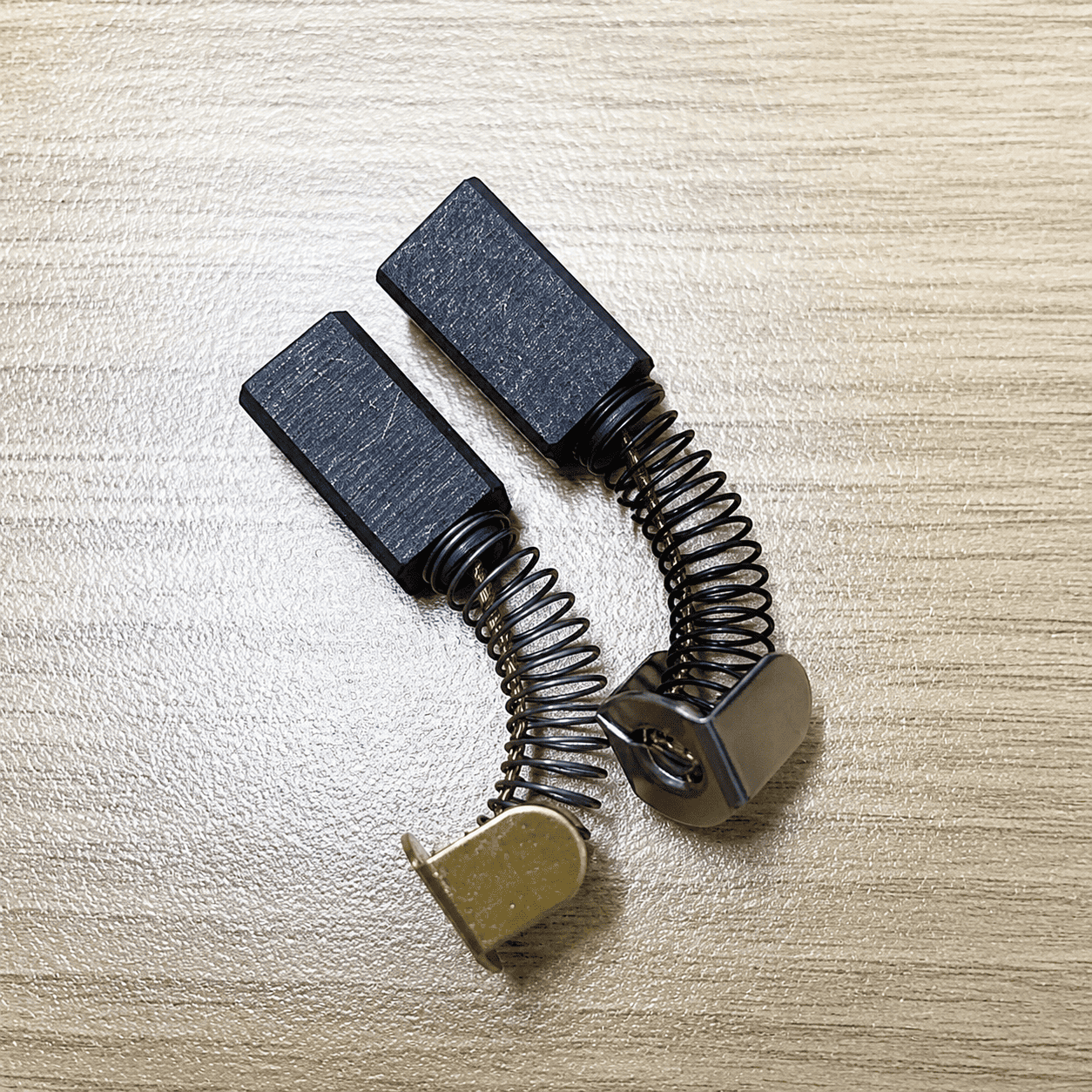
In a brushed motor, current is transmitted to the rotor via carbon brushes and a commutator; these two components remain in constant contact as the rotor spins.
Friction at the contact point generates heat, while the process of making and breaking the electrical circuit can produce small sparks between the brushes and the commutator. Higher rotational speeds increase the frequency of contact, thereby intensifying both heat generation and mechanical wear.
The windings of a brushed motor are located on the rotor the internal rotating component. Heat generated in this area must pass through surrounding parts before dissipating externally, resulting in less efficient heat dissipation.
Why do brushless motors generate less heat?
BLDC motors do not transfer electricity to the rotor via mechanical contact; instead, electronic control circuitry modulates the stator's magnetic field to generate rotational force.
By eliminating carbon brushes pressing against a commutator, the motor removes a source of direct friction that typically generates heat and causes wear in conventional motors.
The winding configuration also presents a significant difference. In BLDC motors, the windings are located on the stator the stationary component surrounding the rotor. This placement facilitates a more efficient heat transfer path to the motor housing, thereby aiding heat dissipation.
Higher energy conversion efficiency also minimizes energy loss in the form of heat. Simply put, when performing the task of rotating the rotor, the brushless motor reduces two major sources of heat: friction at contact points and energy losses during power transmission.
How does a rise in temperature affect centrifuged samples?
Biological samples cannot always withstand prolonged exposure to elevated temperatures; proteins, cells, and nucleic acids can be sensitive to temperature fluctuations. In processes requiring strict temperature control, heat generated by the motor can add to the thermal load within the centrifuge chamber.
In centrifuges lacking a cooling system, motor heat can cause the chamber temperature to rise gradually during operation a factor of particular concern when using high-speed rotors or performing multiple consecutive runs. Refrigerated centrifuges present an additional consideration: the cooling system must continuously dissipate heat generated by the sample, the chamber, and the motor. A motor that generates less heat reduces the thermal load the cooling system must handle.
Related article on centrifuge applications: 100% Pure Creatine Monohydrate? What Manufacturers Need to Control to Prove It
An engine that generates less heat also contributes to the machine's durability
Prolonged heat accumulation can affect the mechanical components surrounding the motor.
Bearings, insulation materials, and electronic components all have operating temperature limits. Sustained high temperatures can accelerate material degradation and reduce component lifespan.
Brushless motors also eliminate the need for periodic replacement of a specific wear part: carbon brushes. This removes the requirement for brush replacement after a period of use and reduces the risk of carbon dust accumulation inside the motor.
For laboratories that use centrifuges frequently, these benefits are more significant than for equipment used only a few times a week.
Comparison of brushed and brushless motors

Should you choose a brushless centrifuge?
Brushless centrifuges are suitable for laboratories requiring frequent high-speed operation or the processing of heat-sensitive samples. The brushless (BLDC) design minimizes friction, reduces wear and tear, and lowers heat generation within the drive system.
Of course, the motor is not the only factor determining the unit's temperature. The design of the centrifuge chamber, rotational speed, rotor type, run duration, ventilation system, and cooling capabilities all influence the final outcome.
If a laboratory frequently performs high-speed centrifugation or requires sample temperature control, a brushless motor is a key feature worth considering when selecting equipment.