What is an inverter?
An inverter is a device that regulates the frequency and voltage supplied to a motor, thereby changing the rotational speed according to actual needs. Instead of operating the motor at a fixed speed, the inverter allows for flexible increase and decrease without the need for a mechanical gearbox. Thanks to the principle of switching semiconductor components, the current is transformed appropriately to create a stable rotating magnetic field for the rotor.
In Vietnam, inverters are widely used in pumps, fans, conveyors, compressors, and many other production lines due to their ability to save electricity and effectively control the process.
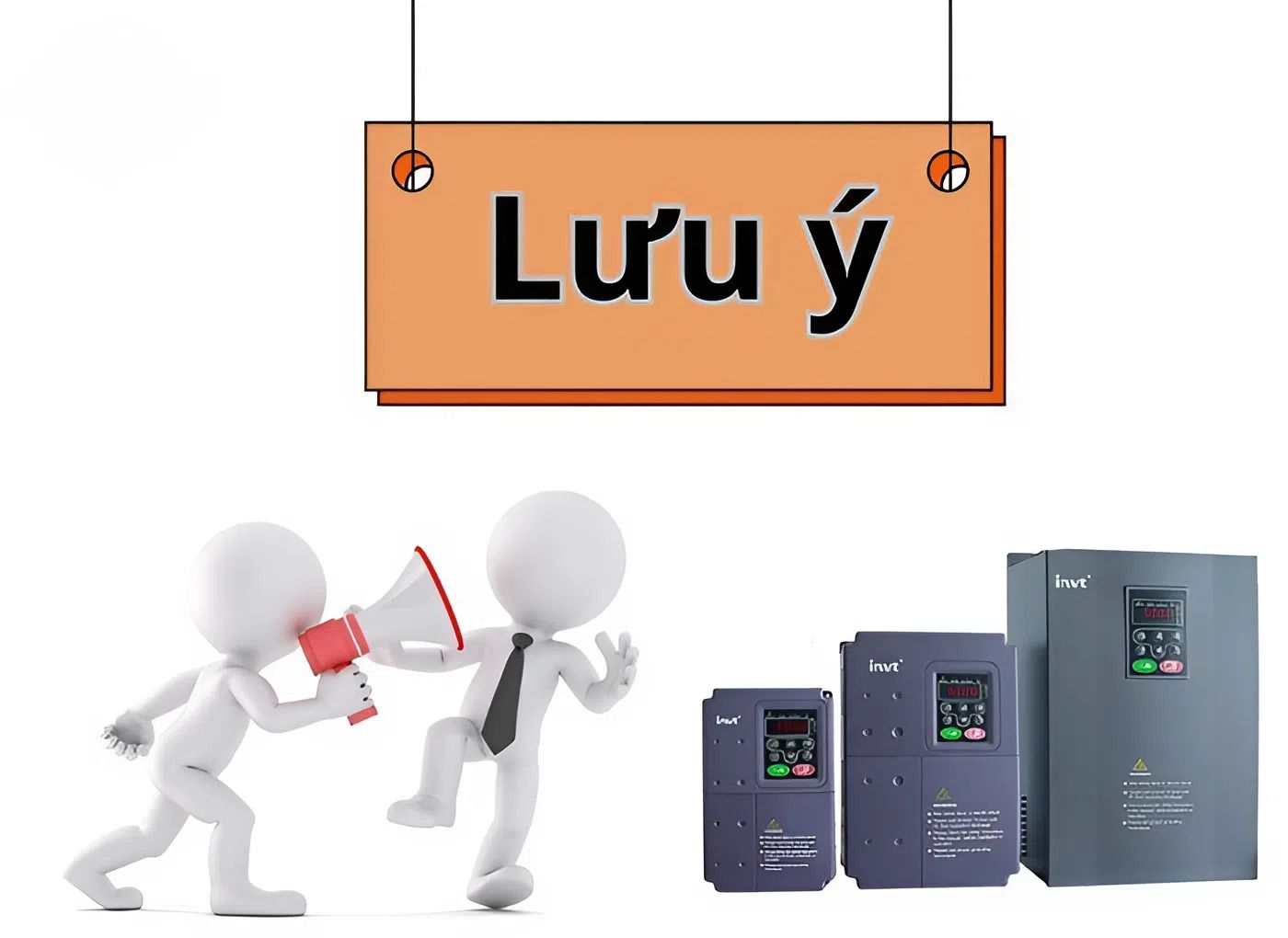
10 things to keep in mind when using frequency converters in industry.
1. Choose a suitable installation location
The inverter should be placed in a dry, well-ventilated area, free from dust and moisture. Avoid environments with corrosive chemicals or strong vibrations to minimize damage to internal components.
2. Maintain original settings unless necessary
Manufacturer-defined settings are established according to the equipment's characteristics. Do not attempt to make significant adjustments yourself if you are unsure, as this can easily cause errors or reduce the inverter's lifespan. If changes are necessary, consult the technical documentation or the distributor.
3. Observe electrical safety precautions during operation
The inverter operates at high voltage. Avoid direct contact while the device is running, especially at connectors and circuit boards.
4. Clean the cooling fan regularly
The cooling fan helps dissipate heat from the inverter. Accumulated dust reduces cooling efficiency, leading to overheating. Regular cleaning is recommended, typically every 3 to 6 months depending on the operating environment.
5. Control the installation area temperature
The ideal ambient temperature for the inverter typically fluctuates around standard technical room temperatures. Temperatures that are too high or too low will affect component durability and long-term operation.
6. Carefully read the equipment documentation
Each inverter model has different configurations and requirements. The instruction manual provides information on connection, installation, and operation specific to each model.
7. Disconnect the power before maintenance
Before disassembling or inspecting the internal components, ensure the power supply is completely disconnected. This minimizes the risk of electric shock and protects the operator.
8. Perform maintenance as recommended
The inverter should undergo a comprehensive inspection periodically according to the manufacturer's instructions, usually every 1 to 2 years. Timely maintenance helps detect early signs of malfunction and avoids sudden machine shutdowns.
9. Proper Grounding
A proper grounding system helps limit electrical leakage and increase safety during use. This is a basic requirement but is often overlooked during installation.
10. Entrust the Equipment to a Professional
Installation, configuration, and maintenance of the inverter should be performed by experienced technicians. Incorrect adjustments can cause the equipment to operate unstably or develop serious faults.
EMIN distributes various lines of industrial inverters.
Currently, EMIN offers a wide range of inverters commonly used in factories, electromechanical systems, and production lines, suitable for both basic and specialized applications.
Schneider Electric ATV320 inverter
Schneider ATV320 is a popular choice in conveyor systems, packaging machines, processing and material handling equipment. This series is suitable for both asynchronous and synchronous motors, easily integrated into automation systems, and commonly used in continuous production environments.
Schneider Electric ATV630 inverter
The ATV630 is widely used in pumping, fan, and water treatment applications. This inverter series is suitable for high-power systems, supporting good load control and maintaining stable operation over long periods, especially in factories and technical stations.