What are Laser Levels and Squares? What are they used for?
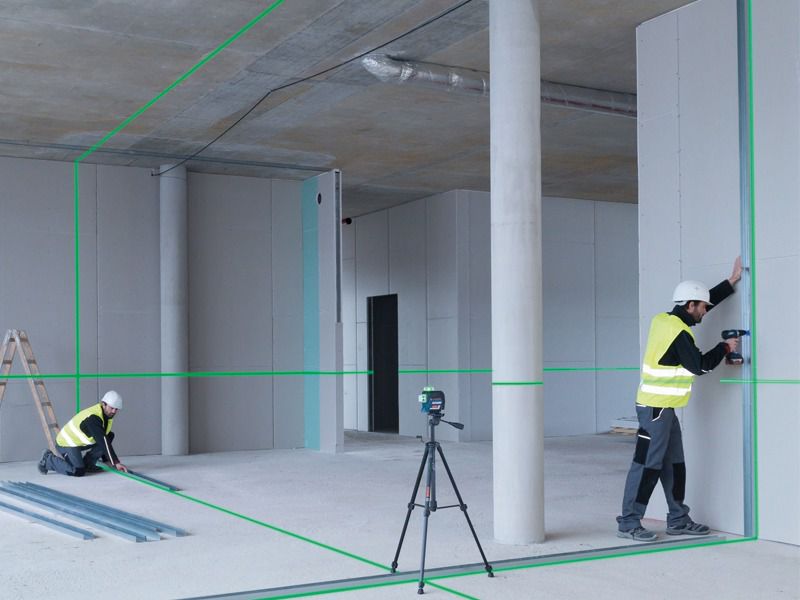
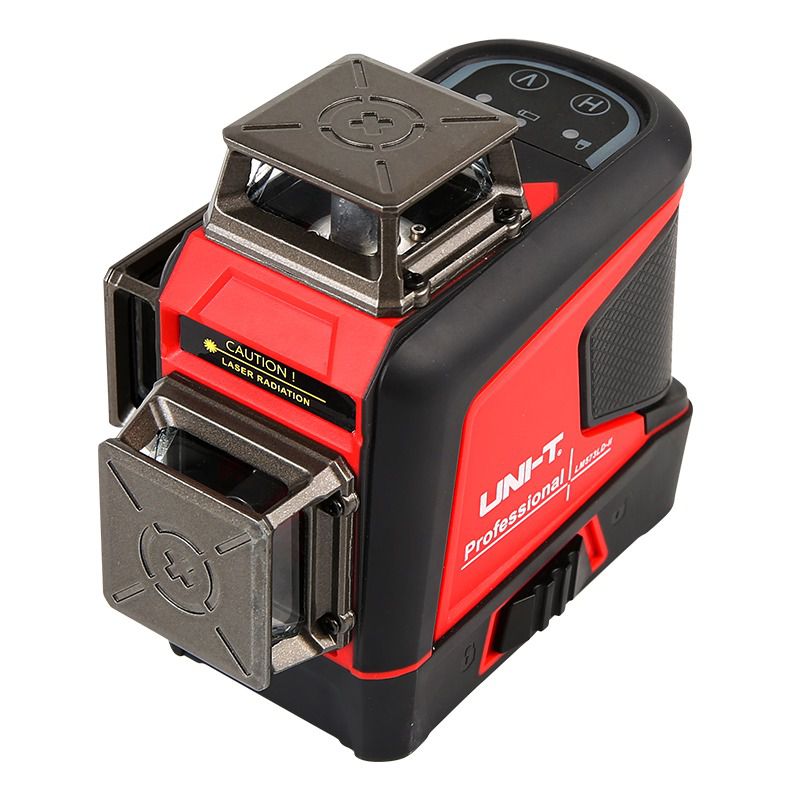
A Laser Level is a device that utilizes laser beams to project precise horizontal, vertical, or plumb lines onto walls, floors, and ceilings. These units usually feature a self-leveling mode powered by a pendulum system, accelerometers, or spirit levels, ensuring the beam remains stable within a range of +/-3 to 5 degrees. For instance, the UNI-T LM573LD-II Laser Level can project multiple horizontal and vertical lines-and even cross-lines-to quickly create an orthogonal grid in a 3D space.
On the other hand, a Square is a mechanical or laser-based tool with physical edges or beams that form a precise 90-degree angle.
So, can a laser level replace a square?
Squaring Capabilities of a Laser Level
A laser level can assist in establishing orthogonal reference lines but cannot completely replace a physical square. Laser levels project horizontal and vertical lines (and sometimes cross-lines or 3D grids), allowing users to visualize perpendicular lines on a surface. However, while the laser provides a reference line, it does not physically check the squareness between two planes or two edges as a manual square does.
For example, using the BOSCH GLL 50-15 XG Laser Level, which projects 5 lines to create a squaring grid, is highly effective for interior fit-outs, wall tiling, and flooring. However, for verifying the 90-degree angle between two edges of a door frame, a mechanical square is more accurate as it directly measures the contact between two physical planes.
Limitations of Laser Levels
Although laser levels offer high precision, they are dependent on surface flatness, ambient lighting, and build quality. In high-brightness environments, the laser beam can become difficult to see, affecting accuracy. Furthermore, a laser level cannot measure the squareness of two non-parallel planes or work at ultra-short distances as effectively as a handheld square.
Read more: What is a Laser Level? Construction and Operating Principles.
Key Considerations When Choosing a Laser Level for Squaring
Accuracy: Select a unit with low margins of error, typically +/-1 mm / 5 m or better.
Number of Laser Lines: Multiple lines help create a comprehensive squaring grid, but choose based on your specific workflow requirements.
Self-Leveling/Out-of-Level Compensation: This feature allows the device to auto-adjust for tilt, ensuring the integrity of the reference lines.
Working Environment: For outdoor sites, opt for a Green Beam laser, which offers a wider range and higher visibility, along with IP-rated water and dust resistance.