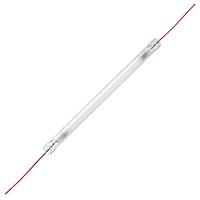
CCFL Fluorescent Lamps
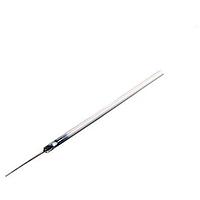
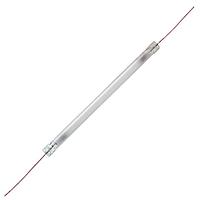
When a design needs slim, even illumination in a confined space, lamp geometry and electrical behavior matter just as much as brightness. CCFL fluorescent lamps remain a practical choice for backlighting applications that require a narrow profile, stable light output, and a form factor that can fit into compact assemblies, panels, and display-related equipment.
In this category, buyers can compare miniature cold cathode fluorescent lamps across different diameters, lengths, and operating characteristics. That makes it easier to match the lamp not only to the available installation space, but also to the inverter, light distribution target, and service conditions of the final product.
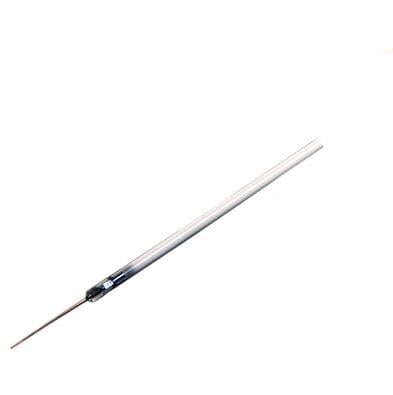
Where CCFL lamps fit in backlighting systems
CCFL technology is widely used where a long, slender light source is needed to illuminate a surface evenly. In practice, these lamps are often selected for backlighting assemblies, edge-lighting arrangements, instrument panels, and other equipment where space is limited and uniformity is important.
Compared with broader illumination components, the main advantage is the combination of compact diameter and useful light output over relatively long lamp lengths. If your project also involves the power stage, it is often helpful to review compatible EL/CCFL inverters and accessories as part of the overall system design rather than treating the lamp as an isolated part.
Key selection factors for engineers and buyers
The most important starting points are physical dimensions and electrical requirements. Length and diameter determine whether the lamp fits the mechanical layout, while start voltage and operating voltage affect inverter compatibility and startup behavior. A lamp that is mechanically suitable but mismatched electrically can create integration issues later in prototyping or production.
Brightness is another critical parameter, but it should be interpreted in context. Higher luminance can support stronger backlighting, yet uniformity, diffusion method, and enclosure design will also influence the visible result. For that reason, procurement teams usually compare lamp dimensions, target brightness, and supply conditions together instead of optimizing only one value.
Typical product range in this category
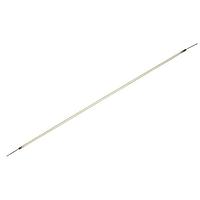
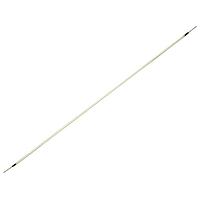
This selection includes miniature lamps in several size formats, from very small diameters such as 2 mm and 2.6 mm up to larger options like 5.6 mm and 6.5 mm. Lengths also vary significantly, from compact versions around 75 mm to long-format lamps reaching 325 mm, which is useful when designing for anything from localized illumination to extended linear backlighting.
Examples from JKL Components illustrate this range clearly. Models such as BF375-20B suit shorter layouts, while BF20125-28B and BF22140-24B cover mid-length requirements. For longer backlighting runs, parts like BF26240-24B, BF26250-24B, and BF20325-24B show how the category supports more extended illumination paths without changing to a completely different lamp family.
Understanding lamp dimensions and performance trade-offs
In many projects, the lamp diameter is one of the first constraints. A 2 mm or 2.2 mm lamp can help where installation channels are especially narrow, while slightly larger diameters may be preferable when the assembly allows more room and a different balance of brightness and handling is needed. Small changes in diameter can have a real effect on mechanical integration, holder design, and light-coupling geometry.
Length also influences both coverage and electrical behavior. For example, longer lamps such as BF26285-20B or BF20218-24B can support wider illuminated areas, but they may require higher start voltages than shorter options. This is why mechanical fit and electrical compatibility should always be reviewed together during part selection.
Manufacturers commonly considered in this segment
Two names that often appear in this backlighting segment are Sylvania and JKL Components. In practical sourcing terms, product availability, dimensional variety, and documentation support are usually the deciding factors when narrowing down suitable parts for development or replacement needs.
Within the products highlighted here, JKL Components is strongly represented with multiple miniature cold cathode lamp formats. That makes the brand particularly relevant when you need to compare several lengths or diameters within a similar lamp family. Buyers evaluating alternative backlighting technologies may also want to look at LED backlighting solutions for projects where a different light source architecture is preferred.
Application and replacement considerations
For OEM maintenance, retrofit work, or service parts purchasing, replacement is not only about finding a lamp with a similar appearance. Length, diameter, lamp type, operating current, and voltage conditions all need to be checked carefully. Even when two lamps look close in size, differences in startup or operating requirements can affect inverter behavior and service life.
This is especially important in legacy equipment where the original backlighting assembly was designed around a specific lamp envelope. A model such as BF26180-24B or BF22180-28B may be suitable for certain linear backlight designs, but confirmation should always include both the physical installation details and the electrical specifications of the existing system.
How to navigate this category efficiently
A practical way to shortlist parts is to start with the installation space, then narrow by diameter and length, and finally confirm the lamp’s electrical values against the intended driver or inverter. This approach reduces the risk of selecting a lamp that fits the housing but does not perform correctly in the circuit.
If you are comparing multiple lamp families for a broader sourcing project, browsing the full CCFL fluorescent lamp range alongside adjacent backlighting categories can help clarify whether the requirement is best served by a direct lamp replacement, a complete inverter-and-lamp combination, or a migration to another backlighting technology.
Choosing the right CCFL lamp for your project
The right part usually comes down to a balanced assessment of size, brightness, and operating conditions. Shorter lamps can be useful in compact equipment, while longer lamps are better suited to wider illuminated areas. Slim diameters help in constrained assemblies, but they should still be evaluated against handling, mounting, and light-distribution needs.
By comparing dimensions and electrical characteristics carefully, buyers can identify a suitable backlighting component for new designs, maintenance planning, or production sourcing. This category is best used as a practical reference point for matching lamp format and performance to the needs of the final assembly.
Get exclusive volume discounts, bulk pricing updates, and new product alerts delivered directly to your inbox.
By subscribing, you agree to our Terms of Service and Privacy Policy.
Direct access to our certified experts