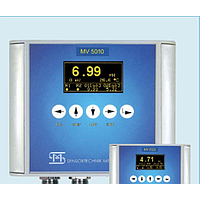
Chlorine Controllers
Maintaining a stable chlorine level is a critical part of water treatment, whether the application involves process water, pools, utility systems, or other controlled water environments. When chlorine concentration drifts too low, disinfection performance can suffer; when it rises too high, water quality, equipment life, and operating costs can all be affected. That is where Chlorine Controllers play an important role, helping operators monitor and regulate dosing with better consistency.
On this category page, buyers can explore chlorine control instruments used to measure chlorine values, support automatic dosing logic, and integrate chlorine measurement with other key water parameters such as pH. These devices are typically selected where stable treatment performance, repeatable control, and clear operator feedback are required.
Why chlorine control matters in water treatment
Chlorine is widely used as a disinfectant, but its effectiveness depends on maintaining the right concentration under changing water conditions. Variations in flow, temperature, contamination load, and pH can all influence how chlorine behaves in a system. A dedicated controller helps translate those variations into actionable control signals for dosing equipment or alarm outputs.
In many installations, chlorine monitoring is not treated as an isolated task. It is part of a broader water quality monitoring strategy that may also include pH, dissolved oxygen, resistivity, or organic load measurements. Using the right controller improves process visibility and supports more reliable day-to-day operation.
Typical functions of chlorine controllers
Most systems in this category are designed to do more than display a chlorine reading. Depending on the model, a controller may provide alarm handling, relay outputs, analogue output signals, calibration support, and control modes such as manual, automatic, or proportional feed. These features make the controller suitable for both standalone use and integration into a larger control cabinet or supervisory system.
Another common requirement is compensation or parallel monitoring of related parameters. In practical water treatment, pH often has a direct effect on disinfection performance, which is why some controllers combine chlorine and pH in a single platform. This can simplify installation and give operators a more complete picture of the treatment process from one interface.
Representative products in this category
A good example is the Chemtrol CH265, a digital controller designed for free chlorine and pH control in one unit. Based on the listed configuration, it supports adjustable free chlorine and pH ranges, multiple feed modes, sensor connection for both parameters, status indication, and 4–20 mA output capability. This type of instrument is relevant where chlorine control needs to be coordinated with pH correction rather than handled separately.
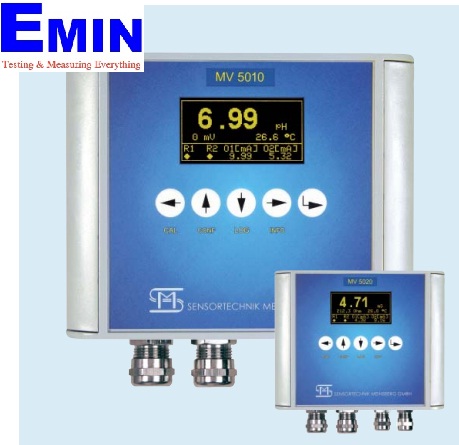
Another reference point is the Meinsberg MV5060 chlorine set, which combines a controller, sensor, and cable assembly for chlorine measurement. Its listed features indicate relay outputs, analogue outputs, data logging, and an industrial enclosure format, making it suitable for applications that need local control with signal transmission to other systems. Buyers interested in this manufacturer can also review the Meinsberg product range for related instrumentation.
How to choose the right chlorine controller
The first step is to define the control objective. Some sites only need chlorine monitoring with alarm notification, while others require active dosing control through relays or analogue outputs. If the process also depends heavily on acidity or alkalinity, a combined chlorine and pH controller may reduce panel complexity and improve coordination between treatment variables.
It is also important to check the expected measuring range, output requirements, power supply, enclosure rating, and sensor arrangement. A compact controller with integrated display may be enough for a local skid, while larger installations may prefer models that can send signals to PLC, SCADA, or remote monitoring systems. Where ultra-pure or specialized water loops are involved, users may also compare chlorine instruments with solutions such as a water resistivity controller to cover different quality indicators in the same plant.
Applications and operating environments
Chlorine controllers are used anywhere water disinfection has to be maintained within a controlled window. This includes industrial water treatment, utility water conditioning, recreational water systems, and process environments where water quality directly affects product quality or equipment performance. The required control strategy can vary from simple threshold alarms to closed-loop dosing.
In more advanced treatment systems, chlorine control may operate alongside other environmental and analytical controllers. For example, dissolved oxygen control, organic load monitoring, or nutrient dosing may be handled in parallel depending on the process. For applications that also track oxygen levels, related options are available in DO controllers, which can complement broader water process monitoring.
Sensor, output, and integration considerations
Controller performance depends not only on the electronics but also on how the sensor is applied in the process. Sample flow quality, sensor placement, cable routing, and maintenance access all affect the reliability of chlorine readings. A well-matched sensor and flow assembly can reduce noise, improve response, and make calibration easier for plant personnel.
From an integration standpoint, buyers should look at relay capacity, analogue signal format, display readability, and available communications options where relevant. Features such as data logging, limit settings, and out-of-range handling can be useful in troubleshooting and compliance-related record keeping. In B2B purchasing, these practical integration details are often just as important as the basic measuring range.
Brand options available in this category
This category includes solutions from Chemtrol and Meinsberg, two manufacturers represented here with chlorine control products suited to different installation needs. Chemtrol is relevant when combined chlorine and pH control is required in a single controller, while Meinsberg offers a set-based approach that can fit industrial measurement and control environments.
Rather than choosing by brand name alone, it is usually better to compare instruments based on process parameter requirements, control logic, signal interface, and maintenance expectations. That approach leads to a better match between the controller and the real operating conditions of the site.
Finding the right fit for your process
Selecting a chlorine controller is ultimately about balancing measurement needs, control method, and system integration. A simple monitoring point may only need clear display and alarm outputs, while a more demanding treatment loop can benefit from combined parameter control, proportional feed logic, and scalable signal interfaces.
By reviewing the available chlorine controllers in this category, buyers can narrow down options for disinfection monitoring and dosing control with greater confidence. If your application also involves broader water analysis or linked treatment parameters, exploring related controller categories can help build a more complete and practical instrumentation setup.
Get exclusive volume discounts, bulk pricing updates, and new product alerts delivered directly to your inbox.
By subscribing, you agree to our Terms of Service and Privacy Policy.
Direct access to our certified experts