Construction engineers often rely on a concrete moisture meter to determine the right time to install wood flooring.
Concrete does not become completely dry as soon as it reaches its design strength. Moisture trapped inside the slab continues to evaporate over an extended period, and the drying rate depends on weather conditions, ventilation, and the thickness of the concrete slab.
A newly installed wood floor usually shows no visible signs of trouble. The surface appears flat, the boards fit tightly together, and the installation is considered satisfactory. However, after several months of use, certain areas may begin to swell, produce squeaking sounds, or develop gaps between the boards.
On projects carried out during the rainy season, on ground floors, or in poorly ventilated areas, this drying process often takes longer than expected.
Why Does Wood Flooring Start to Swell Only After Several Months?
During the early stages, moisture migrates slowly from the concrete slab into the flooring, so there are typically no obvious signs of damage. Over time, however, the wood absorbs additional moisture, expands, and places stress on the locking joints. As a result, edge lifting, slight warping, and squeaking gradually begin to appear.
Wood floor swelling after several months is not always caused by poor-quality materials or improper installation. Residual moisture within the concrete subfloor is also a major factor that directly affects the long-term stability of the flooring system.
Visual Inspection Is Not Enough to Evaluate a Concrete Subfloor
On many construction projects, the installation schedule often determines when flooring work begins. As soon as the concrete surface feels hard enough and appears dry, finishing work typically proceeds.
However, the amount of moisture remaining inside the concrete cannot be assessed by visual inspection alone. When measured with a concrete floor moisture meter, it can be observed that the rate of moisture evaporation is slower in areas near the base of walls, close to utility boxes, or on the ground floor compared to the rest of the building.
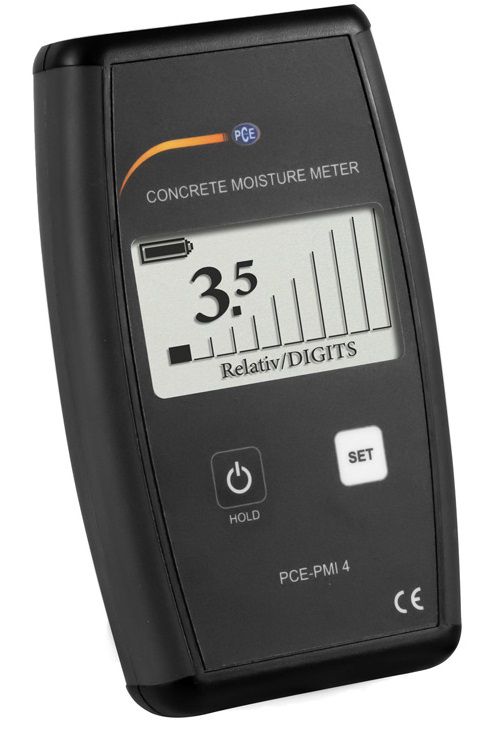
Concrete Moisture Meters Are Becoming Part of Construction Quality Inspections
During site preparation, technicians measure moisture at multiple locations to evaluate the consistency of the subfloor. Areas with a history of water intrusion or those located near entrances are typically inspected more carefully.
Some projects also measure the moisture content of the wood flooring before installation to minimize the difference between the flooring material and the surrounding environment. Comparing these two measurements helps reduce the risk of warping, swelling, and other moisture-related issues after the floor is put into service.
A building material moisture meter provides quantitative measurements of the moisture content in concrete, cement, brick, mortar, and various types of wood. The results help determine whether the subfloor is ready for installation or requires additional drying time. For projects with stringent quality requirements, these measurements are often documented as part of the final inspection records for future verification or warranty purposes.
Using a concrete moisture meter before installation provides an accurate assessment of the subfloor condition. When both the concrete slab and flooring materials have reached appropriate moisture levels, the likelihood of warping, edge lifting, floor swelling, and expensive repairs can be significantly reduced