"We need the MSO58B oscilloscope."
"We need a 20 GHz unit."
For Mr. Lam Su Bao - EMIN Group’s top salesperson in 2025 hearing such remarks signals that it is not yet the time to provide a price quote. Instead, that is the moment to ask the customer clarifying questions: What signal needs to be measured? How many channels are required? Is the measurement for troubleshooting or research purposes? Is there a need to analyze noise, stability, or other signal characteristics?

During the sales or consultation process with customers interested in the Tektronix brand, what specific questions or needs signal to you that they truly require a professional-grade oscilloscope?
The complaints are usually quite specific. The current instrument fails to detect signal errors the output signal appears correct according to the design, yet faults occur during actual operation. The signal is noisy, making it impossible to observe a clear waveform. There is a need to capture a signal that lasts only a few milliseconds or nanoseconds, but the current oscilloscope cannot keep up. Alternatively, the requirement goes beyond mere waveform visualization to include parameter analysis such as jitter, eye diagrams, mask testing, and power analysis.
At this point, I realize the customer needs a more versatile, multi-functional instrument. The next step is to delve into the specific application details: whether the signals are analog, digital, or both; the signal frequency and rise time; the number of signals to be monitored simultaneously (to determine the required channel count); and the specific parameters of interest such as switching characteristics, overshoot, rise and fall times, or clock and jitter.
When a customer specifies a particular oscilloscope model, do you often ask follow-up questions to determine whether that device truly meets their needs or if there might be a more optimal choice?
Yes, almost always; it is usually a prerequisite and a requirement for a professional in the field. I typically ask further questions regarding the following points:
What are the specific signal characteristics?
+ Bandwidth, sample rate, number of channels, memory depth, and waveform capture rate.
+ What additional analysis is required beyond basic waveforms such as protocol decoding, power analysis, jitter, or serial bus analysis?
+ Compare these requirements against the customer's selected configuration to offer further advice if necessary.
...
Often, customers have heard about a specific model from other sources or colleagues; while the brand might be correct, the configuration may not necessarily suit their specific application. My job is to verify this before finalizing the order.
For customers involved in R&D, electronic system design and debugging, or even education, what specific challenges lead you to recommend the Tektronix 6 Series B MSO? Are there any features of this series whose value customers often fail to realize until they use the instrument firsthand?
Tektronix has introduced significant updates across the MSO 4, 5, and 6 Series not just the 6 Series. Beyond improvements in ADC resolution, bandwidth, and record length, a standout feature introduced with the MSO 4 Series is "FlexChannel" technology, which allows for the measurement of either analog or digital signals on the same channel. A single analog channel can effectively become eight digital channels when a logic probe is attached; for instance, with the 8-channel MSO58B, customers have access to a total of 64 logic channels.
The MSO 6 Series is particularly well-suited for high-speed digital applications such as DDR, PCIe, and SerDes. Its capabilities in waveform capture, triggering, and search are standout features, enabling the detection of elusive signal anomalies amidst hundreds of captures. A 16-bit high-resolution mode allows users to identify minute ripple signals superimposed on larger waveforms, while the available probe and software options cover virtually all common debugging requirements.
Most customers only truly appreciate the value of FlexChannel technology and the high-resolution mode after testing them against their specific use cases, as the full benefits are difficult to grasp from specifications alone.
How do test equipment requirements change when a customer's challenge shifts from standard debugging to high-speed signals, SerDes, RF, or signal integrity? And how does the 7 Series DPO address these challenges differently compared to a conventional oscilloscope?
It is obvious that faster signals require higher bandwidth and sample rates. However, regarding signal integrity, when measuring low-amplitude signals in the multi-GHz range, the oscilloscope's own internal noise can mix with the signal under test.
The 7 Series DPO addresses this challenge through:
+ Very low noise floor and high ENOB
+ Deep memory for capturing long signal records
+ Jitter and eye diagram analysis capabilities
+ Protocol decoding for PCIe, USB, Thunderbolt, DisplayPort, HDMI, and DDR
In short, it offers higher bandwidth, lower noise, higher ENOB, and lower jitter, combined with high-speed analysis capabilities. The 7 Series DPO not only captures faster signals but also measures them with far greater fidelity and reliability.
When advising on ultra-high-speed test systems like the DPO70000SX ATI, what do customers care about most? Beyond bandwidth and sample rates, what factors truly determine the reliability of a measurement?
With oscilloscopes reaching up to 70 GHz, we are no longer dealing with ordinary instruments. Customers in this segment are primarily concerned with signal fidelity.
Key parameters to consider include the noise floor, frequency response, ENOB, time-base accuracy, and signal fidelity. While bandwidth and sample rates are necessary, they are not sufficient on their own. At ultra-high bandwidths, ensuring the displayed signal accurately reflects its true nature is far more important than simply capturing and displaying the signal.
If you could offer a piece of advice to engineers currently selecting oscilloscopes for R&D, manufacturing, or high-speed signal applications, where would you suggest they start? Also, what is the theme of the upcoming seminar hosted by EMIN and Tektronix this October?
Start by considering the signal itself: rise and fall times, amplitude, differential vs. single-ended configuration, and permissible noise levels. Next, clearly define your objective whether it is R&D debugging, device characterization, compliance testing, or production testing. Only then should you select the appropriate probes and fixtures (such as current or differential probes and connectors) and necessary analysis options like power analysis, spectrum view, or protocol decoding.
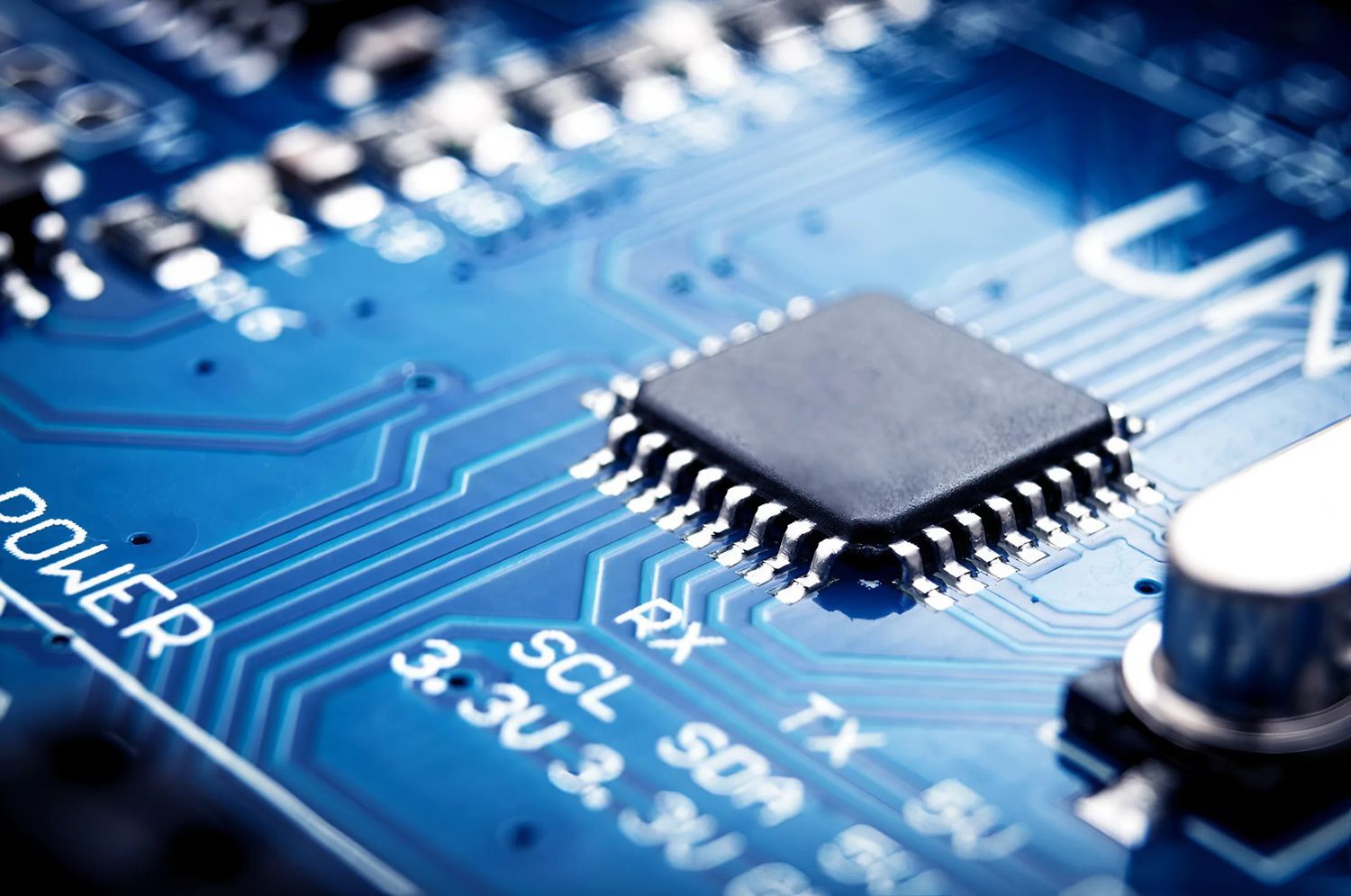
Notably, this coming October, EMIN will partner with Tektronix to host an in-depth seminar on semiconductors, focusing on testing and validation solutions for semiconductor development and manufacturing. We will share further details about the seminar very soon.