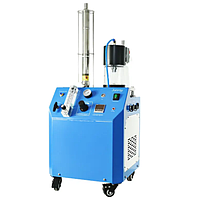
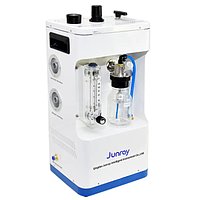
Aerosol Generator
Reliable aerosol generation is a key part of filter integrity testing, cleanroom validation, HVAC qualification, and selected laboratory procedures. When a test requires a controlled challenge aerosol with repeatable particle characteristics, the right equipment helps create stable conditions for meaningful downstream measurement with photometers or other monitoring instruments.
Aerosol generators are commonly used wherever HEPA or ULPA filters, containment systems, and air handling equipment must be checked for performance or leakage. This category brings together practical options for different airflow ranges, generator principles, and test environments, from portable field use to larger system testing.
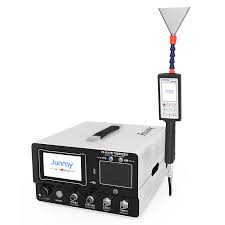
Where aerosol generators are used
In controlled environments, the goal is not simply to create particles, but to produce a known aerosol challenge that can be introduced into a duct, housing, or test section in a consistent way. This is especially important in cleanrooms, pharmaceutical production, electronics manufacturing, biosafety areas, and ventilation systems where filtration efficiency must be verified rather than assumed.
Typical use cases include HEPA/ULPA filter leak testing, airflow system qualification, particle counter support applications, and smoke or aerosol-based simulation tasks. In many workflows, the generator is paired with an aerosol photometer to compare upstream and downstream concentration. If your application also involves broader environmental monitoring, related solutions such as air quality sensors may help complete the measurement setup.
Common generator principles and output ranges
Not all test setups require the same aerosol output. Some systems need a compact source for lower flow applications, while others require enough output to challenge large HVAC or cleanroom air volumes. That is why this category includes models with very different operating ranges and aerosol generation methods.
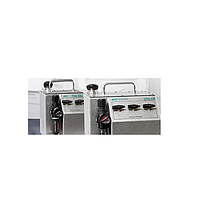
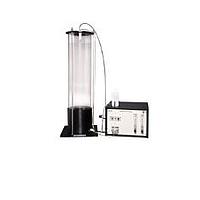
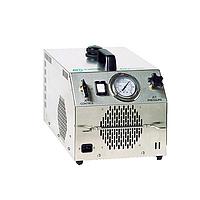
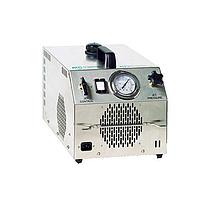
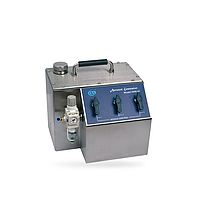
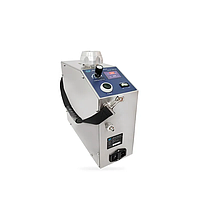
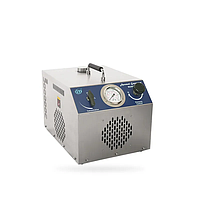
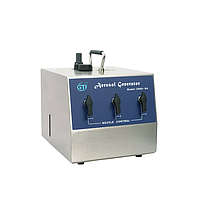
For example, the GTI 3990-01 Aerosol Generator is suited to moderate airflow applications, while the GTI 3990-03 and GTI 3990-02 extend into much higher airflow ranges for larger systems. Where very small particle generation is needed, the GTI 3990-04 Aerosol Generator supports a particle size range down to 0.005 µm. Other designs, such as the ATI 6D Laskin Nozzle Aerosol Generator, use a Laskin nozzle approach for established filter testing workflows.
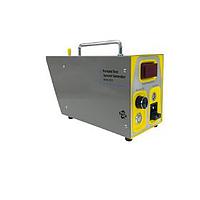
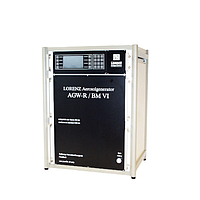
There are also application-specific options. The LORENZ AGW Aerosol Generator is positioned for automated test environments and references standards used in filter and smoke detector testing. For portable or laboratory-oriented aerosol generation, TSI models such as the TSI 3073 Portable Test Aerosol Generator and TSI 8108 Large-particle Aerosol generator provide additional flexibility depending on particle size and test method.
How to choose the right aerosol generator
The first selection factor is usually airflow range. The aerosol source must be able to provide enough concentration for the volume of air being tested. A unit intended for several hundred cfm may not be suitable for a large ventilation system operating at several thousand cfm or more.
Particle size is the next critical consideration. Some procedures focus on submicron aerosol behavior for filter integrity work, while others need larger particles for specific detector or test chamber applications. It is also important to consider the aerosol reagent used in your procedure, since supported media can vary by model.
Practical handling matters as well. Buyers often compare portability, onboard compressor design versus external gas supply, warm-up behavior, duty cycle, and how easily the unit integrates into the test sequence. If your team also monitors surrounding process conditions, air and gas transmitters can be relevant for broader facility control and verification.
Using aerosol generators with photometers and test instruments
A generator is only one part of the test chain. In many cleanroom and filtration applications, the aerosol source is used together with an instrument that measures concentration and helps identify leaks or performance deviations. Good test results depend on stable aerosol introduction, appropriate mixing, and consistent sampling technique.
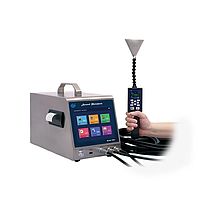
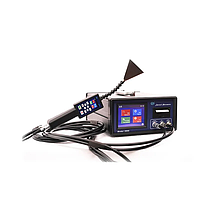
Within this category context, GTI also offers matching measurement tools such as the GTI 3990 Aerosol Photometer and the GTI 3991 Aerosol Photometer. These instruments are designed for aerosol concentration measurement in filter testing workflows, helping users verify penetration levels and locate leakage points more efficiently.
For many buyers, selecting generator and photometer together reduces compatibility questions during commissioning. This is particularly useful when test teams need a repeatable process for cleanroom maintenance, periodic validation, or acceptance testing after filter replacement.
Representative brands in this category
Several established manufacturers appear in this range, each with a different focus. GTI is prominent here with multiple generators that cover low to very high airflow applications, as well as aerosol photometers for integrated filter testing workflows. This makes GTI a practical option for users who want both aerosol generation and measurement tools within the same equipment family.
ATI remains a familiar name for HEPA leak testing and support services, including aerosol generator repair and calibration service options listed in this category context. TSI contributes portable and specialized laboratory-style aerosol generation solutions, while LORENZ addresses automated and standards-oriented testing scenarios. The right choice depends less on brand preference alone and more on test method, airflow demand, and operating environment.
Service, calibration, and long-term usability
For test equipment used in regulated or quality-critical environments, long-term performance is just as important as initial specifications. Aerosol generators are part of validation and compliance workflows, so maintenance history, calibration support, and service access can directly affect uptime and confidence in test results.
This is why service-related items such as ATI Aerosol Generator Repair Service and ATI Aerosol Generator Calibration Service can be relevant for organizations managing existing equipment fleets. A well-maintained generator supports more repeatable aerosol output and helps reduce uncertainty during routine verification work.
What buyers often compare before ordering
When narrowing down options, technical teams usually compare a small set of practical points rather than only reading headline specifications. A good shortlist often includes:
- Required airflow coverage for the system under test
- Needed particle size behavior for the target method
- Supported aerosol reagents and operating media
- Portability and power or gas supply requirements
- Compatibility with photometers and inspection workflow
- Availability of calibration or repair support
If the application extends beyond challenge aerosol generation and into wider air monitoring, you may also want to review nearby instrumentation categories within the same environmental measurement range. That helps ensure the selected setup supports both qualification work and ongoing facility checks.
Find a suitable aerosol generator for your test environment
Choosing an aerosol generator is ultimately about matching the equipment to the test objective: airflow volume, particle characteristics, operating method, and measurement workflow all need to align. A compact portable unit may be ideal for field verification, while larger or automated systems are better suited to production, laboratory, or facility-scale testing.
This category is intended to support those comparisons with options from GTI, ATI, TSI, and LORENZ across different use cases. If you already know your required airflow range or testing method, that is often the fastest way to narrow the selection and identify the most appropriate model for your application.
Get exclusive volume discounts, bulk pricing updates, and new product alerts delivered directly to your inbox.
By subscribing, you agree to our Terms of Service and Privacy Policy.
Direct access to our certified experts