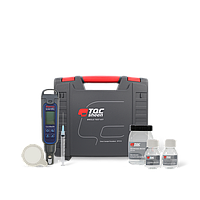
Salinity Meter Calibration Service
Reliable salinity data matters wherever dissolved salt concentration affects process control, product quality, environmental monitoring, or compliance. When a meter or refractometer starts to drift, even small deviations can lead to incorrect readings in water testing, food applications, aquaculture, and laboratory work. A professional Salinity Meter Calibration Service helps verify measurement accuracy and keeps instruments performing within expected tolerances.
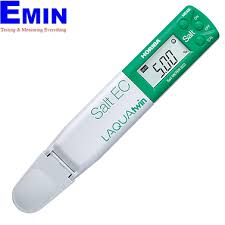
This category covers calibration support for salinity meters and salinity refractometers used across technical and industrial environments. It is relevant for handheld field instruments, benchtop devices, and application-specific tools that measure salinity directly or as part of a broader water quality workflow.
Why salinity meter calibration is important
Salinity measurement is often used as a decision point rather than a simple reference value. In many applications, operators rely on the instrument reading to adjust process conditions, confirm water suitability, or document product consistency. If the instrument is out of calibration, the impact can extend beyond one incorrect measurement to an entire batch, sampling round, or inspection report.
Calibration helps confirm that the instrument response remains aligned with known reference values. It also provides a practical way to detect sensor drift, handling damage, contamination, or performance changes caused by regular use. For organizations that maintain multiple environmental instruments, calibration planning can be coordinated with related services such as dew point meter calibration where periodic accuracy verification is equally important.
Instruments typically covered in this category
This service category is designed for a range of salinity measuring devices, including dedicated salinity meters, salt meters, and salinity refractometers. Depending on the instrument design, calibration may involve conductivity-based measurement, optical refractive index methods, or application-focused devices that combine salinity with temperature for food or water testing workflows.
Examples in this category include service support for instruments associated with manufacturers such as HORIBA, ATAGO, YSI, Eutech, EXTECH, HANNA, KERN, Bellingham, ELCOMETER, and SEKISUI. Representative listings include Horiba Salinity Meter Calibration Service, Atago Salinity Refractometer Calibration Service, YSI Salinity Meter Calibration Service, and Sekisui Food Salinity/ Temperature Meter Calibration Service. These examples illustrate the breadth of instruments commonly used in laboratory, field, and production settings.
Common application areas
Salinity measurement appears in a wide variety of technical contexts. Water quality teams may use it for environmental sampling, marine or brackish water monitoring, and process water checks. Food and beverage users may depend on salt concentration readings for recipe control, raw material verification, or product standardization. In coating or surface-related work, salt contamination measurement can also influence inspection and quality outcomes.
Because the operating environment can vary widely, the value of calibration is not limited to regulated laboratories. Field technicians, maintenance teams, and production operators all benefit from instruments that respond predictably and consistently. Where measurement programs include other environmental tools, users may also review services like water activity meter calibration for complementary quality control needs.
What to consider when selecting a calibration service
The right service approach depends on the instrument type, the measurement principle, and how the device is used in practice. A handheld salinity meter used in routine field checks may have different calibration considerations than a refractometer used for batch verification in food processing. Temperature influence, sample type, operating range, and required reporting format can all affect the most suitable calibration workflow.
It is also useful to match the service request to the actual instrument family. For example, conductivity-based devices and optical refractometers do not behave the same way, so calibration methods should reflect the instrument’s intended measurement principle. This is why category-specific listings such as Bellingham Salinity Refractometer Calibration Service, Eutech Salinity Meter Calibration Service, Hanna Salt Meter Calibration Service, and Kern Salinity Refractometer Calibration Service are helpful reference points when identifying the appropriate service path.
Supported brands and examples in this category
This category includes calibration service references for widely used brands in salinity measurement. Users looking for manufacturer-specific support may recognize names such as HORIBA, ATAGO, YSI, Eutech, EXTECH, HANNA, KERN, Bellingham, ELCOMETER, and SEKISUI. Mentioning these brands helps buyers quickly align the service category with the instruments already in use across their facility or testing workflow.
Typical examples listed here include:
- Horiba Salinity Meter Calibration Service
- Atago Salinity Refractometer Calibration Service
- YSI Salinity Meter Calibration Service
- Eutech Salinity Meter Calibration Service
- Extech Salinity Meter Calibration Service
- Hanna Salt Meter Calibration Service
- Kern Salinity Refractometer Calibration Service
- Bellingham Salinity Refractometer Calibration Service
- Elcometer Salt Meter Calibration Service
- Sekisui Food Salinity/ Temperature Meter Calibration Service
These references should be understood as examples of supported calibration demand within the category, rather than a complete technical comparison between instrument models.
How calibration supports measurement consistency
A calibrated instrument gives teams more confidence when comparing readings over time, between operators, or across different sites. This is especially important when salinity values are used for trend analysis, process adjustment, acceptance checks, or documented quality records. Consistency is often just as important as absolute accuracy in day-to-day operations.
Measurement traceability and routine verification also help reduce uncertainty when instruments are exposed to frequent transport, variable sample conditions, or demanding production environments. Organizations that manage broader calibration schedules may also group this service with adjacent environmental instrument categories such as alcohol meter calibration or light meter calibration service, depending on their testing scope.
When to arrange recalibration
Recalibration intervals are usually influenced by usage frequency, handling conditions, internal quality requirements, and the criticality of the measurement. Instruments used heavily in field work or in production environments may require more frequent attention than those used occasionally in controlled laboratory conditions. A sudden change in readings, suspected impact damage, or inconsistent results between instruments can also be a sign that calibration should be reviewed.
For many users, the most practical approach is to include salinity instruments in a planned maintenance and calibration cycle rather than waiting for visible problems. This helps reduce downtime, supports more stable measurement performance, and makes it easier to manage records across multiple devices.
Choose a service that fits your instrument and application
Salinity measurement devices are used in different ways, and calibration should reflect that reality. Whether you work with a handheld meter, a salt meter for routine checks, or a refractometer for application-specific testing, selecting the correct service category makes the process more efficient and relevant to your instrument.
This page brings together manufacturer-specific calibration service options for commonly used salinity instruments, making it easier to identify a suitable starting point for your equipment. If your workflow depends on dependable salt concentration readings, a structured calibration service is a practical step toward maintaining reliable measurement performance over time.
Get exclusive volume discounts, bulk pricing updates, and new product alerts delivered directly to your inbox.
By subscribing, you agree to our Terms of Service and Privacy Policy.
Direct access to our certified experts