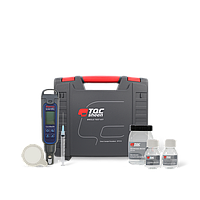
Salinity Meter Inspection Service
Reliable salinity readings matter in far more places than many users expect, from food processing and laboratory work to water quality control and field measurement. When a meter or refractometer begins to drift, the impact is not limited to a single number on the display; it can affect process checks, product consistency, and confidence in recorded data. That is why a dedicated Salinity Meter Inspection Service is important for organizations that depend on repeatable measurement results.
This category brings together inspection services for salinity meters and salinity refractometers used across industrial, environmental, and quality-related applications. It is suitable for users who need to verify instrument condition, confirm measurement reliability, and maintain equipment readiness as part of a broader instrument control program.
Why salinity instrument inspection is important
Salinity measurement is often used as a practical indicator in workflows where concentration, water condition, or process quality must be checked quickly. Over time, however, sensors, optical components, electronics, and sample-contact surfaces can be affected by contamination, wear, handling conditions, or storage history. Even when an instrument still powers on and appears usable, its performance may no longer be fully reliable.
A structured inspection service helps users assess whether the device is functioning as expected and whether it remains suitable for routine work. This is especially relevant for companies that need traceable maintenance practices for internal quality systems, incoming equipment checks, or regular service intervals alongside other environmental instruments such as water activity meter inspection service.
Scope of instruments covered in this category
This category includes inspection services for both electronic salinity meters and salinity refractometers. In practical terms, that means support for handheld, portable, bench-style, or application-specific devices used to assess salt concentration in liquids, processed food environments, or water-related testing tasks.
Examples in this category include service options for instruments associated with HORIBA, YSI, Eutech, EXTECH, HANNA, ATAGO, Bellingham, KERN, ELCOMETER, and SEKISUI. Representative services listed here include Horiba Salinity Meter Inspection Service, YSI Salt Meter Inspection Service, Eutech Salinity Meter Inspection Service, Hanna Salt Meter Inspection Service, Atago Salinity Refractometer Inspection Service, and Bellingham Salinity Refractometer Inspection Service.
Typical issues identified during inspection
The exact inspection workflow can vary depending on whether the device is an electronic meter or an optical refractometer, but the objective remains the same: to evaluate the instrument’s operating condition and measurement integrity. Common points of concern include unstable readings, slow response, display or keypad issues, contamination in the sample area, and signs of physical wear that may affect repeatability.
For refractometer-based devices, optical clarity and scale readability are often critical to dependable use. For digital salinity meters, electrode condition, temperature-related behavior, and general response consistency may be more relevant. In both cases, inspection helps users determine whether the instrument remains appropriate for production checks, laboratory verification, field use, or incoming quality control.
Suitable industries and application contexts
Salinity measurement is used in a wide range of B2B environments. Food manufacturers may rely on it for recipe consistency, brine control, or process verification. Environmental and water-related users may need it for routine monitoring, comparison testing, or instrument fleet management. Laboratories and service teams may also require periodic checks to keep devices aligned with internal procedures.
Inspection is particularly valuable when instruments are shared across departments, used in demanding field conditions, or handled frequently by multiple operators. In these cases, routine service helps reduce uncertainty and supports more stable day-to-day operation. Organizations managing several portable instruments may also benefit from coordinating inspection schedules with related services such as ion measurement electrode inspection or dew point meter inspection service.
How to choose the right inspection service
When selecting a service, the first step is to identify the instrument type correctly. A digital salt meter, a food salinity and temperature meter, and a salinity refractometer may all serve related purposes, but their construction and inspection priorities are not the same. Matching the service to the actual device helps avoid delays and improves the relevance of the evaluation.
It is also helpful to prepare basic information before placing a request, such as manufacturer, model name, visible symptoms, and the intended application. For example, users may be looking for service support for the Sekisui Food Salinity/ Temperature Meter Inspection Service, Elcometer Salt Meter Inspection Service, or Kern Salinity Refractometer Inspection Service. Clear instrument identification makes the inspection process smoother and helps determine the most suitable handling path.
Brand coverage and practical service relevance
This category is designed around instruments commonly used in technical and industrial settings, including brands such as ATAGO, Bellingham, HORIBA, YSI, Eutech, EXTECH, HANNA, KERN, ELCOMETER, and SEKISUI. The presence of these manufacturers is useful for buyers who are searching by installed equipment base rather than by generic service name.
In practice, users often search for support in relation to the exact equipment they already own. That is why this page includes recognizable service entries such as Extech Salinity Meter Inspection Service and Atago Salinity Refractometer Inspection Service. Rather than treating all devices as interchangeable, the category helps users locate a more relevant service path based on brand and instrument format.
When inspection should be considered
There are several situations where an inspection check is especially worthwhile. These include inconsistent measurement results between instruments, suspected drift after long storage, visible damage, unusual response behavior, or a need to verify the condition of devices before internal audits or renewed deployment.
Inspection can also be a sensible step after heavy usage periods, relocation, or prolonged operation in harsh conditions. For companies that maintain formal equipment control, periodic review of salinity instruments supports better maintenance planning and reduces the risk of relying on questionable readings during routine work.
Support better measurement confidence across your instrument fleet
A well-chosen inspection service helps extend the useful life of measuring equipment while improving confidence in daily operation. For businesses that rely on salinity data for product quality, environmental checks, or process control, regular instrument assessment is a practical part of maintaining consistency.
This Salinity Meter Inspection Service category is intended to make that selection easier by bringing together relevant service options for commonly used brands and device types. If your team also manages other environmental measuring instruments, it can be useful to review related service categories and build a more complete maintenance routine around the equipment you use most.
Get exclusive volume discounts, bulk pricing updates, and new product alerts delivered directly to your inbox.
By subscribing, you agree to our Terms of Service and Privacy Policy.
Direct access to our certified experts