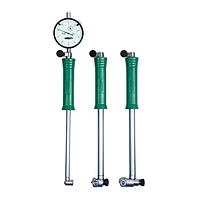
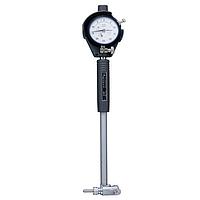
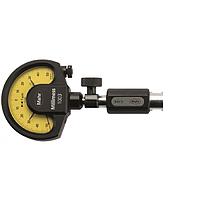
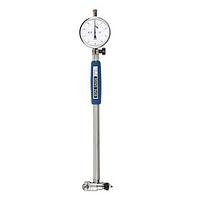
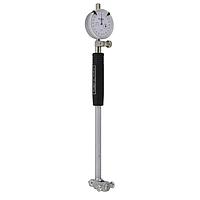
Bore Gage Inspection Service
Accurate internal diameter measurement is critical in machining, toolmaking, automotive components, and precision manufacturing. When a bore gage is used to verify hole size, roundness, taper, or fit conditions, its condition directly affects inspection reliability. A professional Bore Gage Inspection Service helps maintain confidence in measurement results and supports stable quality control across production and maintenance workflows.

Why bore gage inspection matters
Bore gages are commonly used where internal dimensions must be checked with repeatability and consistency. Even small deviations in contact condition, indicator response, alignment, or wear can influence the reading and create uncertainty during incoming inspection, in-process checks, or final quality verification.
Regular inspection is especially important for facilities that rely on close-tolerance dimensional control. It helps determine whether the instrument remains suitable for use, supports traceable quality systems, and reduces the risk of accepting nonconforming parts or rejecting good parts due to measurement error.
What is typically evaluated during the service
A bore gage inspection service is generally focused on verifying the measurement condition of the instrument rather than simply checking whether it still appears usable. Depending on the instrument design, inspection may involve assessment of the measuring mechanism, contact points, repeatability, smooth operation, and overall response during comparison-based measurement.
Because bore gages are often used with reference standards, inspection also helps confirm whether the tool performs consistently within its intended measurement setup. This is particularly valuable in production environments where internal diameter checks are part of routine dimensional verification alongside micrometer inspection services and other mechanical measuring instrument controls.
Suitable for major bore gage brands used in industry
This category includes inspection support for widely used brands in precision metrology, including MITUTOYO, Mahr, MOORE & WRIGHT, and TECLOCK. These manufacturers are commonly specified in workshops, quality rooms, and industrial maintenance departments where dependable dimensional measurement is required.
Examples available in this category include the Mitutoyo Bore Gauge Inspection Service, Mahr Bore Gauge Inspection Service, Moore & Wright Bore Gauge Inspection Service, and TECLOCK Bore Gauge Inspection Service. These listings help buyers identify a service path that matches the instrument brand already deployed in their facility.
When to arrange a bore gage inspection
Inspection intervals usually depend on usage frequency, required tolerance level, handling conditions, and internal quality procedures. Instruments used daily on the shop floor or in environments with frequent setup changes may need more frequent verification than tools used occasionally in a controlled inspection room.
Typical situations that justify inspection include unstable readings, suspected wear after extended use, impact or accidental dropping, audits that require documented instrument control, or preventive quality planning before critical production runs. If your team also manages other handheld dimensional tools, it may be practical to review related services such as callipers inspection and depth gauge inspection as part of the same maintenance cycle.
How to choose the right service listing
When selecting a service, the first step is to match the listing with the instrument brand. This helps streamline handling and ensures the service request is aligned with the bore gage family in use. If your facility standardizes on one manufacturer, choosing the corresponding service entry can simplify internal documentation and purchasing workflows.
It is also useful to review the role of the instrument in your process. A bore gage used for routine acceptance checks may require a different service urgency than one used for critical process capability studies or final inspection of precision bores. Clear identification of the manufacturer, instrument type, and usage context supports a smoother inspection process.
Bore gage inspection in a broader measurement control system
A bore gage rarely works in isolation. In many plants, internal diameter verification is part of a wider inspection chain that includes outside dimension checks, depth measurements, surface-related verification, and hardness evaluation. Maintaining each instrument in suitable condition improves consistency across the whole measurement workflow and strengthens confidence in inspection records.
For that reason, bore gage inspection is often considered one element of a broader instrument control strategy. Companies that manage multiple mechanical measuring devices often benefit from coordinating inspection schedules, service records, and periodic review of measurement-critical tools rather than treating each instrument as a separate task.
Who benefits from this service category
This category is relevant for machine shops, precision engineering firms, automotive suppliers, mold and die manufacturers, maintenance departments, laboratories, and quality assurance teams. Any operation that depends on reliable internal diameter measurement can benefit from periodic inspection of bore gages to support process control and product conformity.
It is also useful for procurement teams and technical buyers who need a clear path to service for established metrology brands. With options covering recognized manufacturers and common industrial use cases, the category makes it easier to locate an appropriate inspection solution without unnecessary complexity.
Support more reliable measurement decisions
Choosing the right inspection service for a bore gage is ultimately about reducing uncertainty in day-to-day measurement work. Whether the instrument is used for production checks, maintenance verification, or final dimensional control, periodic inspection helps keep results dependable and easier to trust.
If your organization uses branded bore gages from MITUTOYO, Mahr, MOORE & WRIGHT, or TECLOCK, this category provides a practical starting point for maintaining those tools in serviceable condition. A well-managed inspection routine supports better measurement discipline, more consistent quality outcomes, and smoother operation across the wider metrology system.
Get exclusive volume discounts, bulk pricing updates, and new product alerts delivered directly to your inbox.
By subscribing, you agree to our Terms of Service and Privacy Policy.
Direct access to our certified experts