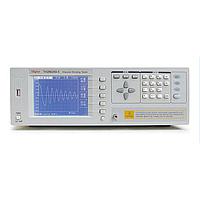
Electrical safety Calibrator Repair Service
When an electrical safety test workflow depends on stable, traceable calibration, even a small fault in the calibrator can affect verification quality, maintenance schedules, and compliance confidence. A dedicated Electrical safety Calibrator Repair Service helps restore the performance of instruments used to support hipot and related electrical safety testing, reducing uncertainty in both service labs and production environments.
This category is intended for organizations that need repair support for electrical safety calibrators used in inspection, verification, and maintenance programs. Whether the issue involves measurement drift, unstable output, failed self-checks, display problems, or general functional degradation, the goal is to bring the instrument back to reliable operating condition with a process suited to professional technical equipment.
Why repair support matters for electrical safety calibrators
Electrical safety calibrators play an important role in confirming the performance of instruments used for high-voltage and insulation-related testing. If the calibrator itself is not operating correctly, the integrity of downstream checks can be compromised, especially in environments where repeatability and documentation matter.
A structured repair service is useful when equipment shows signs such as inconsistent readings, startup errors, damaged connectors, keypad or interface failure, or suspected internal faults after long-term use. In many cases, repair is not only about replacing defective parts but also about restoring measurement stability, functional reliability, and confidence in day-to-day verification work.
Typical situations that lead to service requests
In practical use, electrical safety calibrators may be exposed to frequent transport, repeated connection cycles, and demanding service intervals. These conditions can gradually affect output accuracy, switching behavior, user controls, or communication interfaces, even before a complete failure occurs.
Users often seek repair service after noticing abnormal behavior during routine checks, preventive maintenance, or failed comparison against reference equipment. This is especially relevant in facilities that support multiple calibration disciplines, where electrical safety devices may be serviced alongside electrical calibrator repair services for broader test and measurement workflows.
Supported brands and example service scope
This category can cover repair needs for well-known instruments from manufacturers such as KEYSIGHT and KIKUSUI, both of which are widely recognized in electronic test and safety measurement environments. Brand-specific experience can be important when diagnosing model behavior, interface issues, or faults related to instrument architecture.
Representative examples in this category include the KEYSIGHT Hipot Tester Calibrator Repair Service and the KIKUSUI Hipot Tester Calibrator Repair Service. These examples illustrate the type of equipment supported here: instruments associated with the verification and maintenance of hipot tester performance rather than general-purpose calibration devices.
What a repair process typically addresses
Although the exact work depends on instrument condition, repair support commonly focuses on identifying defective assemblies, restoring normal functionality, and checking whether core operating parameters behave as expected after service. For electrical safety calibrators, this may include attention to output behavior, control responsiveness, indicator status, protective elements, connectors, and internal electronic sections.
In many technical environments, repair is closely tied to broader instrument lifecycle management. After fault isolation and corrective action, users may also need follow-up verification or coordination with related service categories, especially when the calibrator is part of a larger quality system built around multiple reference devices.
How to choose the right repair service
Selection should be based on the actual role of the instrument in your workflow, the symptoms observed, and the level of documentation your organization requires. For example, a calibrator used to support regulated testing activities may need a more structured evaluation than a unit used only for occasional internal checks.
It is also useful to prepare basic service information before sending the instrument in: model identification, visible fault symptoms, startup behavior, recent handling history, and any prior service notes. Clear input shortens diagnosis time and helps align repair actions with the instrument’s operational use, whether in a lab, service center, or production support setting.
Related repair needs across calibration and test equipment
Electrical safety calibrators are often maintained as part of a wider service ecosystem. Facilities managing mixed instrument fleets may also require support for process signal calibrator repair when working with instrumentation loops, or for pressure comparator repair services in pressure calibration programs.
Looking at repair requirements in this broader context can improve planning, especially when several instruments are due for service within the same maintenance cycle. It also helps procurement and engineering teams keep calibration support aligned across electrical, process, and physical measurement disciplines.
Who this service is relevant for
This category is relevant for calibration laboratories, electronics manufacturers, testing service providers, maintenance departments, and quality teams that depend on electrical safety verification equipment. It is particularly useful where instrument downtime has a direct effect on compliance tasks, product release schedules, or preventive maintenance planning.
Because electrical safety calibrators support critical test confidence, repair decisions should prioritize technical suitability and serviceability rather than treating the instrument as a generic electronic device. A repair path tailored to this equipment type is generally the most effective way to restore dependable operation.
Final considerations before arranging service
Before submitting an instrument, it is helpful to confirm the exact fault condition, accessories involved in the issue, and whether the unit is failing consistently or intermittently. This information improves communication and supports faster troubleshooting, especially for instruments used to verify high-voltage safety testers.
For organizations that rely on repeatable electrical safety checks, a focused repair service for electrical safety calibrators is a practical way to maintain equipment readiness and protect confidence in test results. If your instrument is showing abnormal behavior, performance drift, or operational faults, this category provides a clear starting point for professional service support.
Get exclusive volume discounts, bulk pricing updates, and new product alerts delivered directly to your inbox.
By subscribing, you agree to our Terms of Service and Privacy Policy.
Direct access to our certified experts