
Pressure Deadweight Testers Repair Service
Accurate pressure generation and reference performance are essential in calibration labs, maintenance departments, and quality systems that rely on traceable measurements. When a deadweight tester starts showing unstable readings, mechanical drag, leakage, or poor repeatability, repair work needs to address both the pressure-generating mechanism and the metrological integrity of the instrument.
Pressure Deadweight Testers Repair Service is intended for organizations that need to restore the performance of primary or transfer pressure standards used in test and calibration workflows. A well-executed repair process helps reduce downtime, supports dependable pressure comparison work, and extends the useful life of equipment that often remains central to a calibration program for many years.
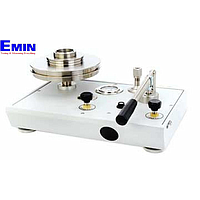
Why deadweight tester repair matters
A deadweight tester is valued for its role as a high-accuracy pressure reference, but its performance depends on the condition of multiple mechanical elements working together. Piston-cylinder assemblies, mass loading components, seals, valves, reservoirs, and pressure connections all influence how smoothly pressure is generated and how reliably the system reaches equilibrium.
Over time, contamination, wear, improper storage, fluid issues, or accidental handling damage can affect operation. In practical terms, that may appear as difficulty building pressure, sticking pistons, drift in generated values, or leakage under load. Repair service helps identify the root cause rather than only treating the visible symptom, which is especially important for instruments used in regulated or traceability-sensitive environments.
Common issues addressed during service
Repair requirements can vary depending on the design and operating medium, but many service cases involve a combination of mechanical restoration, cleaning, seal replacement, and functional verification. Deadweight testers are precision instruments, so even minor internal contamination or friction can influence repeatability and operator confidence.
Typical service concerns may include pressure leakage, unstable piston movement, difficulty achieving target pressure, damaged fittings, worn seals, contaminated working fluid paths, or inconsistent loading behavior. If the unit is used alongside other pressure standards, it can also be useful to review related support options such as pressure comparator repair service when troubleshooting a broader pressure calibration setup.
What a repair workflow usually involves
Effective repair work on a deadweight tester typically begins with an initial inspection and functional assessment. This step helps determine whether the problem is primarily mechanical, related to contamination, caused by damaged pressure connections, or linked to normal wear from long-term use. It also helps separate repair needs from calibration needs, since not every performance issue is solved by recalibration alone.
After diagnosis, service may include disassembly, cleaning of critical parts, replacement of worn components, leak correction, reconditioning of moving assemblies, and reassembly with careful attention to alignment and operating condition. The final stage generally focuses on functional verification so the instrument can be returned to service with more stable and dependable performance.
When to consider repair instead of continued use
Many pressure standards remain in operation well beyond their original purchase date, which makes timely repair an important part of lifecycle management. If the unit requires excessive operator effort, shows inconsistent behavior between runs, or no longer inspires confidence during calibration work, delaying service can increase both measurement risk and process disruption.
Repair should also be considered after transport damage, long idle storage, fluid contamination events, or suspected internal wear. In some facilities, deadweight testers are only one part of a larger calibration bench, so it may be practical to review adjacent services such as process signal calibrator repair or electrical calibrator repair if multiple references in the same workflow require attention.
Key factors in evaluating a repair service
For this type of equipment, repair quality is not only about replacing faulty parts. The more important question is whether the service approach respects the instrument’s role as a precision standard. That means attention to cleanliness, handling discipline, sealing integrity, smooth mechanical operation, and post-repair verification that is appropriate for the instrument’s intended use.
It is also useful to consider whether the service provider understands the broader calibration environment in which the deadweight tester operates. A repair decision is easier to justify when it supports better uptime, more predictable maintenance planning, and reduced uncertainty in routine pressure work. Where temperature-related calibration equipment is used in the same lab, some organizations also coordinate maintenance with dry block and bath calibrator repair to streamline service scheduling.
How repair supports calibration and quality systems
In many industrial and laboratory settings, deadweight testers support calibration chains for gauges, transmitters, controllers, switches, and other pressure instruments. If the reference itself becomes unreliable, the effect can spread across maintenance records, verification intervals, and audit readiness. Repair therefore plays a direct role in protecting the consistency of downstream measurement tasks.
Serviceability is especially important when organizations want to preserve existing assets rather than replace specialized equipment prematurely. Restoring a pressure standard to proper operating condition can be a practical way to maintain workflow continuity while supporting internal quality procedures and routine instrument management.
Choosing the right path for your equipment
Not every deadweight tester issue looks serious at first, but small mechanical or sealing problems can develop into larger performance concerns if ignored. A structured repair service helps determine whether the unit can be restored efficiently, what components need attention, and how to return it to dependable use within a calibration program.
If your pressure standard is showing signs of wear, leakage, instability, or difficult operation, a focused repair assessment is often the most practical next step. For organizations that depend on reliable reference equipment, Pressure Deadweight Testers Repair Service provides a targeted way to improve usability, support measurement confidence, and keep pressure calibration work moving with less interruption.
Get exclusive volume discounts, bulk pricing updates, and new product alerts delivered directly to your inbox.
By subscribing, you agree to our Terms of Service and Privacy Policy.
Direct access to our certified experts