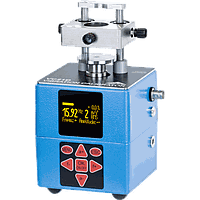
Vibration Calibrator Repair Service
Reliable vibration measurement depends on more than the sensor alone. When a calibrator begins to drift, becomes unstable, or no longer provides repeatable output, the entire verification chain can be affected. That is why Vibration Calibrator Repair Service is important for maintenance teams, calibration labs, and condition monitoring professionals who need confidence in their test equipment.
This category focuses on repair support for vibration calibrators used to check accelerometers, vibration meters, and related instruments. Whether the issue is output instability, mechanical wear, power-related faults, or general performance degradation, proper service helps restore the instrument to practical working condition and supports more dependable vibration measurement workflows.
Why vibration calibrator repair matters
A vibration calibrator is used as a reference tool in inspection, predictive maintenance, and laboratory environments. If the unit is not operating correctly, users may unknowingly validate field instruments against an unreliable source. In industrial settings, that can lead to questionable vibration readings, inconsistent trend data, and unnecessary troubleshooting time.
Repair service is often required when a calibrator shows signs such as abnormal vibration output, unstable operation, display or control problems, charging or power issues, or physical damage from transport and daily use. Addressing these problems early is usually more practical than continuing to work with uncertain equipment performance.
Common service scope for these instruments
Repair work for vibration calibrators typically begins with an assessment of the unit’s condition, followed by fault isolation and corrective action. Depending on the condition of the instrument, this may involve checking the drive mechanism, electronics, connectors, controls, and overall functional behavior. The goal is not simply to power the unit back on, but to restore stable and usable performance for routine calibration tasks.
Because vibration calibrators are part of a measurement assurance process, service quality matters. A well-handled repair can help reduce equipment downtime, extend usable instrument life, and support more consistent verification of accelerometers and handheld vibration devices across maintenance programs.
Supported brands and representative repair options
This category includes repair options for instruments from established manufacturers used in vibration measurement and calibration work. Examples include PCE, ACO, MMF, and Agate, with service entries such as PCE Vibration Calibrator Repair Service, ACO Vibration Calibrator Repair Service, MMF Vibration Calibrator Repair Service, and Agate Vibration Calibrator Repair Service.
These listings are useful when your team needs brand-specific support context while still searching within a broader repair category. If you already know the manufacturer of your unit, reviewing the relevant repair service page can help you identify the most suitable starting point for service coordination.
When to consider repair instead of replacement
Replacement is not always the first or most economical step, especially when the instrument is still operational but no longer performing consistently. A repair evaluation can make sense when the calibrator has intermittent faults, mechanical shock damage, aging internal components, or signs of drift that affect daily use. For organizations managing multiple field instruments, keeping an existing calibrator in service can help preserve workflow continuity.
This approach is especially relevant in B2B environments where equipment availability, service lead time, and budget planning all matter. Sending a unit for repair may be a practical decision when the instrument remains an important part of a maintenance, quality, or laboratory process.
How to choose the right repair service path
When selecting a repair service, it helps to prepare a clear description of the problem. Include the manufacturer, visible symptoms, operating condition, and any recent events such as impact, battery issues, or storage problems. This kind of information can shorten diagnosis time and improve the accuracy of service planning.
If your operation uses multiple types of calibration equipment, you may also need related support beyond vibration instruments. In that case, it can be useful to review services such as electrical calibrator repair or process signal calibrator repair for broader maintenance planning across your test equipment inventory.
Typical applications behind demand for vibration calibrator service
Demand for this service usually comes from plants and technical teams that depend on condition monitoring and vibration verification in daily work. This includes rotating equipment maintenance, inspection of motors and pumps, field validation of handheld vibration meters, and support for laboratories that handle sensor checking and measurement reliability tasks.
In these environments, a faulty calibrator can affect more than one instrument or technician. Repair service helps protect the integrity of the measurement chain, particularly where calibration tools are shared across departments, sites, or service teams.
What users should prepare before sending a unit for repair
Before arranging service, it is helpful to record the model identification, observed fault, power status, and any accessories that may be related to the issue. If the unit fails only under certain conditions, that detail can also be valuable during troubleshooting. The more precise the fault description, the easier it is to determine the likely repair path.
It is also good practice to remove unrelated accessories unless they are directly connected to the problem being reported. For service teams, accurate information supports a more efficient diagnosis process and reduces unnecessary back-and-forth during intake.
Choosing a practical service option for long-term equipment use
Vibration calibrators play a small but critical role in maintaining confidence in vibration measurements. When the instrument is no longer behaving as expected, a focused repair service can be the right step to restore usability, reduce uncertainty, and support ongoing maintenance or laboratory work.
If your calibrator is showing unstable output, functional errors, or signs of wear, this category provides a clear route to suitable repair options for major brands including PCE, ACO, MMF, and Agate. A structured repair decision can help extend equipment life and keep your calibration workflow dependable.
Get exclusive volume discounts, bulk pricing updates, and new product alerts delivered directly to your inbox.
By subscribing, you agree to our Terms of Service and Privacy Policy.
Direct access to our certified experts