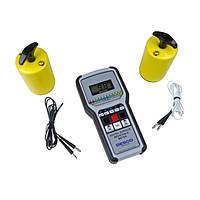
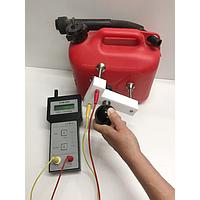
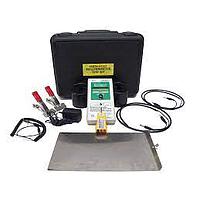
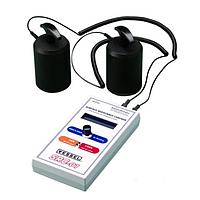
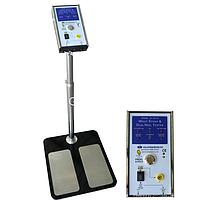
Surface resistance tester Repair Service
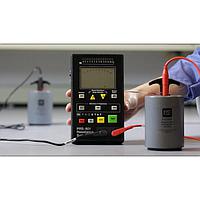
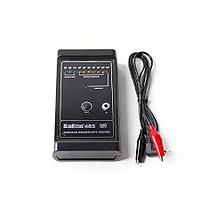
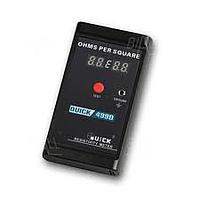
Accurate ESD control depends on reliable measurement. When a surface resistance tester starts showing unstable readings, slow response, failed self-checks, or questionable repeatability, repair becomes essential not only for the instrument itself but also for the quality of your electrostatic control program. This page covers Surface resistance tester Repair Service for organizations that need dependable support for testing equipment used in electronics production, clean environments, laboratories, and ESD-protected areas.

Why repair matters for surface resistance testing equipment
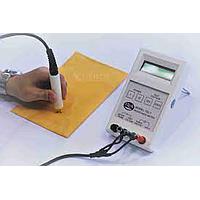
A surface resistance tester is used to verify whether mats, work surfaces, packaging, flooring, garments, and other ESD-related materials remain within the expected resistance range. If the instrument itself is drifting, intermittently failing, or physically damaged, the measurements used for compliance and process control can no longer be trusted. In practical terms, that can affect troubleshooting, incoming inspection, maintenance routines, and audit readiness.
Repair service helps restore the tester to stable operation so that measurement results are usable again in day-to-day ESD verification work. For many facilities, repairing an existing instrument is also a practical way to extend equipment life, reduce disruption, and maintain continuity with established testing procedures.
Typical issues seen in surface resistance tester repair
Problems can appear in several ways. Some units power on but produce inconsistent values, while others may fail to complete normal measurement sequences, show display faults, or have damaged connectors, switches, or leads. In ESD environments, even a minor issue with the tester, its measurement path, or user interface can make routine checks slower and less reliable.
Another common concern is measurement confidence. If operators see unexpected resistance results across known materials, the root cause may come from the instrument, accessories, or internal circuitry rather than the surface under test. In those cases, repair service focuses on identifying the fault and returning the tester to dependable working condition for ongoing verification tasks.
Supported brands and service examples
This category is intended for repair needs across commonly used electrostatic testing brands, with priority support context around manufacturers such as Desco, SIMCO, TREK, Vessel, KLEINWACHTER, and Static Solutions. Different brands may vary in interface, accessories, and measurement workflow, but the service objective remains the same: restore reliable operation for resistance testing in ESD programs.
Examples of service entries in this ecosystem include TREK Resistivity Meter Repair Service, SIMCO Resistivity Meter Repair Service, Vessel Resistivity Meter Repair Service, Static Solutions Resistivity Meter Repair Service, KLEINWACHTER Resistivity Meter Repair Service, and Desco Resistivity Meter Repair Service. These references help illustrate the kinds of instruments and manufacturers commonly associated with electrostatic measurement and repair support.
Where repaired testers are used
Repaired surface resistance testers are typically returned to environments where ESD verification is part of standard operating procedure. This includes electronics assembly lines, semiconductor-related processes, PCB production, maintenance workshops, quality labs, and other controlled areas where materials must be checked for dissipative or conductive behavior.
They are also relevant in programs that rely on periodic validation of benches, floor systems, table mats, containers, and personal grounding-related materials. When testing schedules are routine and documented, dependable instrumentation becomes especially important because repeated measurement errors can affect trend analysis and internal compliance records.
How to choose the right repair path
For a smoother service process, it helps to prepare basic information before sending equipment in. The most useful details usually include brand, service name or model reference, observed symptoms, power condition, accessory status, and whether the issue is constant or intermittent. If the tester has been exposed to impact, cable stress, battery leakage, or environmental contamination, that information can also help narrow down the likely fault.
It is also useful to distinguish between problems originating from the tester and those related to the broader measurement setup. In some cases, a facility may want to compare support options for closely related instruments, such as electrostatic meter repair services or ESD monitoring equipment repair, especially when multiple electrostatic measurement tools are maintained under one program.
Surface resistance testers within the wider electrostatic equipment ecosystem
Surface resistance measurement is only one part of a broader electrostatic control strategy. Facilities often use several instrument types together, including field meters, resistance-related testers, monitoring systems, and ionization equipment. Because of that, repair planning is often more efficient when viewed as part of a complete maintenance approach rather than as a single isolated event.
If your operation also depends on ion control hardware, it may be worth reviewing related support such as electrostatic eliminator repair service. Looking at adjacent service categories can help maintenance teams organize downtime, shipping, and instrument availability more effectively across the ESD control workflow.
What to expect from a practical repair service approach
A good repair workflow is centered on restoring function, improving usability, and reducing uncertainty in future testing. That generally means addressing the reported fault, checking the instrument’s operating behavior, and confirming that the tester is suitable to return to routine measurement tasks. For users in production and QA settings, the real value of repair is not simply getting the unit to power on again, but returning it to a state where it can support consistent measurement practice.
For organizations using equipment from TREK and other established electrostatic brands, service continuity can be especially important when procedures, operator familiarity, and documentation are already built around existing instruments. Repair support helps preserve that continuity while avoiding unnecessary replacement when the original tester can still be restored.
Final considerations before sending in your tester
Before arranging service, it is a good idea to record the instrument condition, package the unit carefully, and include a clear description of the issue seen during use. If the problem appears only under certain measurement conditions, noting those details can make evaluation more efficient. Clear symptom reporting often leads to faster diagnosis and a more targeted repair process.
When dependable resistance measurement is part of your ESD control routine, timely repair is a practical way to protect both equipment uptime and data quality. This category is intended to support that need with repair options for surface resistance testers used across technical and industrial environments.
Get exclusive volume discounts, bulk pricing updates, and new product alerts delivered directly to your inbox.
By subscribing, you agree to our Terms of Service and Privacy Policy.
Direct access to our certified experts