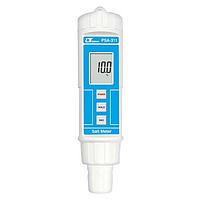
Salinity Meter Repair Service
Reliable salinity measurements are essential in water treatment, aquaculture, food processing, laboratory work, and coating inspection. When a meter or refractometer begins to drift, respond slowly, or show unstable readings, repair is often the most practical way to restore dependable performance and reduce unnecessary replacement costs. This page covers Salinity Meter Repair Service for commonly used instruments in professional and industrial environments.
Service needs can vary depending on the measuring principle, operating conditions, and the age of the instrument. Some users rely on portable digital salinity meters for field checks, while others use refractometers or salt meters in production and quality control workflows. In both cases, proper diagnosis helps determine whether the issue is related to the sensor, optics, electronics, display, connectors, or general wear from routine use.
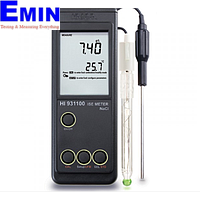
Common issues seen in salinity measuring instruments
Salinity instruments are exposed to moisture, sample residue, frequent handling, and sometimes harsh field conditions. Over time, that can lead to inaccurate readings, poor repeatability, unstable displays, button failure, damaged probes, or contamination affecting measurement quality.
For digital instruments, service often starts with checking the sensing path, electrical condition, and overall response behavior. For optical devices such as refractometers, repair work may focus on prism condition, optical alignment, mechanical damage, and readability of the scale or display. In either case, restoring measurement stability is more important than simply making the unit power on again.
Support for different salinity instrument types
This category is relevant for a range of salinity-related instruments used across technical and industrial applications. That includes handheld salinity meters, salt meters, food salinity and temperature meters, and salinity refractometers used for quick concentration checks.
Examples in this category include repair support for instruments such as the HORIBA Salinity Meter Repair Service, Sekisui Food Salinity/ Temperature Meter Repair Service, YSI Salinity Meter Repair Service, and ATAGO salinity refractometer repair. Optical and electronic devices differ in construction, so the inspection and repair approach should match the instrument type rather than treat all salinity equipment the same way.
Brands and service examples covered in this category
Users often search by manufacturer when looking for repair support, especially when the instrument is already integrated into an established workflow. This category includes representative service entries for brands such as ATAGO, YSI, Eutech, EXTECH, HANNA, KERN, Bellingham, ELCOMETER, and HORIBA.
Typical examples include Bellingham Salinity Refractometer Repair Service, Eutech Salinity Meter Repair Service, Hanna Salinity Meter Repair Service, Extech Salinity Meter Repair Service, Elcometer Salt Meter Repair Service, and Kern Salinity Refractometer Repair Service. These examples help illustrate the scope of support, but the core value of the category lies in handling instrument faults methodically and restoring usable operating condition where repair is viable.
What a salinity meter repair process usually involves
A practical repair workflow usually begins with symptom review and condition assessment. That may include checking whether the unit powers correctly, evaluating display behavior, confirming response to known samples or calibration references, and identifying visible issues such as corrosion, cracked housings, or damaged measurement surfaces.
Once the fault is isolated, the service can focus on the affected area, whether that is the electronic circuit, sensor section, optical assembly, connector, keypad, or internal mechanical components. After repair, the instrument should be checked again for basic operation and reading consistency so it can return to service with clearer confidence in its performance.
When repair makes sense for B2B users
For many businesses, replacing every faulty instrument is not always efficient. Repair can be a suitable option when the device is part of a routine inspection program, when operators are already familiar with the instrument, or when the unit is used alongside other environmental measurement tools in a broader maintenance workflow.
This is especially relevant where salinity checks support ongoing process decisions, such as water quality control, food salt verification, or field testing. If your operation also depends on related instruments, you may also want to review services such as water activity meter repair or alcohol meter repair for adjacent measurement needs.
Choosing the right service path
When requesting service, it helps to provide the instrument brand, model name, observed fault, and current condition. Useful details include whether the problem is constant or intermittent, whether the instrument has suffered liquid ingress or impact, and whether the issue appears during calibration, sampling, or startup.
For example, a salinity refractometer and a food salinity meter can fail in very different ways, even though both relate to salt measurement. Sharing accurate fault information improves troubleshooting efficiency and helps align expectations on repair scope, turnaround, and the likelihood of restoring full functionality.
Why category-specific repair content matters
Salinity instruments are not interchangeable with general-purpose meters, and their service requirements are shaped by the way they measure dissolved salt or concentration. A category focused specifically on salinity meter repair makes it easier for buyers, maintenance teams, and lab users to identify relevant support without sorting through unrelated instrument types.
Whether you use a handheld digital meter, a salt meter for coating or surface evaluation, or a refractometer for concentration checks, targeted repair support helps preserve instrument value and maintain continuity in daily operations. Reviewing the examples in this category is a practical starting point for identifying the most suitable repair service for your equipment and application.
When salinity readings begin to affect product quality, process control, or inspection accuracy, timely service becomes more than a maintenance task. A well-scoped repair can help restore usable performance, extend instrument life, and support more consistent results in the environments where these tools matter most.
Get exclusive volume discounts, bulk pricing updates, and new product alerts delivered directly to your inbox.
By subscribing, you agree to our Terms of Service and Privacy Policy.
Direct access to our certified experts