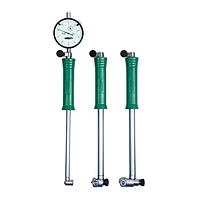
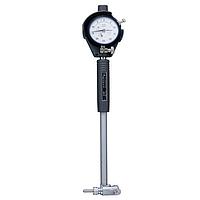
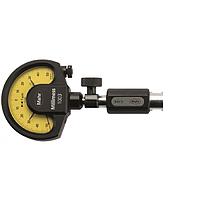
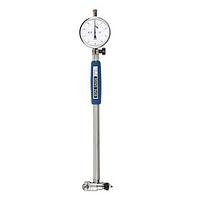
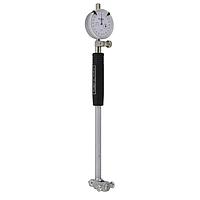
Bore Gage Repair Service
Accurate internal diameter measurement depends heavily on the condition of the instrument. When a bore gage starts showing inconsistent readings, sticky movement, worn contact points, or poor repeatability, repair is often the most practical way to restore measurement confidence and extend service life. This page covers Bore Gage Repair Service for industrial and quality-control environments where reliable dimensional inspection is essential.
Bore gages are widely used in machining, automotive, toolmaking, and precision manufacturing to verify bores, cylinders, and other internal features. Because these tools operate through mechanical contact and fine movement, they can be affected by wear, impact, contamination, or improper handling over time. A suitable repair service helps bring the instrument back to stable working condition and supports consistent inspection results on the shop floor or in the metrology room.
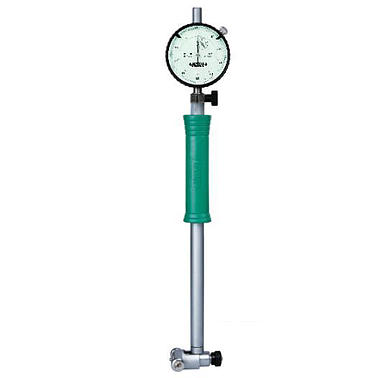
Why bore gage repair matters in precision measurement
A bore gage is typically used where small deviations in internal diameter can affect assembly fit, sealing performance, or product quality. If the mechanism no longer moves smoothly or the measuring contacts are no longer in proper condition, even an experienced operator may struggle to obtain dependable readings. In these cases, repair service is not only about fixing visible damage, but also about restoring the instrument’s ability to perform consistently in actual measurement work.
Repair can also help reduce unnecessary replacement costs, especially for instruments that remain structurally sound but need maintenance, adjustment, or component restoration. For companies managing multiple mechanical measuring tools, this is often part of a broader maintenance strategy alongside services such as micrometers repair service and other instrument support categories.
Common situations that indicate a bore gage may need service
Not every issue appears as obvious physical damage. In many cases, users first notice a gradual decline in repeatability, unstable indication, or difficulty zeroing the instrument correctly before measurement. A bore gage may also require attention after accidental dropping, prolonged use in dusty or oily environments, or storage conditions that affect internal movement.
Typical service cases include stiff or uneven travel, worn measuring surfaces, mechanical looseness, and deviations that make comparative measurement unreliable. If your inspection process depends on matching internal dimensions against standards or reference setting tools, any inconsistency in feel or reading behavior should be checked promptly to avoid downstream quality issues.
Repair coverage across major bore gage brands
This category includes service support for widely used brands in industrial measurement. Examples include Mahr, MITUTOYO, MOORE & WRIGHT, and TECLOCK. Each brand may have its own design characteristics, but the service objective remains the same: restore dependable operation while respecting the original measuring principle of the instrument.
Representative service options in this category include Mahr Bore Gauge Repair Service, Mitutoyo Bore Gauge Repair Service, Moore & Wright Bore Gauge Repair Service, and TECLOCK Bore gauge Repair Service. These examples help illustrate the range of supported repair requests without turning the page into a simple product list. The right service path depends on the actual condition of the tool, its usage history, and the type of fault observed during inspection.
What a professional bore gage repair service typically addresses
In practical terms, service work may involve evaluation of the measuring mechanism, checking contact movement, identifying worn or damaged parts, cleaning internal assemblies, and correcting issues that affect smooth operation. For mechanical measuring instruments, restoring proper tactile response and stable indication is often just as important as correcting visible faults.
A proper workflow usually begins with fault assessment so the service team can determine whether the issue is related to wear, impact, contamination, or general deterioration from use. From there, repair actions can be planned with attention to both instrument condition and the measurement role it serves within production or inspection processes. This is especially important when bore gages are part of a larger metrology set that may also include tools supported under depth gauge repair service or related maintenance categories.
How to choose the right service for your instrument
When selecting a service, it helps to prepare basic information about the bore gage, including the manufacturer, the symptom observed, and whether the issue is sudden or gradual. This makes it easier to determine if the tool likely needs cleaning, mechanical adjustment, component replacement, or a more complete inspection. If the instrument belongs to a known brand family such as Mahr, MITUTOYO, MOORE & WRIGHT, or TECLOCK, brand-specific handling may also be relevant during evaluation.
It is also useful to think about the role of the gage in your operation. A tool used for routine shop checks may present different service priorities than one used for tighter inspection control in quality assurance. Choosing the correct repair path means balancing turnaround expectations, instrument condition, and the importance of measurement reliability in your workflow.
Supporting broader maintenance for mechanical measuring tools
Bore gage maintenance is often part of a wider approach to keeping mechanical inspection instruments in usable condition. Facilities that rely on dimensional checks across multiple stages of production may need service support for several tool types over time, not only bore gages. Coordinating these requirements can help standardize maintenance practices and reduce disruption in inspection routines.
Depending on your equipment mix, related service needs may also extend to areas such as callipers repair service or thickness and hardness measuring instruments. Looking at repair support as part of an overall measurement equipment strategy can improve tool availability and help maintain better control over dimensional verification processes.
When repair is a practical alternative to replacement
Replacing a damaged measuring instrument is not always necessary. If the bore gage body and core mechanism remain serviceable, repair may offer a cost-effective route to recover useful performance while preserving a familiar tool already integrated into your inspection routine. This can be especially relevant for organizations managing multiple instruments from established brands and aiming to control equipment lifecycle costs.
At the same time, repair decisions should be guided by actual instrument condition rather than assumption. A clear assessment helps determine whether service is likely to restore the gage to a dependable working state and whether that outcome aligns with your measurement requirements. For many users, this makes repair a sensible option before moving to full replacement.
Conclusion
Reliable internal measurement depends on instruments that respond smoothly, repeat accurately, and remain fit for daily use. A well-matched bore gage repair service helps address wear, mechanical issues, and performance problems that can compromise inspection results. Whether you are maintaining a single instrument or supporting a broader fleet of mechanical measuring tools, timely repair is an effective way to protect measurement quality and keep essential inspection equipment in service.
Get exclusive volume discounts, bulk pricing updates, and new product alerts delivered directly to your inbox.
By subscribing, you agree to our Terms of Service and Privacy Policy.
Direct access to our certified experts