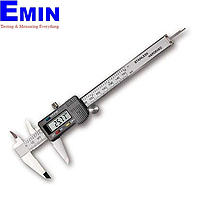
Callipers Repair Service
Accurate dimensional measurement depends on calipers that move smoothly, read consistently, and maintain reliable jaw alignment over time. In workshops, inspection rooms, maintenance departments, and quality control processes, even a small deviation can affect fit, tolerance checks, and downstream production decisions. That is why a professional Callipers Repair Service is an important part of keeping mechanical measuring instruments usable and trustworthy in daily work.
Whether the issue comes from wear, impact, stiffness, display inconsistency, or reduced measuring confidence, repair work helps restore the instrument to a practical operating condition. This category is intended for businesses that need support for commonly used calipers from established brands and want a clear service path for inspection, repair, and follow-up evaluation.
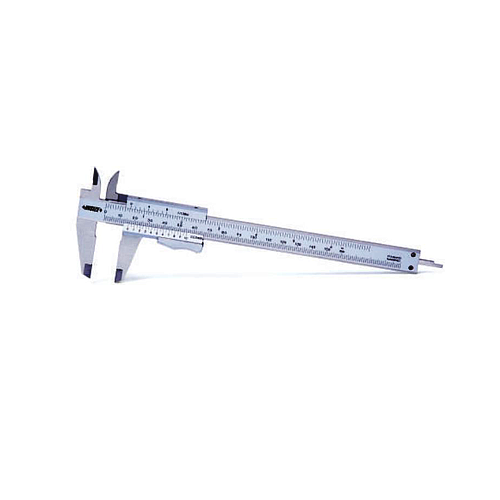
Why caliper repair matters in industrial measurement
Calipers are among the most frequently handled tools in mechanical measurement. Because they are used repeatedly on the shop floor and in inspection routines, they are exposed to dust, oil, accidental drops, sliding wear, and handling stress. Over time, these conditions can affect movement, contact surfaces, readability, and overall measuring confidence.
A proper repair service helps extend instrument life and supports more stable measurement practice than continuing to use a damaged or unreliable tool. For organizations that rely on repeatable dimensional checks, repairing calipers can also be a practical step before broader metrology review or calibration planning.
Typical service needs covered in this category
Calipers may require attention for several reasons. Common service requests include instruments that no longer slide evenly, jaws that appear worn or misaligned, mechanical scales that are difficult to read, or tools that no longer feel consistent during internal, external, depth, or step measurements.
Some users also request service after an instrument has been dropped, exposed to harsh working conditions, or shown suspicious results during routine inspection. In those cases, repair often begins with checking the overall condition of the tool, identifying the source of the problem, and determining whether restoration is practical for continued use.
For customers who are assessing broader dimensional tool maintenance, related services such as micrometers repair service may also be relevant when multiple handheld instruments are managed together.
Supported brands and service examples
This category includes service examples for widely recognized manufacturers used in industrial, technical, and workshop environments. Brands referenced here include MITUTOYO, Mahr, MOORE & WRIGHT, Proskit, TOPTUL, YATO, HAGLOF, LUTRON, and METROLOGY.
Representative service listings include Mitutoyo Calipers Repair Service, Mahr Calipers Repair Service, Yato Calipers Repair Service, Proskit Calipers Repair Service, Lutron Calipers Repair Service, and MOORE & WRIGHT Calipers Repair Service. The category also includes examples such as HAGLOF Calipers Calibration Service and TOPTUL Calipers Inspection Service, which reflect the broader need to evaluate instrument condition in a structured way before or alongside repair work.
Not every service case is identical, even within the same brand. Condition, usage history, and the nature of the fault all influence the service approach, so brand reference is helpful for orientation but does not replace technical assessment.
What to consider before sending calipers for repair
When selecting a service, it is useful to consider the instrument type, the symptoms observed, and how the caliper is used in the process. A tool used for rough workshop checks may not require the same follow-up as one used in quality inspection or incoming goods verification. Understanding the role of the instrument helps determine whether repair alone is sufficient or whether inspection and calibration steps should also be considered.
It is also worth noting whether the issue is mechanical, functional, or confidence-related. A visibly damaged jaw, a sticky slider, or a measurement discrepancy noticed during comparison checks can point to different service needs. Providing clear information about the fault can help speed up evaluation and make the repair process more efficient.
Repair, inspection, and calibration in the same workflow
In practice, caliper maintenance is not always limited to a single action. Inspection helps identify wear, physical damage, or functional abnormalities. Repair addresses the actual defect where restoration is possible. Calibration is then relevant when the user needs documented measurement verification after service or as part of a quality system.
This is why some listed examples in the category refer specifically to repair, while others refer to inspection or calibration. These activities support one another and are often part of the same decision-making flow: first determine the condition, then restore the tool if appropriate, and finally verify measurement performance according to operational needs.
If your maintenance scope includes other handheld measuring tools, related categories such as depth gauge repair service or thickness gauge repair service can be useful for planning a more complete instrument service program.
How businesses typically use this category
This page is useful for maintenance teams, QA departments, metrology coordinators, trading companies, and industrial buyers looking for support with damaged or underperforming calipers. It can also help procurement teams identify brand-related service options when they manage mixed fleets of measuring tools across different sites or departments.
For organizations that use multiple Mahr instruments, the Mahr brand page may provide additional context on related products and service compatibility. In the same way, customers working with various mechanical measuring tools may use this category as a starting point for wider service planning rather than treating caliper repair as an isolated task.
Choosing a practical service path
A sensible service decision usually balances instrument condition, measurement role, and replacement cost. If a caliper still has operational value and is important to routine checks, repair can be a practical way to restore usability and reduce unnecessary replacement. For heavily used tools, combining evaluation and post-repair verification may offer better long-term confidence.
When comparing service options, it helps to look beyond the instrument name alone. Consider whether you need troubleshooting, functional restoration, condition assessment, or service support across several brands. That broader view makes it easier to choose a solution that fits both technical requirements and maintenance workflow.
Final thoughts
Reliable calipers support reliable measurement, and reliable measurement supports better production control, inspection accuracy, and maintenance decisions. This Callipers Repair Service category brings together service options for widely used brands and helps buyers navigate repair, inspection, and calibration-related needs in a more structured way.
If you are reviewing the condition of handheld dimensional instruments in your facility, this category is a practical place to start. It helps connect common caliper issues with suitable service paths so you can maintain measuring capability with less disruption and better confidence in day-to-day use.
Get exclusive volume discounts, bulk pricing updates, and new product alerts delivered directly to your inbox.
By subscribing, you agree to our Terms of Service and Privacy Policy.
Direct access to our certified experts