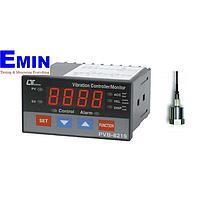
Vibration Online Monitor, Sensor Repair Service
Unexpected vibration signals can quickly become a maintenance concern in rotating equipment, production lines, and utility systems. When an online monitor or vibration sensor starts drifting, losing signal, or reporting unstable values, repair service becomes a practical way to restore condition monitoring without replacing the entire setup. This category focuses on Vibration Online Monitor, Sensor Repair Service for industrial applications where continuous measurement and reliable alarm behavior matter.
In many plants, vibration devices are part of a broader predictive maintenance strategy. A repair service helps extend the usable life of installed instruments, reduce unplanned downtime, and recover monitoring performance when sensors, signal paths, or controller-related functions no longer operate as expected. For users working with LUTRON equipment, this page also provides a relevant starting point for service support within that brand ecosystem.

Why vibration monitoring devices often require service
Online vibration monitoring systems are typically installed in demanding environments where motors, pumps, fans, gearboxes, and other rotating assets operate continuously. Over time, sensors and monitoring units can be affected by electrical noise, wiring issues, aging components, process contamination, mechanical stress, or environmental exposure. These factors may lead to incorrect readings, intermittent output, communication problems, or alarm instability.
A proper repair service is useful when the device still has value in the installed system, but its performance no longer matches operational requirements. Instead of treating every fault as a replacement case, many maintenance teams first evaluate whether the monitor or sensor can be restored to stable operation, especially when the existing installation, mounting arrangement, and signal integration are already in place.
Typical scope of vibration online monitor and sensor repair
This category is relevant for service needs involving vibration sensors and online monitoring instruments used for continuous machine condition tracking. In practice, repair work may relate to signal acquisition problems, display or output faults, unstable measurement behavior, power-related issues, or reduced responsiveness in the monitoring chain. The exact service scope depends on the unit condition and the role of the device in the process.
For example, the listed LUTRON Vibration Online Monitor, Sensor Repair Service reflects a focused service path for installed equipment that needs inspection and restoration rather than immediate replacement. In B2B environments, this is especially important when plant operators want to maintain compatibility with current monitoring architecture and avoid unnecessary changes to panels, controllers, or maintenance procedures.
When to consider repair instead of replacement
Repair is often worth considering when the instrument housing, installation point, and overall monitoring concept remain suitable, but the device is showing clear signs of malfunction. Common situations include noisy signals, unexpected zero readings, abnormal drift, lost output, irregular alarm triggers, or units that power on but do not measure reliably. These symptoms can affect maintenance decisions and may reduce confidence in the monitoring system.
Another common reason is system continuity. A repaired unit may allow the plant to preserve established commissioning settings, operator familiarity, and integration with existing maintenance workflows. Where vibration monitoring is only one part of a larger network of online instruments, it also makes sense to review related service needs such as load cell online controller repair service or SS and MLSS sensor repair service when multiple devices are affected by age, environment, or control issues.
How this service supports industrial maintenance workflows
In condition-based maintenance, reliable vibration data helps teams identify imbalance, misalignment, looseness, bearing wear, and other machine health concerns before they become more serious. If the monitor or sensor itself is faulty, the maintenance team may lose visibility into actual equipment condition. That creates risk not only for diagnostics, but also for alarm handling and maintenance scheduling.
Using a dedicated service category for vibration-related instruments helps maintenance, utilities, and engineering teams organize repair needs more efficiently. It provides a clear route for handling installed devices that are already part of a plant monitoring strategy. This is particularly useful in facilities where online measurement extends across multiple parameters, including water treatment and process analytics such as conductivity and TDS controller repair service.
Choosing a suitable repair service path
When selecting a service option, users usually look at more than the instrument name alone. It is helpful to identify whether the problem is likely related to the sensor element, monitoring unit, power and signal interface, installation environment, or overall controller connection. Clear fault descriptions, application context, and current symptoms can make the service process more efficient and reduce back-and-forth during evaluation.
For brand-specific requirements, working within the appropriate manufacturer context can also simplify matching and support history. If your installed equipment belongs to the LUTRON range, the available LUTRON vibration online monitor and sensor repair service is a relevant reference point for this category. This is especially useful when the goal is to maintain continuity with the original equipment family rather than switching to a different platform.
Related repair categories in the same instrumentation environment
Vibration monitoring is often deployed alongside other online measurement systems in industrial plants. Although the measured variables differ, the service logic is similar: restore dependable signal quality, recover process visibility, and keep installed instrumentation functioning as part of the broader control or maintenance system. That makes this category a practical fit for users responsible for multiple device types across one site.
If your maintenance scope includes additional online sensors and controllers, related service categories may also be relevant depending on the process. Examples include chlorine, free ion, conductivity/TDS, suspended solids, and load cell systems. Reviewing neighboring service groups can help users manage repair requirements more consistently across departments and applications without treating each instrument issue in isolation.
Practical value of a focused vibration repair category
A dedicated category for vibration monitor and sensor repair helps buyers and maintenance teams find the right service direction faster. Instead of navigating through a broad repair catalog, users can come directly to a page aligned with machine condition monitoring and online vibration measurement. That improves search relevance and makes it easier to connect device problems with the appropriate service route.
For industrial B2B procurement, the value is not only technical but also operational. A well-defined repair category supports faster screening of installed equipment, clearer communication between maintenance and purchasing, and better planning for asset reliability. If your current vibration instrument is no longer performing as expected, this category provides a focused path for evaluating repair options while keeping the existing monitoring system as stable and usable as possible.
Get exclusive volume discounts, bulk pricing updates, and new product alerts delivered directly to your inbox.
By subscribing, you agree to our Terms of Service and Privacy Policy.
Direct access to our certified experts