
Table Scale Repair Service
When a bench or tabletop scale starts drifting, failing to stabilize, or showing inconsistent readings, even routine weighing tasks can slow down production, packing, receiving, or laboratory work. A reliable Table Scale Repair Service helps restore measurement performance and keeps weighing equipment usable in day-to-day industrial and commercial workflows.
This category is intended for businesses that rely on compact weighing equipment for frequent, repeatable measurements. Whether the issue involves unstable readings, display faults, keypad problems, or general wear from continuous use, repair service is often a practical step before replacing the unit outright.
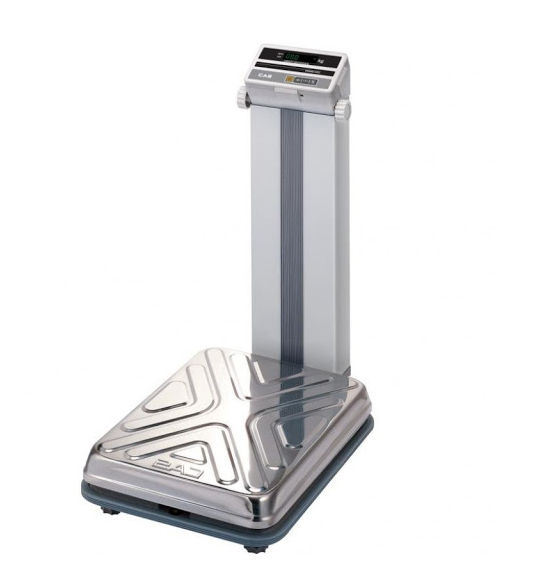
Why tabletop scale repair matters in daily operations
Table scales are commonly used where space is limited but weighing accuracy still matters. They appear in warehouses, packing stations, food handling areas, workshops, incoming inspection points, and many other environments where operators need quick and repeatable results. Because these instruments are handled frequently, they are exposed to vibration, overload, dust, moisture, and accidental impact over time.
A professional repair service helps address these issues without interrupting the broader weighing process more than necessary. For many organizations, restoring a damaged or unstable scale is a more efficient option than replacing equipment immediately, especially when the device is already integrated into established workflows.
Common issues addressed by a repair service
Not every problem is obvious at first. In many cases, users notice that the scale takes longer to settle, the display behaves irregularly, or measurements vary between repeated weighings. These symptoms can point to problems with the indicator, internal electronics, load sensing components, connectors, or the weighing platform itself.
Repair service for tabletop units is generally relevant when a scale shows signs of measurement instability, power-related faults, physical damage, or reduced usability. It can also be useful when keys, screens, or interfaces no longer respond as expected. For operations that depend on consistent weight data, early repair can help prevent larger process errors downstream.
Support for major bench scale brands
This category includes repair options related to widely used manufacturers such as CAS, KERN, OHAUS, PCE, and AXIS. Brand-specific service pathways can be helpful when businesses want support aligned with the equipment family already in use across their site.
Examples in this category include services such as the CAS Bench Scale Repair Service, KERN Bench Scale Repair Service, OHAUS Bench Scale Repair Service, PCE Benchtop Scale Repair Service, and AXIS Electronic Bench Repair Service. These references help clarify the scope of supported equipment types, especially for users searching by brand rather than by repair category alone.
How to choose the right repair path
The right service choice usually depends on the scale’s form factor, weighing role, and operating environment. A tabletop or bench unit is different from a larger platform system, and the repair approach should reflect that difference. Small-footprint scales used for checkweighing, counting, batching, or routine goods handling often need service that focuses on compact electronics and frequent-use mechanical parts.
It is also worth considering whether the issue is isolated to one unit or part of a wider equipment problem across the site. If your operation uses larger warehouse platforms, a dedicated floor scale repair service may be more appropriate for those systems. For highly sensitive weighing tasks, users may also want to review options for precision scale repair when the application requires finer measurement control.
Typical applications for table and bench scales
Compact weighing equipment is used in a broad range of B2B settings. In logistics and packaging, it supports portioning, order verification, and shipping preparation. In manufacturing, it may be part of assembly support, raw material handling, or component counting. In laboratories and technical environments, bench-style scales are often used for controlled weighing at workstations where a larger platform would be impractical.
Because these applications vary, the service need also varies. A scale exposed to repetitive loading in a warehouse may show different wear patterns than one used in a cleaner inspection area. Understanding the application helps determine whether repair is mainly about restoring operational reliability, improving weighing consistency, or resolving a specific hardware fault.
When repair is more suitable than replacement
Replacement may be necessary in some cases, but repair remains a sensible option when the equipment still fits the process and only certain components or functions have degraded. This is especially true when operators are already familiar with the unit, mounting arrangements are fixed, or the scale is part of a validated routine where changing hardware would create unnecessary retraining or process adjustment.
Repair can also make sense when businesses are managing mixed fleets of weighing devices. For example, facilities using bench units alongside specialized systems may prefer to repair each device according to its role rather than standardize prematurely. If the issue concerns suspended loads rather than benchtop weighing, a separate crane scale repair service may be the more relevant route.
What businesses should prepare before requesting service
To make the repair process more efficient, it helps to identify the manufacturer, product type, and the symptoms observed during operation. Information such as intermittent display behavior, inability to power on, unstable zero, repeated overload exposure, or visible physical damage gives useful context and can speed up evaluation.
If multiple scales are in use at the same site, documenting where the faulty unit is used and how often it operates can also support a better service decision. This is particularly important in environments where weighing equipment supports quality checks, inventory control, or customer-facing fulfillment steps, since even a small fault can affect broader process consistency.
Choosing service with the application in mind
Not all weighing equipment is used the same way, so repair planning should reflect actual operating conditions rather than category labels alone. A table scale in a production cell, a bench unit in dispatch, and a compact platform in inspection may appear similar at a glance, yet each can have different usage intensity and fault patterns. Looking at the application first often leads to a more practical repair decision.
For businesses using established brands such as OHAUS, PCE, or AXIS, it is also useful to align service selection with existing equipment standards already in place across the site. In many cases, a focused repair service for bench and tabletop scales helps extend equipment life, reduce unnecessary replacement, and restore dependable weighing performance where it matters most.
Get exclusive volume discounts, bulk pricing updates, and new product alerts delivered directly to your inbox.
By subscribing, you agree to our Terms of Service and Privacy Policy.
Direct access to our certified experts
