
Function/Arbitrary Waveform Generators Repair Service
When waveform quality starts drifting, triggering becomes inconsistent, or output channels no longer behave as expected, repair support becomes more important than replacement planning. For laboratories, production lines, service centers, and electronics design teams, dependable Function/Arbitrary Waveform Generators Repair Service helps extend instrument life while maintaining confidence in test results and daily workflows.
This category is intended for organizations that rely on signal generation equipment for development, validation, troubleshooting, and maintenance. Whether the issue involves unstable output, interface faults, channel problems, or general performance degradation, repair and inspection services can help restore function and reduce unnecessary downtime.
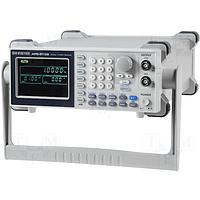
Why waveform generator repair matters in real test environments
Function and arbitrary waveform generators are used to simulate signals, verify circuit behavior, and support repeatable test conditions across many electronics applications. When these instruments begin to fail, the impact is often broader than a single device issue: engineering schedules slip, troubleshooting takes longer, and production verification can become less reliable.
A professional repair process is especially relevant when an instrument still fits the application but no longer performs consistently. In many cases, service is a practical way to preserve existing test setups, operator familiarity, and equipment investment without introducing avoidable changes into the measurement chain.
Typical service scope for this category
This category focuses on repair and inspection support for waveform generation equipment used in technical and industrial settings. The work generally relates to restoring normal operation, diagnosing faults, and checking whether the instrument can return to service in a reliable condition.
Common concerns may include power-up issues, display or control failures, unstable signal output, connector damage, communication problems, or channel-related faults. For users working with broader signal generation platforms, related support may also be relevant in areas such as RF signal generator repair when the test environment includes both low-frequency and RF instruments.
Brand coverage and service examples
The category includes service examples associated with established test and measurement brands used in professional environments. Depending on the installed equipment base, users may look for repair support tied to manufacturers such as KEYSIGHT, TEKTRONIX, Rohde & Schwarz, PICO, GW INSTEK, KIKUSUI, METRIX, Promax, TEXIO, and BKPRECISION.
Representative listings in this ecosystem include service entries such as Keysight Impulse Generator Repair Service, TEKTRONIX Impulse Generator Repair Service, PICO Impulse Generator Repair Service, Rohde & Schwarz Impulse Generator Repair Service, and GW INSTEK Impulse Generator Repair Service. These examples help illustrate the range of supported repair needs across different instrument families, while the actual diagnosis always depends on the condition and behavior of the unit received.
How to decide whether repair is the right option
Repair is often worth considering when the instrument remains suitable for the application, accessories and workflows are already built around it, and the fault appears limited to serviceable electronics, controls, or output behavior. This is especially true in environments where test procedures, operator training, and validation documents are already aligned with a specific generator platform.
It may also be sensible to compare repair with replacement when the generator is part of a larger bench setup that includes oscilloscopes, analyzers, power supplies, and specialized fixtures. If your operation uses several generator types, you may also want to review related support for function and arbitrary waveform generator service or adjacent categories where different signal formats and performance ranges are involved.
Information that helps speed up diagnosis
Providing clear fault details can make the repair workflow more efficient. Useful information usually includes the brand, model, visible symptoms, whether the issue is constant or intermittent, any error messages, and what happened before the failure appeared. If the instrument powers on but produces abnormal output, describing the waveform behavior under load or during specific operating modes can also be helpful.
It is also useful to mention whether the problem affects one channel or multiple channels, whether external communication ports still respond, and whether the unit has previously been serviced. For advanced benches that include multiple generator classes, some users may also need support that overlaps with repair services for RF signal generators, particularly when troubleshooting system-level signal chain issues.
Repair support across laboratories, production, and maintenance teams
Signal generation equipment is used in many different operating contexts, so repair expectations can vary. In R&D labs, users often focus on waveform stability, output integrity, and dependable control behavior. In production or service departments, turnaround time and a predictable return to routine testing may be just as important as the technical fault itself.
This is why category-based service pages are useful in B2B procurement: they help teams quickly identify relevant repair routes for their installed equipment. A company working with platforms from Rohde & Schwarz or mixed-brand benches can evaluate support options in context instead of searching model by model from the start.
Choosing a repair path that fits your equipment strategy
Not every failure means an instrument has reached end of life. In many situations, equipment repair is part of a broader asset management strategy that balances uptime, budget control, and measurement continuity. Keeping compatible generators in service can reduce retraining, avoid process disruption, and preserve consistency in established test methods.
If your team works with multiple generator technologies, it is useful to assess repair needs by function rather than by isolated instrument name alone. That approach makes it easier to match the right service category, compare related options, and maintain a more coherent support plan for the entire bench or facility.
Conclusion
For organizations that depend on stable waveform output and repeatable signal generation, Function/Arbitrary Waveform Generators Repair Service provides a practical route to restore equipment performance and keep test activities moving. With support relevant to widely used brands and related signal generator service categories, this page helps procurement teams, engineers, and maintenance personnel identify a suitable starting point for instrument repair and inspection needs.
Get exclusive volume discounts, bulk pricing updates, and new product alerts delivered directly to your inbox.
By subscribing, you agree to our Terms of Service and Privacy Policy.
Direct access to our certified experts
