Signal Generator Repair Service
When a signal source starts drifting, output levels become unstable, or modulation performance no longer matches expected behavior, test accuracy across the entire RF workflow can be affected. A dependable Signal Generator Repair Service helps restore confidence in measurement results, reduce unnecessary equipment replacement, and keep critical lab or field operations moving.
This category focuses on repair support for signal generators used in telecom, RF, microwave, and electronic test environments. Whether the issue involves frequency stability, output accuracy, display faults, connector wear, or general performance degradation, repair service is often a practical step for extending instrument life and protecting existing test setups.
Why signal generator repair matters in test environments
Signal generators are central to many verification and troubleshooting tasks because they provide the reference stimulus needed to evaluate receivers, amplifiers, communication paths, and other RF-related systems. When the source itself is no longer reliable, downstream measurements can become misleading, which may result in wasted engineering time or incorrect maintenance decisions.
Repair is especially relevant in B2B settings where instruments are integrated into established procedures, compliance workflows, or production support activities. Restoring a familiar unit can be more efficient than replacing it, particularly when teams depend on known interfaces, existing accessories, and validated operating practices.
Common service scenarios for signal generators
A repair request may begin with obvious symptoms such as failure to power on, damaged front-panel controls, or unreadable displays. In other cases, the problem is more subtle: unexpected signal behavior, intermittent output, instability over time, or performance that no longer aligns with the instrument’s intended role in the test chain.
In RF and telecom applications, even small deviations can have broader consequences. A generator that is not behaving correctly may affect troubleshooting of adjacent instruments, including vector network analyzer repair service workflows or source-and-measure setups that also depend on stable power verification. That is why service quality should be evaluated not only by whether a unit turns back on, but by whether it returns to useful, repeatable operation.
Supported brands and representative repair options
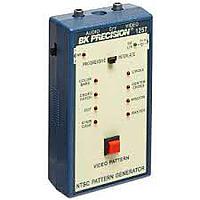
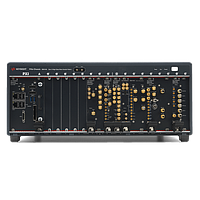
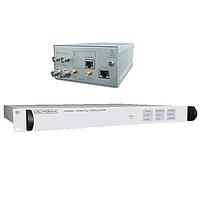
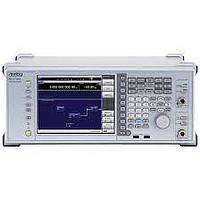
This category includes service options related to widely used manufacturers in electronic test and measurement. Brands highlighted here include ANRITSU, KEYSIGHT, BKPRECISION, and Promax, each commonly associated with RF, telecom, and laboratory instrument environments.
Representative listings in this category include Anritsu Signal Generator Repair Service, KEYSIGHT Signal Generator Repair Service, BKPRECISION Signal Generator Repair Service, and Promax Signal Generator Repair Service. These examples help illustrate brand-specific service pathways without limiting the broader purpose of the category, which is to support repair needs for signal generation equipment used in professional test applications.
What to consider before selecting a repair service
A good starting point is the instrument’s role in your process. If the generator is used for routine troubleshooting, product validation, telecom maintenance, or RF bench work, repair turnaround and post-service reliability may matter just as much as the fault itself. Users should also consider the age of the unit, observed symptoms, operating history, and whether the issue appears electrical, mechanical, or interface-related.
It is also helpful to think about the wider measurement ecosystem. A signal source often works alongside devices such as RF and microwave power meter repair service equipment or related telecom test instruments. Choosing a service path that fits the rest of the bench can make it easier to maintain consistency across diagnostic and verification routines.
Repair service in the broader RF and telecom workflow
Signal generators rarely operate in isolation. In many facilities, they are part of a connected test environment used to assess transmission quality, receiver sensitivity, modulation response, and overall system behavior. Because of this, a fault in one source instrument can create uncertainty across multiple test steps, even when other devices appear to be functioning normally.
Organizations that maintain several categories of electronic test gear may also need support for related service areas, such as wave testing equipment repair service or other RF diagnostic instruments. Looking at repair needs in a system context can help maintenance teams prioritize service decisions and reduce repeated troubleshooting caused by one unstable source device.
How repair supports cost control and equipment continuity
For many engineering teams, replacing a signal generator is not only a budget decision but also an operational one. New equipment may require procurement lead time, operator retraining, software or interface adjustments, and changes to established procedures. A well-matched repair service can therefore support both cost control and continuity of work.
Repair can also be a sensible option when the instrument remains suitable for the application, but specific faults prevent normal use. In that case, restoring the existing unit may help preserve bench consistency, maintain known workflows, and avoid introducing unnecessary variation into day-to-day testing.
Choosing the right service path for your instrument
The most suitable repair option depends on the type of signal generator, the symptoms observed, and the context in which the unit is used. Brand familiarity can be relevant as well, especially for users working with manufacturers such as ANRITSU, KEYSIGHT, BKPRECISION, or Promax. If your facility already standardizes around a certain brand family, that may influence how you organize maintenance and service planning.
Before moving forward, it helps to document the problem clearly: when the issue occurs, whether it is constant or intermittent, and how it affects real measurement tasks. That information makes it easier to align the service request with the instrument’s actual role and expected performance after repair.
Final thoughts
A reliable signal source is fundamental to repeatable RF and telecom testing, so repair decisions should be made with both instrument condition and application context in mind. This category brings together service options for organizations that need to restore performance, extend usable equipment life, and keep critical measurement workflows running with fewer disruptions.
If you are comparing repair options for different instrument types, it can also be useful to review related service categories such as RF voltmeter repair service to support a more complete maintenance strategy across the test bench.
Get exclusive volume discounts, bulk pricing updates, and new product alerts delivered directly to your inbox.
By subscribing, you agree to our Terms of Service and Privacy Policy.
Direct access to our certified experts