For full functionality of this site it is necessary to enable JavaScript.
EMIN.ASIA
0

Golden Rules for Workplace Safety When Using High-Speed ​​Centrifuges

10/05/2026 15:40:12

A comprehensive occupational safety handbook integrating quantitative technical standards and international-standard emergency response procedures

Quantitative Technical Guide & Emergency Response Protocols according to International Standards (OSHA / COSHH)
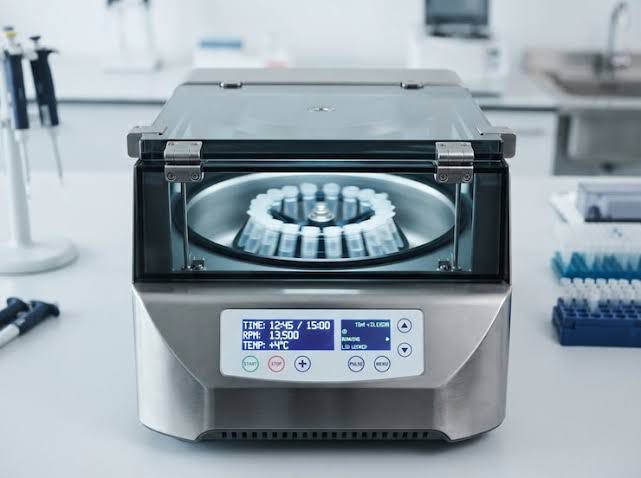
In molecular biology laboratories, medical testing centers, and industrial facilities, high-speed centrifuges (operating from 15,000 to over 30,000 RPM) are essential equipment, yet they pose the highest risk of major accidents if operated incorrectly. Given the extreme acceleration force exerted on samples, a minor oversight in load balancing or lid opening procedures can trigger rotor explosion, complete equipment destruction, and direct threats to technician safety.
High-speed centrifuge

1. Mandatory Technical Metrics for Load Balancing

Even the slightest eccentricity at speeds of tens of thousands of RPM generates massive destructive force on the drive shaft and bearings. Therefore, technicians must strictly adhere to the following quantitative parameters:

≤ 0.1g
Maximum allowable mass imbalance between opposing tubes
Gram (g)
Mandatory unit when counterbalancing different solvent types
≤ 2/3
Maximum sample fill limit per test tube

• Maximum Mass Imbalance

For high-speed centrifuges, the weight differential between two symmetrical tubes must not exceed 0.1 grams. High-precision analytical balances must be used for calibration—never estimate by eye.

• Liquid Counterbalance Rule for Differing Densities

When two samples contain different solvents (for example, one tube contains water while the other contains a chemical of higher or lower density), operators must balance by mass (in grams), and strictly never by volume (in mL).

• Safe Sample Fill Limit

Fill sample tubes to a maximum of 2/3 capacity. Overfilling causes hydrodynamic pressure build-up at high speeds, resulting in instant tube cap dislodgement or tube rupture.

2. Strict Safety Rules for Rotors and Centrifuge Tubes

• The "Run-In" Rule (Monitored Startup)

Upon powering on the unit, operators must remain present to observe the equipment for 1 to 2 minutes until it reaches the set target speed smoothly. Field statistics reveal that approximately 90% of rotor explosion accidents occur during this initial acceleration phase.

• Speed Derating Limits Based on Solvents

When utilizing high-density solvents (such as CsCl) or highly corrosive chemicals, the maximum allowable rotor speed must be derated according to the manufacturer's specification chart. Never run at the maximum RPM listed on the outer casing.

• Absolute Sealing Integrity

Always secure individual rotor lids firmly before closing the main outer chamber lid of the centrifuge.

3. Emergency Protocol: Handling Tube Ruptures or Severe Vibration

⚠️ ACTIVATE PROTOCOL IMMEDIATELY UPON LOUD POPPING SOUNDS, METALLIC IMPACT NOISE, OR SEVERE VIBRATION

Step 1 - Emergency Stop: Immediately press the STOP button on the control panel and quickly unplug the power cord from the wall outlet.
Step 2 - Strictly DO NOT Open the Lid Immediately: Opening the lid right after shutdown causes severe consequences due to rotational inertia and the release of toxic airborne particles.
Step 3 - Comply with Mandatory Isolation Wait Times:

• Standard Samples: Wait at least 15 to 30 minutes.

• Biohazardous / Pathogenic Samples (Biohazard): Mandatory wait time of at least 30 minutes.

Scientific Rationale: High operational speeds generate hazardous aerosol particles containing pathogens or volatile chemicals suspended within the chamber. Opening the lid prematurely releases these toxic clouds directly onto the operator's face and respiratory tract.

Step 4 - Safe Decontamination Cleanup: After the isolation wait time, technicians equipped with full PPE (respirators and thick protective gloves) must use forceps/tweezers to retrieve broken glass or plastic fragments. Decontaminate the rotor chamber with an appropriate disinfectant (e.g., 70% ethanol or diluted bleach solution). Avoid harsh high-chlorine cleaners that cause severe pitting corrosion on aluminum rotors.

Related article: Refrigerated Centrifuge Solutions in Healthcare & Aesthetics: The Gold Standard for Preserving Biological Samples

4. Equipment Lifecycle Management via Rotor Logbooks

Every high-speed centrifuge rotor has a strictly calculated service lifespan based on total run cycles or cumulative operating hours.

Operator Responsibility: Record complete entries in the logbook after every shift with mandatory data fields: Date of Operation — Speed (RPM) — Run Duration.

Metal Fatigue Warning: Once a rotor reaches the maximum rated cycle limit recommended by the manufacturer, it must be permanently decommissioned and scrapped. Internal metallic structures suffer from progressive metal fatigue, presenting catastrophic failure and explosion risks under extreme centrifugal forces if kept in service.
Related News

The scent of new wood in a newly handed-over apartment: How to measure and address formaldehyde (HCHO) levels before moving in
11/14/2026 10:28:19

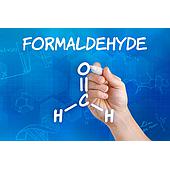
Many people refer to the pungent, acrid odor that emerges when opening a new cabinet as the "smell of new wood," assuming it will simply dissipate after a few days. In reality, however, what is being released could well be formaldehyde—a substance originating from the adhesives used in the pressed-wood panels—and our sense of smell is not a reliable enough gauge to determine the concentration levels present

Guide to Selecting a TCLP Toxicity Characteristic Leaching Procedure Shaker Configuration in Compliance with QCVN 07:2025/BNNMT and TCVN 9239:2012
11/13/2026 17:23:39

Regulation QCVN 07:2025/BNNMT (replacing QCVN 07:2009/BTNMT and QCVN 50:2013/BTNMT) specifies hazardous waste and sludge thresholds based on leachate concentrations. To ensure that analytical results for heavy metals and organic compounds are accepted during ISO/IEC 17025 or VIMCERTS assessments, laboratories must comply with the Toxicity Characteristic Leaching Procedure (TCLP) specified in TCVN 9239:2012, which is equivalent to US EPA Method 1311

Checking the Temperature of Paint and Coating Surfaces After Curing Using an Infrared Thermometer
11/13/2026 16:11:22

An infrared thermometer allows surface temperature measurement without direct contact, making it suitable for products coming out of curing ovens or surfaces that are difficult to access. However, to ensure reliable results for production quality control, it is important to understand the measurement principle and the factors that affect measurements on painted and coated surfaces.

Crowded Gyms and Yoga Studios: How to Manage Air Quality to Retain Members
11/13/2026 15:07:40

Around 6 or 7 in the evening, the gym becomes packed; the music drowns out the sound of heavy breathing, and the air conditioning runs at full blast behind closed doors. At first glance, everything seems fine: the room is cool, the lights are bright, and the equipment is state-of-the-art. Yet, after just a few sessions, regular members begin to feel a heavy-headedness and find themselves running out of breath more quickly eventually, they simply stop renewing their memberships. No one complains about the personal trainers or the exercise machines. The very thing that makes them feel stifled and drives them away is something entirely invisible: the air inside the room

Stay Updated with Offers

Get exclusive volume discounts, bulk pricing updates, and new product alerts delivered directly to your inbox.

By subscribing, you agree to our Terms of Service and Privacy Policy.

Quick Support

Direct access to our certified experts