When Humidity Is No Longer a Secondary Parameter
In HVAC technical documentation, humidity is always control along with temperature. However, in many residential buildings and even small to medium-sized industrial facilities, humidity control is often overlooked. While users can easily notice a rise in temperature, it is much harder to accurately perceive when humidity exceeds safe limits.
This leads to a common paradox: the system may still be operating within the “standard temperature range,” yet the equipment inside experiences reduced lifespan or unexplained faults.
When failures occur, the cause is often attributed to component of humidity temperature tester quality or operational errors. In reality, the root issue may have been developing long before originating from improperly controlled humidity.
For most electrical and electronic equipment, the ideal humidity range is typically between 40–60% RH. Once humidity exceeds 70%, moisture begins to penetrate even the smallest components, triggering a chain of degradation processes. In industrial environments where dust and metallic ions are also present this process accelerates significantly.
That is why many factories maintain strict humidity levels between 45–55% RH. Even a slight deviation of a few percentage points can noticeably increase failure rates.
High Humidity Causes Leakage Currents and Corrosion
Unlike temperature which is easy to sense—humidity is difficult to detect using human perception. A change from 60% to 70% RH may feel almost identical, yet it represents a critical threshold for electronic systems.
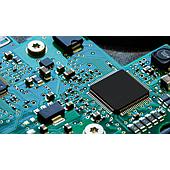
When humidity exceeds safe levels (typically above 70% RH), water vapor no longer remains evenly dispersed in the air but begins interacting directly with material surfaces. At the microscopic level, water molecules form a thin film over components, especially in areas with temperature differences or surface contamination.
This film fundamentally alters the electrical properties of the system. Surface resistance decreases, allowing leakage currents to form. In high-density electronic circuits, even a small leakage current can distort signals or trigger hard-to-trace faults.
If these conditions persist, localized condensation may occur, leading to short circuits at sensitive contact points.
Beyond that, high humidity also accelerates metal oxidation. When moisture combines with airborne contaminants particularly metallic ions or chemical compounds in industrial environments electrochemical corrosion progresses much faster than under normal conditions.
Component leads, solder joints, and contact surfaces gradually degrade, increasing contact resistance and generating localized heating during operation.
The real danger lies in the fact that this entire process is slow, continuous, and often invisible until failures begin to appear.

It’s Not Just High Humidity, Low Humidity Is Also a Risk
When humidity drops below approximately 30% RH, the air’s ability to neutralize electrical charges is significantly reduced. Insulating surfaces can accumulate static electricity without a natural discharge mechanism.
Under these conditions, even minor contact between a person and equipment can generate an electrostatic discharge (ESD). For modern microelectronics especially sensitive semiconductor components the energy from a single ESD event can cause immediate damage or reduce lifespan without visible signs of failure.
This type of damage is latent and often only becomes apparent after a period of operation.
From Reactive Repairs to Preventive Maintenance
A large portion of the cost associated with electrical equipment does not come from component replacement, but from downtime and operational disruptions. A system outage lasting just a few hours can result in losses far exceeding the cost of monitoring instruments.
For this reason, many industrial facilities rely on temperature and humidity data loggers to monitor environmental conditions in real time. Maintaining humidity within a stable, safe range not only extends equipment lifespan but also ensures more reliable long-term operation and reduces unexpected failures.
Recommended Humidity Levels by Environment
Residential buildings, schools: 40–60% RH
Laboratories, pharmaceuticals: 35–50% RH
Electronics manufacturing: 40–55% RH
High-grade cleanrooms: 45–50% RH
Libraries, operating rooms: 45–55% RH
Cold storage: 70–90% RH
Related Articles
How to Measure Temperature & Humidity Accurately
How Temperature and Humidity Impact Air Conditioning Energy Costs