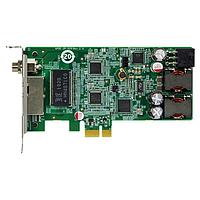
Power over Ethernet PoE
When power and data need to reach the same device through a single Ethernet cable, selecting the right PoE hardware becomes an important part of network and industrial system design. Power over Ethernet PoE products help simplify installations, reduce separate power wiring, and support cleaner deployment for connected equipment in commercial and industrial environments.
On this page, you can explore PoE components and devices used to deliver power across Ethernet infrastructure for endpoints such as network nodes, edge devices, control equipment, and other connected systems. The category also fits naturally into broader power architectures where regulated distribution, backup planning, and installation constraints all matter.
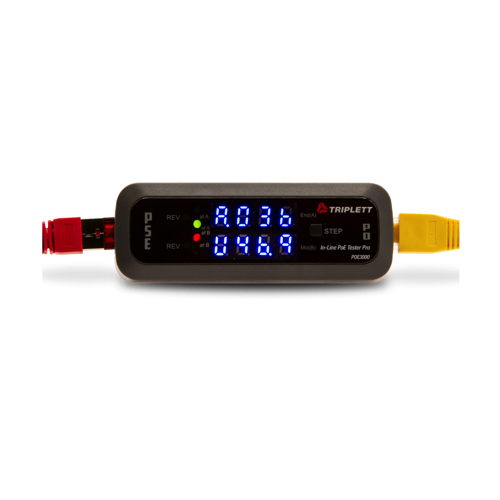
Why PoE is widely used in connected systems
PoE technology combines power delivery and data communication over standard Ethernet cabling, which can reduce installation complexity compared with running separate power lines to each device. This is especially useful in projects where cable routing is limited, device locations are distributed, or future maintenance access needs to be simplified.
In industrial and building-related applications, PoE is often chosen to support a more streamlined infrastructure. It can help shorten deployment time, centralize power management, and make it easier to integrate networked devices into a structured system design.
What you can find in this category
This category includes a mix of PoE-related semiconductors and power devices used at different levels of a design. Some items are intended for embedded circuit integration, while others are better aligned with field installation or system-level power injection.
Examples from this range include chipset-oriented solutions such as Analog Devices LTC4292IUJ#PBF and LTC4274IUHF#PBF, controller-oriented options from Microchip Technology such as PD69100C-026501 and PD69204T4ILQ-TR-LE, and system-facing products like the MOXA INJ-24-T. These examples illustrate that PoE selection is not limited to one device format; it can span from board-level implementation to deployment hardware.
Typical applications for Power over Ethernet
PoE products are commonly used wherever low-voltage power must be delivered to network-connected equipment without adding a separate local power source. This can include industrial communication nodes, embedded networking products, monitoring points, control panels, and edge-connected electronics that benefit from a single-cable approach.
In practical projects, the decision to use PoE often comes down to layout efficiency and serviceability. For installations that already rely on distributed power architecture, PoE may work alongside equipment such as DIN rail power supplies or backup infrastructure such as UPS systems, depending on how the overall network and power scheme is arranged.
How to choose the right PoE product
The first step is identifying where the device sits in the power chain. Some products in this category are intended for circuit designers building PoE functionality directly into equipment, while others are used to inject or manage power in an installed network. Understanding whether you need a controller IC, interface device, or external injector helps narrow the shortlist quickly.
Next, review the electrical and environmental demands of the application. Designers often consider factors such as mounting style, operating temperature range, port requirements, and integration level. For example, the Analog Devices LTC4292IUJ#PBF is listed as a surface-mount device and shows an operating range of -40 to 85C, which points to board-level use in designs where temperature tolerance matters.
It is also worth evaluating the wider ecosystem around the PoE section of the design. In some systems, supporting products such as DIN rail mount isolated DC/DC converters may be relevant when isolation, voltage conversion, or downstream conditioning is required elsewhere in the cabinet or installation.
Representative product directions in this range
For integrated design work, solutions from Analog Devices, Maxim Integrated, and Microchip Technology are particularly relevant in this category. Products such as the Maxim Integrated MAX5974EETE+T, MAX5974AETE+T, MAX5969BETB+T, and MAX5987AETE+T indicate options for designers looking at dedicated PoE power management functions within compact electronic systems.
Microchip Technology devices such as PD69104B1FILQ-TR and PD-3501G/AC show how the category also addresses different implementation levels, from IC-oriented designs to more deployment-oriented hardware. Meanwhile, the MOXA INJ-24-T is a useful example of PoE hardware associated with practical network installation and industrial connectivity contexts.
PoE in industrial power planning
Although PoE is often discussed as a networking topic, it also plays a clear role in power distribution planning. Engineers and buyers typically need to think about source power, cable runs, endpoint load, thermal conditions, and service access rather than looking at Ethernet power as an isolated component choice.
This is why PoE products are often considered together with the rest of the power infrastructure in a panel, cabinet, or facility. A well-matched solution can support tidier installations, easier device expansion, and more predictable maintenance, especially in systems where connected equipment is spread across multiple physical locations.
Choosing by brand and integration preference
If your priority is semiconductor integration, brands such as Analog Devices, Maxim Integrated, and Microchip Technology are the most directly represented by the featured products in this category. They are typically relevant for OEMs, embedded developers, and engineers designing PoE capability into custom hardware.
If your priority is deployment within industrial networking environments, MOXA is a practical reference point from the product selection shown here. The right choice ultimately depends less on brand name alone and more on the intended role of the product inside your design, installation, or retrofit project.
Final considerations before ordering
Before selecting a part, it helps to confirm whether you are solving a board-level design task or a field-level installation requirement. That distinction affects package style, integration effort, supporting circuitry, and how the product fits into the wider system.
This Power over Ethernet PoE category is best approached as part of a complete power and connectivity strategy. By comparing application needs, device role, and surrounding infrastructure, you can narrow down the most suitable PoE components and hardware for reliable network-powered deployment.
Get exclusive volume discounts, bulk pricing updates, and new product alerts delivered directly to your inbox.
By subscribing, you agree to our Terms of Service and Privacy Policy.
Direct access to our certified experts