Cart, Hand Truck, Trolley
Moving chemicals, instruments, cylinders, and routine lab supplies safely from one area to another is a small task that has a big impact on daily efficiency. In laboratory and technical environments, the right transport equipment helps reduce manual handling, keeps workstations organized, and supports safer movement of fragile or heavy items. That is why choosing a suitable Cart, Hand Truck, Trolley setup matters in both research and industrial support spaces.
Why transport carts matter in laboratory workflows
Laboratories often need to move glassware, reagent containers, instruments, and gas cylinders between storage, preparation, testing, and cleaning areas. A properly selected trolley or hand truck helps streamline these routines while lowering the risk of dropping sensitive items or overloading personnel with repeated manual transport.
Within broader laboratory equipment planning, transport solutions are sometimes overlooked in favor of analytical devices. In practice, however, they are part of the everyday infrastructure that supports clean workflows, safer handling, and better space utilization.
Common types in this category
This category covers several practical formats for different movement and storage needs. Standard multi-tier carts are useful for general transport of consumables, tools, and small equipment, while basket-style designs can help separate loose items during movement. Hand trucks and dedicated cylinder carts are more suitable when the load is taller, heavier, or harder to stabilize.
For example, models such as the DaiHan C9.4011 Cart, 2Tiers and DaiHan C9.4015 Cart, 3 Shelf represent typical utility-cart layouts for routine movement inside labs, workshops, and technical rooms. For compressed gas handling, products such as the DaiHan DH3.Car7014 Cart gas cylinder 40kg x 1 and DaiHan S25.HDT004 Cart gas cylinder 40kg x 1 are aligned with more specific cylinder transport tasks.
How to choose the right cart or trolley
The first point to consider is load type. If you mainly move boxes, bottles, benchtop accessories, or packaged materials, a flat or tiered cart is usually more efficient. If the load includes unstable shapes or containers that should not shift easily, a basket configuration may offer better control during transport.
Next, look at the balance between footprint and capacity. Narrower carts can be easier to maneuver through compact aisles, while wider platforms help when moving bulkier items. Options such as the DaiHan C9.4221 Cart 3Tiers and DaiHan C9.4222 Cart 3Tiers show how tier count and working width can influence how much material can be carried in one trip.
For specialized handling, the structure of the trolley is more important than the general category name. A cylinder cart, for instance, should be selected for the intended cylinder size and application rather than treated as a general-purpose shelf cart. This is especially relevant in technical spaces where movement safety is part of standard operating practice.
Examples from the DaiHan range
DaiHan is one of the key names represented in this category, with a selection that covers both general utility carts and dedicated handling solutions. The range includes compact two-tier units such as the DaiHan C9.4012 Cart, larger two-tier formats like the DaiHan C9.401L Cart, and multi-shelf configurations intended for higher carrying volume.
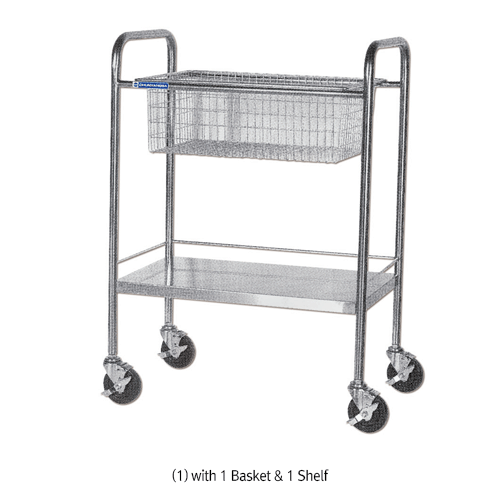
Basket-oriented models such as the DaiHan C9.4101 Cart 1basket&1shelve and DaiHan C9.4102 Cart, 2basket are useful when operators need a more contained transport structure. In contrast, open-shelf units are often easier to load and unload quickly. This gives buyers flexibility to match the transport method to the material being moved rather than relying on one cart style for every task.
Typical applications in labs and technical facilities
These products are commonly used in sample preparation rooms, QC laboratories, maintenance areas, educational labs, and support zones where materials move frequently throughout the day. A trolley can serve as a mobile staging surface for routine operations, while a hand truck or cylinder cart is better suited to point-to-point transport of heavier items.
They also work well alongside related support categories. For example, where personnel need protective wear during material handling, it may be useful to review lab apparels as part of the same workflow. In areas where gas use is involved, related handling tools may also connect naturally with burner and torch equipment, depending on the lab setup.
Practical buying considerations
When comparing options, focus on handling environment as much as product size. Consider aisle width, floor condition, the type of items being moved, and whether operators need temporary storage on the cart between stations. A compact model may be better for frequent turning and short trips, while a wider multi-tier cart may improve throughput where space allows.
It is also worth considering whether the cart will be used for one dedicated task or as a shared utility platform. Dedicated use often supports safer and more organized operations, especially for chemicals, cylinders, or fragile tools. Shared carts can be practical too, but they usually work best when the load profile remains fairly consistent.
Building a more complete handling setup
A well-organized transport solution is rarely isolated from the rest of the workspace. Carts and trolleys typically support broader housekeeping, sample movement, preparation, and equipment servicing routines. If you are also reviewing accessories and utility items from the same supplier ecosystem, other DaiHan product lines may provide additional context for matching general lab support needs.
The goal is not simply to move items from one point to another, but to do so with better consistency, less manual strain, and more predictable workflow control. That makes this category relevant not only for laboratories, but also for industrial technical rooms, training facilities, and service environments that depend on safe material handling.
Conclusion
Choosing the right cart, hand truck, or trolley starts with understanding what needs to be moved, how often it moves, and how much control the operator needs during transport. From compact two-tier carts to basket-style units and dedicated gas cylinder transport models, this category supports a wide range of routine handling tasks.
If you are building or upgrading a laboratory support workflow, start with the load type, the available space, and the level of mobility required. A well-matched transport cart can improve day-to-day efficiency while contributing to a safer and more organized working environment.
Get exclusive volume discounts, bulk pricing updates, and new product alerts delivered directly to your inbox.
By subscribing, you agree to our Terms of Service and Privacy Policy.
Direct access to our certified experts