Radiation Shields/ Spill Control
Protecting people, samples, and surrounding work areas is a routine requirement in many laboratory and technical environments. When handling splashes, minor spills, or processes that call for a physical barrier between the operator and the task, Radiation Shields/ Spill Control products help create a safer and more controlled workspace without adding unnecessary complexity to daily operations.
This category brings together practical protective components used around benches, preparation areas, and general laboratory workflows. Depending on the task, users may need a simple shield for front-facing splash protection, a safety helmet for head protection in mixed lab-industrial environments, or supporting accessories that improve fit and coverage during active work.
Where these products fit in the lab and technical workspace
In real working conditions, hazards are not always limited to one source. A workstation may involve open containers, liquid transfer, sample preparation, cleaning chemicals, or equipment setup where accidental splashes and contact risks need to be reduced. In these situations, protective shields and spill-control-related items support safer handling and clearer separation between the operator and the process.
This is especially relevant in spaces where laboratory practice overlaps with maintenance, utility work, pilot production, or facility support. A bench shield may be suitable for splash protection during manual tasks, while head protection and add-on parts are more appropriate where personnel move between lab zones and operational areas.
Typical product types in this category
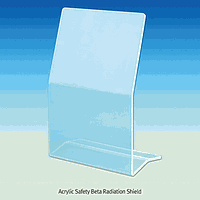
The range in this category includes both protective shields and selected wearable protection items that contribute to safer task execution. For example, acrylic shield options such as the Azlon Az.SRS002 Shield acrylic, dual angled type 445x150mm are useful where a transparent barrier is needed without obstructing visibility. Similar general-use shield models from Kartell, including KA.571 and KA.572, can also support routine splash protection at the point of use.
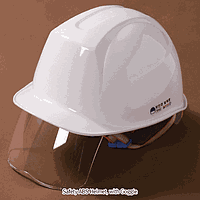
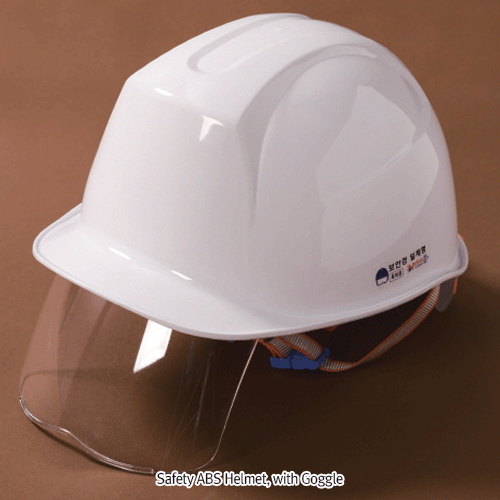
On the personal protection side, this category also features safety helmet options and helmet accessories. Products such as Dongmyung DH.Hel3001, DH.Hel3002, and DH.Hel3005 illustrate the role of head protection in environments where impact risk may exist alongside laboratory or technical tasks. Accessories including the DH.Hel3011 and DH.Hel3012 chinstraps, as well as the DH.Hel3013 rear protection guard, help extend the usability of helmet systems rather than serving as standalone protective solutions.
How to choose the right shield or spill-control item
A good starting point is the type of hazard you are trying to manage. If the main concern is splash exposure during handling or transfer, a transparent shield can be a practical choice because it preserves line of sight while introducing a physical barrier. If the task involves movement around equipment, stored materials, or overhead risk, a helmet-based option may be more relevant.
It is also worth considering how the product will be used throughout the day. Some users need a fixed-position barrier at a workstation, while others require wearable protection that remains secure during movement. In the second case, details such as chinstrap style or added rear protection may influence day-to-day comfort and stability.
Material and form factor matter as well. Acrylic shield designs are often selected when visual monitoring is important, and ABS helmet construction is commonly associated with durable, lightweight head protection. Instead of choosing by product name alone, it is better to match the item to the task, user movement, and surrounding workspace conditions.
Examples of applications across different environments
In a laboratory setting, shields may be placed near sample preparation zones, wash areas, or liquid handling stations where minor splash control improves operator safety and protects nearby surfaces. These products can also be useful in shared benches where a simple barrier helps separate adjacent activities.
In technical service rooms or semi-industrial support areas, safety helmets become more relevant when staff move between analytical work and equipment inspection. A model such as Dongmyung DH.Hel3001 with goggle integration may suit tasks where eye-area coverage is desirable, while basic-type helmet configurations such as DH.Hel3002 may be appropriate for more general head protection needs.
For supporting workflows around containment and cleanup, users may also combine this category with other practical lab consumables and handling items, depending on the process. In some environments, related categories such as bags for collection and disposal or bottle top solvent pumps for controlled liquid transfer can help build a more organized handling setup.
Why accessories matter in a complete protection setup
Protective equipment is often most effective when the supporting parts are chosen with the same care as the main item. Chinstraps, for example, help improve helmet retention in active work conditions, reducing the chance of poor fit during movement. Rear protection guards can add coverage in situations where the user frequently bends, turns, or works near surrounding structures.
This matters for procurement as well. Instead of treating helmets, shields, and accessories as unrelated items, it is often more practical to evaluate them as part of a complete protective setup. That approach can simplify replacement planning and help standardize equipment across teams or work areas.
Brand options available in this category
The products highlighted here include solutions from Azlon, Kartell, and Dongmyung. Each brand contributes differently to the category, with shield-focused options from Azlon and Kartell, and safety helmet systems plus accessories from Dongmyung.
Rather than selecting a brand first, many buyers start with the operating requirement: splash barrier, general shield use, helmet protection, or accessory compatibility. Once the application is clear, comparing the available product styles becomes much easier and more relevant to actual use.
Selection considerations for B2B purchasing
For laboratories, educational facilities, production support teams, and maintenance departments, category-level purchasing usually goes beyond a single item. Buyers often need consistency across multiple stations, compatibility between accessories and the main protective gear, and practical stock availability for routine replacement.
It is helpful to review whether the requirement is for bench protection, personal head protection, or a combination of both. From there, teams can shortlist general shield products such as Kartell KA.571 or KA.572, acrylic barrier options such as Azlon Az.SRS002, and helmet-based products from Dongmyung according to the working environment. If the broader process also involves containment, packaging, or cleanup support, related labware categories such as adhesives may also be relevant depending on the application.
Finding the right fit for safer daily operation
The right protection setup depends on how work is actually performed: stationary or mobile, splash-prone or impact-prone, simple or multi-step. This category is designed to support those needs with a focused mix of shields, helmets, and accessories that help users manage exposure risks more effectively in laboratory and technical environments.
When comparing options, focus on the task, the level of coverage needed, and whether accessories are necessary to complete the setup. A practical, well-matched selection can improve safety, support smoother workflows, and make protective equipment easier to use consistently over time.
Get exclusive volume discounts, bulk pricing updates, and new product alerts delivered directly to your inbox.
By subscribing, you agree to our Terms of Service and Privacy Policy.
Direct access to our certified experts