What is antistatic?
The main purpose of this is to conduct electrical charges to the grounding system, to protect the product from the risk of short circuits, fires and explosions, and ensure safety for everyone during the production process.

When friction creates electrical charges (+ and -), these charges easily attach to non-conducting objects. When an object with opposite charge comes close, an electrical discharge between the two objects can occur. Causes danger if occurring in potentially explosive environments, such as oil refineries or near chemical storage areas.
Sudden electrical discharges pose a fire hazard but can also damage surrounding electronic components. Therefore, anti-static plays a key role in a comprehensive quality management system, helping to protect the safety of both people, machines and products during the production process.
Why is anti-static needed in factories and production?
Although it may not cause immediate harm, electrostatic discharge from machinery or human movement can be potentially dangerous. The industries most affected by static electricity are the manufacturing and installation of electronic circuits, as electrostatic discharge can cause damage or deterioration of product quality.

In the production of electronic circuits, static electricity directly affects the devices, reducing chip quality or damaging components even though it does not cause immediate damage. This leads to a significant reduction in the lifespan of the manufacturing process.
Static electricity not only causes problems but also damages unfinished products, preventing equipment from performing as expected. Therefore, anti-static during the production process is extremely necessary to protect product quality and ensure the production process runs smoothly.
Methods of preventing static electricity
Method 1: Materials that do not conduct static electricity, such as natural materials, can be used. These materials do not create or accumulate electrical charge, helping to prevent static electricity.
Method 2: Equip employees with insulating materials. Devices or items made from insulating materials will prevent the movement of electrical charges on the surface, reducing the risk of electrostatic discharge during work.
Method 3: Use specialized equipment to eliminate static electricity, by neutralizing ions. Devices such as spray nozzles, anti-static guns, or explosion-proof static meters can help prevent the build-up of electrical charges in the air, thereby minimizing the risk of harm from static electricity.
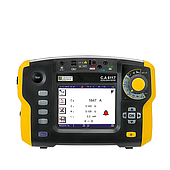
AP&T AP-YF1201 explosion-proof static electricity meter

You can consider the AP&T AP-YF1201 explosion-proof static electricity meter to control static electricity in industrial production environments, especially in explosive areas. With Ex ib ⅡB T5 Gb explosion-proof level, the device ensures absolute safety when used in dangerous environments such as chemical factories, electronic component factories or fuel depots.
AP-YF1201 has the ability to accurately measure in the range from 0.1KV to 50.0KV, suitable for applications that need to accurately monitor and control static electricity levels. Measuring distance of 25mm ± 1.0mm helps users easily operate and ensures stability when measuring.
The device is also equipped with an automatic shutdown feature after 180 seconds, helping to save energy and extend the life of the device. Thanks to its compact design, light weight, and ability to operate in temperatures ranging from -18℃ to +50℃, AP-YF1201 is easy to carry and flexible to use in many different environments.
Related articles: What is the phenomenon of static electricity? Harmful effects and prevention of static electricity
Conclude:
With the information that EMIN has shared above, we hope that you have grasped useful knowledge about static electricity and the important reasons for controlling static electricity in production and daily life. Follow EMIN to not miss valuable information and safety solutions for your production process!