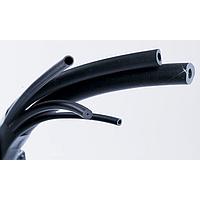
Flow Tubes
Reliable tubing is easy to overlook until a flow setup becomes difficult to route, maintain, or troubleshoot. In pneumatic, low-pressure fluid, and general instrumentation systems, the right flow tubes help keep signals, media paths, and service lines organized while supporting stable operation across the process.
This category focuses on practical tubing options used in measurement and accessory setups where flexibility, identification, and routing efficiency matter. Whether you are building a new panel, replacing worn lines, or standardizing multiple channels, selecting the correct tube size, length, and configuration can simplify installation and reduce mistakes during maintenance.
Where flow tubes fit in industrial measurement systems
Flow tubes are often part of the supporting infrastructure around instruments rather than the primary measuring element itself. They are used to carry air, vacuum, or compatible media between devices, helping connect sensing points, manifolds, regulators, and other accessories in a clean and manageable way.
In many installations, tubing choice affects more than just connectivity. Tube diameter, wall thickness, and layout can influence routing space, bend management, line identification, and overall serviceability. When systems also include accessories such as fittings, filters, and mufflers, compatibility across the whole assembly becomes especially important.
Why multi-colored ribbon tubing is useful
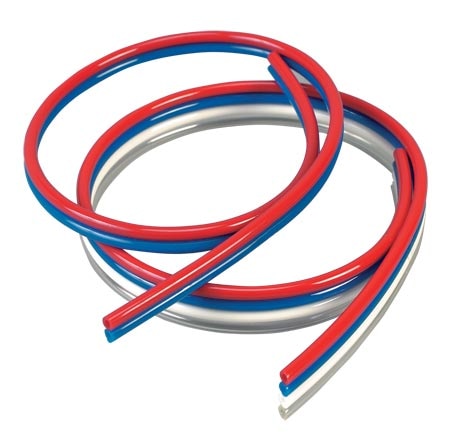
A notable solution in this category is OMEGA Omegaflex® multi-colored ribbon polyurethane tubing. Unlike single loose lines, ribbon-style tubing keeps multiple tubes bonded together in a flat arrangement, making it easier to route several channels in parallel and maintain consistent organization inside equipment, skids, and test benches.
The use of different colors within the same ribbon also supports faster line tracing during installation and service. For technicians working on multi-channel circuits, this can reduce connection errors and make maintenance tasks more straightforward, especially where two-line and four-line layouts are common.
Common configuration options in this category
The available products show a practical spread of configurations for different routing needs. Buyers can choose between two-tube and four-tube ribbon formats, with common lengths such as 50 ft and 100 ft to suit shorter machine runs or larger installations with more distance between connection points.
Several outside diameter sizes are also represented, including 0.125 in, 0.156 in, and 0.25 in options. In general, smaller tubing can be helpful where compact routing is a priority, while larger tubing may be preferred where flow capacity, mechanical robustness, or connection compatibility drives the selection.
How to choose the right flow tube
The best starting point is the physical and functional requirement of the system. Check the needed inner and outer diameter, expected operating pressure, temperature range, and whether the application benefits more from a two-line or four-line ribbon format. It is also worth confirming whether the tubing will be used in vacuum service, since some setups require both positive pressure and vacuum capability.
For example, OMEGA models such as the MCRPT-2-18066-50 and MCRPT-4-18066-100 illustrate how the same tubing family can support different line counts and lengths while keeping a consistent material style. Larger-format examples like the MCRPT-2-14160-100 or MCRPT-4-14160-50 may be more appropriate when a wider tube size is needed for the application.
Selection should also consider the surrounding ecosystem. If the line will be installed with protective accessories, isolation components, or pressure conditioning hardware, it helps to review related items such as a pressure surge protector where the process environment calls for additional protection.
Material and performance considerations
These featured products are polyurethane ribbon tubing assemblies intended for flexible routing in industrial environments. Polyurethane is commonly chosen where a balance of flexibility, handling, and durability is needed, particularly in instrumentation and pneumatic-style applications that require repeated routing through cabinets, frames, or compact machine spaces.
The listed Omegaflex® tubing options also indicate practical operating characteristics such as support for vacuum service, broad sub-zero to elevated ambient temperature use, and different maximum pressure capabilities depending on size. Rather than treating every tube as interchangeable, it is better to match the tubing geometry and pressure rating to the actual duty of the system.
Examples from the current range
For compact multi-line routing, the OMEGA MCRPT-4-18066-50 and MCRPT-2-18066-100 provide smaller-diameter options in four-tube and two-tube versions. These are useful when space is limited and consistent routing across multiple channels is important.
Where a mid-size profile is needed, models such as the MCRPT-2-532332-50 and MCRPT-4-532332-100 offer another step in tubing size while preserving the same ribbon concept. For larger tubing requirements, the MCRPT-2-14160-50 and MCRPT-4-14160-100 extend the range with a larger outer diameter suitable for applications that need a more substantial line format.
If your installation includes air preparation or media conditioning components, related accessories like air line lubricators may also be relevant depending on the broader pneumatic system design.
Installation and maintenance benefits
One of the main advantages of ribbon tubing is line management. Keeping multiple tubes joined together can reduce clutter, improve panel appearance, and make routing paths easier to secure. In maintenance scenarios, color separation supports faster identification of each channel without needing as many tags or manual tracing steps.
Another benefit is consistency across repeated machine builds or plant standards. When the same tubing family is used throughout similar systems, replacement planning becomes simpler and technicians can work more efficiently. This is especially useful in OEM, laboratory, and industrial environments where multiple parallel lines are common.
Supporting a cleaner, more serviceable flow setup
Choosing the right tube size, ribbon format, and length can improve not only connection reliability but also the overall usability of the installation. Well-selected flow tubes help create a neater routing layout, support quicker troubleshooting, and reduce confusion when multiple channels need to be handled together.
This Flow Tubes category is suited to buyers looking for organized, flexible tubing solutions within the broader measurement accessory environment. If you are comparing options, focus on the actual routing path, required number of lines, connection dimensions, and operating conditions so the tubing matches the system instead of becoming a weak point in it.
Get exclusive volume discounts, bulk pricing updates, and new product alerts delivered directly to your inbox.
By subscribing, you agree to our Terms of Service and Privacy Policy.
Direct access to our certified experts