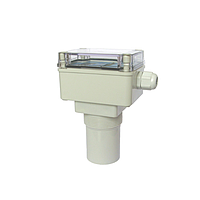
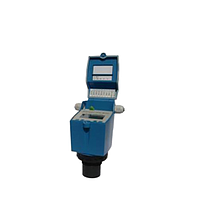
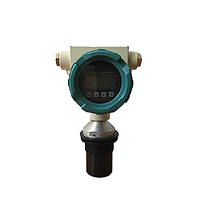
Level Transmitter
Accurate level monitoring is essential wherever liquids, slurries, or process media must be tracked continuously and converted into a stable control signal. In industrial tanks, wastewater pits, lift stations, and storage vessels, a reliable Level Transmitter helps operators move from simple visual checking to repeatable measurement that supports automation, alarms, and process control.
This category focuses on level transmitters used for continuous level measurement, with particular relevance for submersible designs that are installed directly in the measured medium. These instruments are widely selected when users need an analog output such as 4 to 20 mA, dependable operation in demanding environments, and straightforward integration with control systems or local monitoring devices.
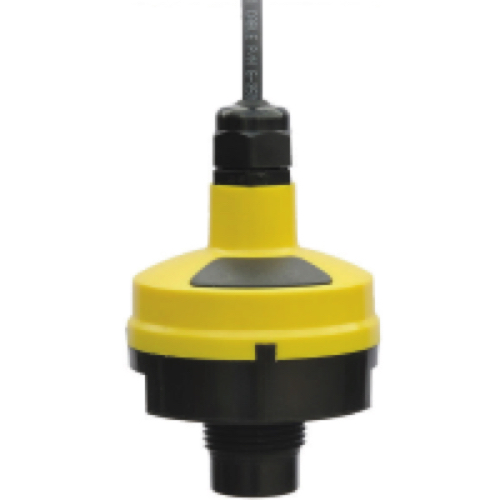
Where level transmitters are used
Continuous level measurement is common across water treatment, wastewater handling, chemical storage, process tanks, sumps, and open vessels. In these applications, the transmitter provides a live signal proportional to liquid height, allowing operators to observe trends, trigger actions, and maintain safer operating margins.
Submersible transmitters are especially practical when the sensing element needs to be suspended below the monitored point. This approach is often chosen for deep wells, wet wells, sludge or slurry service, and remote tanks where a compact installation and robust cable connection are important. If your project also requires a broader comparison of related products, you can explore the wider level gauge range for local indication solutions.
Why submersible designs are common in this category
A submersible level transmitter typically measures hydrostatic pressure created by the liquid column above the sensor. That pressure is then converted into a standardized electrical signal, most often 4 to 20 mA, which can be transmitted over distance to a PLC, display, recorder, or control panel.
The products highlighted in this category show why this design is widely used in industry: suspended mounting, stainless steel wetted construction in several models, fast response, and surge protection features suited to field installation. These characteristics make submersible transmitters a practical choice where direct contact measurement is acceptable and where continuous feedback is more useful than a simple point-level switch.
Representative product options from Dwyer
Several featured models come from Dwyer, including the PBLT2 and MBLT series. The Dwyer PBLT2-5-40 is positioned for wastewater and slurry duty, with a suspended installation style, 316 stainless steel construction, 4 to 20 mA output, and protection against lightning and surge events. That makes it relevant for harsher liquid environments where durability matters as much as signal stability.
The Dwyer MBLT family illustrates a range of compact submersible transmitters offered in different pressure ranges and cable lengths. Examples such as the MBLT-2SC-IVPM-10-15.2, MBLT-2SC-IVPM-100-106, and MBLT-2SC-IVPF-690-710 help cover short and long installation depths, while selected variants are specified with accuracy levels down to ±0.10%. Rather than treating these as interchangeable, it is better to match each model to the required measurement span, installation depth, and environmental conditions.
Key selection factors before choosing a model
The first step is to define the actual measuring range. In hydrostatic level measurement, the required pressure range must correspond to the maximum liquid head in the tank, pit, or well. Choosing a transmitter with too wide a range may reduce useful resolution in practice, while selecting one too close to the process maximum can leave little safety margin.
Next, consider the medium itself. Clean water, wastewater, and slurry service may require different material compatibility and mechanical robustness. The listed products include wetted materials such as stainless steel and engineered polymers, but the context also indicates that media compatibility should be confirmed where needed. For system design, users often pair a transmitter with a level controller when the signal must be used for pump logic, indication, or automated process response.
Cable length, power supply, and signal interface also matter. Many of the featured transmitters use a two-wire loop-powered design with 4 to 20 mA output and supply voltage ranges suited to industrial control panels. Long cable runs and field exposure can influence installation quality, so surge protection and proper grounding are important considerations in outdoor or electrically noisy sites.
Installation and application considerations
For submersible instruments, installation is not only about dropping the sensor into the tank. The mounting depth, cable routing, tank geometry, and possible buildup or turbulence should all be reviewed. In wastewater and slurry applications, suspended placement below the monitored point can help achieve consistent measurement while keeping the installation relatively simple.
Environmental conditions also affect long-term performance. Temperature range, proof pressure, and response time may all be relevant depending on the process. Where operators need continuous measurement plus alarm thresholds or pump sequencing, a transmitter may be combined with a level relay to support straightforward switching functions without overcomplicating the control architecture.
How level transmitters fit into a broader measurement system
A level transmitter is often one part of a larger instrumentation chain. The analog signal may be sent to a PLC, HMI, SCADA system, data logger, or dedicated panel meter. In many facilities, this enables trending, remote monitoring, overflow prevention, and better visibility of tank utilization over time.
Compared with simple visual indication, continuous level measurement improves process awareness. Compared with point-level devices alone, it gives operators more data for control decisions. If you need to review other solutions in the same measurement family, the broader level transmitter selection can be evaluated alongside transmitter accessories, signal handling devices, and complementary level technologies.
What to expect from this category
This category is suited to buyers looking for industrial transmitters that provide dependable analog level output for tanks, wells, pits, and process vessels. The featured range emphasizes compact and submersible solutions, with options covering different pressure capacities, cable lengths, and accuracy classes. That makes it easier to compare models based on the installation depth and operating environment rather than by name alone.
When narrowing your choice, focus on measurement range, media conditions, installation method, output requirements, and the surrounding control system. A well-matched transmitter can support more stable operation, clearer process visibility, and easier integration into existing industrial instrumentation.
Choosing the right level transmitter is ultimately about fit: fit to the medium, fit to the tank or well, and fit to the control strategy around it. By comparing the available submersible models and their intended duty, buyers can identify a solution that supports reliable level monitoring without adding unnecessary complexity to the system.
Get exclusive volume discounts, bulk pricing updates, and new product alerts delivered directly to your inbox.
By subscribing, you agree to our Terms of Service and Privacy Policy.
Direct access to our certified experts