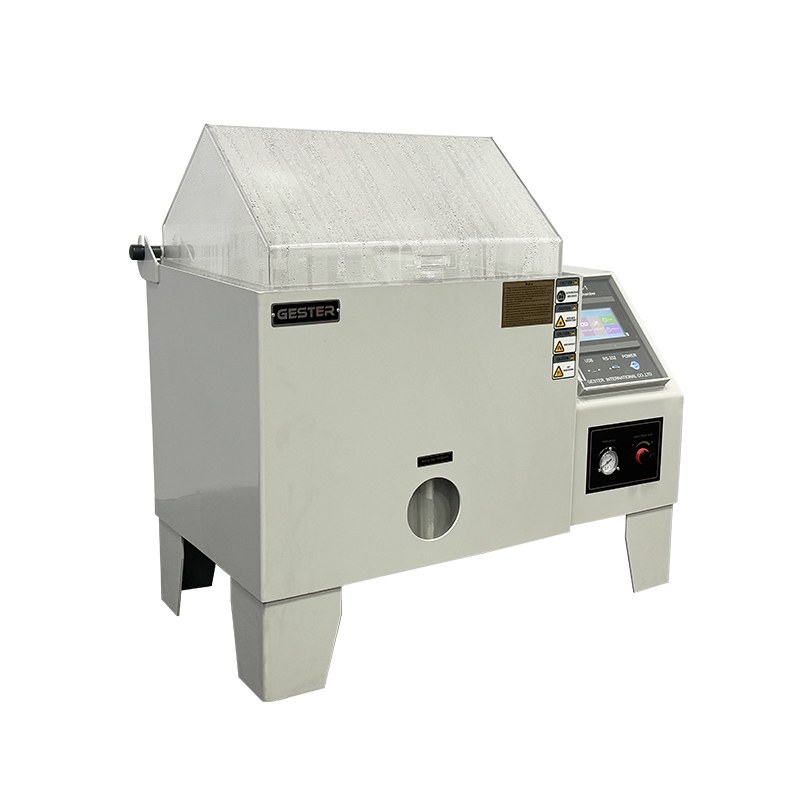
A salt spray test chamber is laboratory equipment used to evaluate how materials and protective coatings respond to a corrosive environment. It is particularly relevant when corrosion resistance, surface durability, and coating performance are important considerations in product development or quality assessment.
Also described as a salt spray tester or environmental corrosion chamber, this equipment provides a controlled way to expose samples to atomized saline solution. Rather than waiting for materials to age in uncontrolled outdoor conditions, a laboratory can observe corrosion-related changes during a defined test period and compare the behavior of different samples.
What is a salt spray test chamber used for?
The central purpose of a salt spray test chamber is to assess the ability of a material or coating to resist corrosion under controlled conditions. Test specimens may include metal parts, coated panels, or other materials whose surfaces need to withstand exposure to salt, humidity, and temperature-related conditions.
The results can help teams identify visible deterioration and compare alternatives. For example, a laboratory may examine whether a coating remains intact, whether a metal surface develops rust, or whether blistering and discoloration appear during exposure. This information supports more informed decisions about material selection and coating development.
Key applications in manufacturing and research
Quality assessment
Manufacturers use salt spray testing to investigate the durability of materials and finishes before products move further through production. It offers a repeatable test environment for evaluating samples under the same exposure approach. This can help quality teams detect potential surface-protection issues earlier in the process.
Material and coating development
During research and development, a salt spray test chamber can be used to compare prototypes, materials, and coating options. By reviewing corrosion signs after exposure, researchers can identify weaknesses and refine a material or protective finish before it is selected for a particular application.
Product durability evaluation
Products used in demanding environments may require careful consideration of corrosion risk. Industries mentioned in connection with salt spray testing include automotive, aerospace, electronics, marine, and coatings. The chamber provides useful evaluation data for materials and components intended for these types of applications.
How a salt spray testing machine works
A salt spray testing machine creates a corrosive test environment by atomizing a saline solution and directing the resulting spray toward the test samples inside the chamber. Temperature and humidity conditions are maintained in a controlled manner to support the selected exposure conditions.
Samples are placed in the chamber for a predetermined duration. The exact duration and sample arrangement should be defined by the laboratory’s testing objective. Because the environment is controlled, personnel can assess samples exposed under comparable conditions rather than relying solely on variation in real-world weather and use.
How to interpret test observations
Periodic examination is an important part of the process. Personnel may look for rust, blistering, discoloration, or other signs of corrosion and surface degradation. The timing and extent of these observations provide a basis for comparing the corrosion resistance of tested materials or coatings.
A salt spray result should be considered in the context of the test conditions, sample type, and intended application. The chamber is a tool for structured evaluation: it helps reveal how samples behave in a controlled corrosive setting and supports decisions about improving product durability.
Why controlled corrosion testing matters
Corrosion can affect appearance, material integrity, and the service life of a product. A salt spray test chamber gives laboratories, manufacturers, and researchers a practical method for studying this risk before products are released or materials are finalized. Whether used for quality assessment, prototype comparison, or durability research, it provides evidence that can guide material and coating choices.