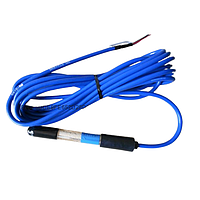
ORP sensors
Accurate oxidation-reduction potential measurement is important in water treatment, process monitoring, laboratory analysis, and many industrial liquid applications where chemical balance must be controlled consistently. Choosing the right ORP sensors helps improve measurement stability, response time, and maintenance planning, especially when the process fluid, installation method, and operating environment vary from one system to another.
This category brings together ORP sensing solutions used to monitor redox conditions in liquids, along with practical accessories for storage and electrode conditioning. It is relevant for users who need replacement probes, application-specific electrodes, or supporting consumables for routine upkeep of measurement performance.

Where ORP measurement is used
Oxidation-reduction potential is commonly monitored where the chemical state of a liquid affects product quality, treatment efficiency, or process safety. Typical use cases include disinfection control, wastewater treatment, chemical dosing, and water quality testing, where redox behavior can provide fast insight into the condition of the medium.
In broader environmental and process instrumentation, ORP often works alongside other analytical parameters. Depending on the application, users may also evaluate related measurements such as dissolved oxygen sensors or chlorine sensors to build a more complete view of water chemistry and treatment performance.
Typical ORP sensor formats in this category
The products in this category reflect different sensor constructions for different measuring conditions. Some models are designed as compact electrodes for portable or benchtop instruments, while others are better suited to fixed installations in industrial lines, tanks, or treatment systems.
For example, HANNA offers electrode-style solutions such as the HI2003/3 Sensor ORP and the HI36183 ORP Electrode for HI98190 Meter, which are suitable when meter compatibility, connector type, and handling convenience are important. For process-oriented installations, HACH models such as the RD1R5, RD1R6, RD2P5, and RD1P6 illustrate how body material, electrode material, and mounting style can vary depending on the application. HORIBA 6855-50B is another example of an ORP electrode used in liquid measurement systems where cable length and operating conditions matter.
How to choose the right ORP sensor
A practical selection process starts with the installation environment. Users should check the measuring range, operating temperature, pressure tolerance, wetted materials, cable requirements, and connector or meter compatibility. These factors affect not only whether the sensor fits the system, but also how reliably it will operate over time.
Electrode tip and body design also matter. A flat-tip platinum electrode such as HANNA HI6200405 may be useful in applications where surface contact or cleaning characteristics are relevant, while glass-body electrodes can be a good fit for laboratory-style measurement. In industrial settings, robust materials such as PPS, PEEK, or PVDF may be preferred for durability and chemical resistance.
It is also worth considering whether the application is general-purpose or more specialized. In the HACH range, for instance, some models are described as general-purpose, while others use gold electrodes for specialty applications. That distinction can help narrow down the sensor type when process chemistry or response characteristics require closer attention.
Maintenance accessories are part of reliable measurement
Stable ORP measurement depends not only on the probe itself but also on proper handling between uses. Storage solutions and pretreatment liquids help maintain electrode condition, reduce response issues, and support more consistent readings after periods of inactivity.
Within this category, HANNA HI70300S and HI70300M are storage solutions intended for pH and ORP electrodes, making them relevant for routine care and reactivation after drying or prolonged storage. For conditioning tasks, HI7092L Pretreatment oxidizing solution and HI7091L Pretreatment Reducing Solution are useful examples of products that support electrode preparation based on the type of redox measurement being performed.
Examples from leading manufacturers
This category includes products from recognized analytical instrumentation brands such as HACH, HORIBA, and HANNA. Each brand is commonly associated with liquid analysis applications, but the product styles shown here differ in form factor and intended use, from handheld-compatible electrodes to process sensors for continuous monitoring.
HANNA products in this category are especially relevant where portable and bench measurement workflows require compatible electrodes and maintenance solutions. HACH models are more representative of analog process sensors with industrial body materials and mounting options. HORIBA contributes application-oriented electrode options suited to compatible measuring systems and established liquid analysis setups.
Key factors that affect sensor performance in the field
Even when the nominal measuring range is suitable, ORP performance in real use depends heavily on process conditions. Temperature, conductivity, contamination, pressure, and chemical exposure can all influence response behavior and maintenance frequency. That is why matching the sensor construction to the actual medium is often more important than comparing headline specifications alone.
Users working in complex water analysis systems may also review adjacent sensing technologies such as turbidity sensors when suspended matter or optical water quality indicators are part of the same monitoring strategy. In many installations, ORP is only one part of a broader measurement architecture.
What to review before ordering
Before selecting an ORP sensor, it is useful to confirm a few practical points: instrument compatibility, required cable length, connector style, mounting method, electrode material, and expected operating temperature and pressure. For replacement purchases, checking the existing model reference can prevent mismatch and reduce downtime.
If the requirement includes routine maintenance, it can also be efficient to order the necessary support consumables at the same time. Storage and pretreatment solutions are small items, but they play an important role in extending usable electrode life and restoring measurement responsiveness when needed.
Choosing with application context in mind
The right ORP sensor depends on more than just the product name. Laboratory measurement, portable field use, and continuous industrial monitoring each place different demands on the sensor body, electrode surface, cable configuration, and maintenance routine. Looking at the full application context usually leads to a better fit than focusing on one specification in isolation.
Whether you are replacing an existing probe, specifying a sensor for a treatment system, or adding maintenance items for an installed analyzer fleet, this ORP category provides a focused starting point. Reviewing sensor construction, compatibility, and support accessories together will help you select a solution that aligns more closely with your process and operating conditions.
Get exclusive volume discounts, bulk pricing updates, and new product alerts delivered directly to your inbox.
By subscribing, you agree to our Terms of Service and Privacy Policy.
Direct access to our certified experts