When selecting a laboratory circulating bath, users often focus on operating temperature range, bath capacity, and control accuracy. However, Stability and Uniformity are equally important because they directly affect the quality and reliability of temperature-dependent processes.
Stability refers to temperature variation over time, while Uniformity describes temperature consistency throughout the working area. Understanding the difference between these two specifications is particularly important for applications such as thermometer calibration, temperature sensor verification, viscosity measurement, and materials research, where even small temperature deviations can influence test results.
Stability Reflects Temperature Consistency Over Time
During operation, the temperature inside a circulating bath does not remain at a perfectly fixed value. Instead, it fluctuates slightly around the setpoint. Stability indicates the magnitude of this fluctuation.
For example, if a bath is set to 50°C, the temperature measured at a fixed location may vary between 49.99°C and 50.01°C. The smaller this variation, the better the temperature stability.
In tests that run for hours or even days, stability has a direct impact on maintaining consistent test conditions. A well-designed control system continuously adjusts heating power to minimize temperature fluctuations throughout the operating period.
Temperature stability is influenced by several factors, including the accuracy of the temperature sensor, the effectiveness of the PID control algorithm, insulation quality, and the response speed of the heating system.
For long-duration applications, temperature stability is often the primary concern. Processes such as microbial culture, thermal aging tests, chemical reaction studies, and continuous sample heating require the temperature to remain as constant as possible. In these situations, stability directly affects the repeatability of test results.
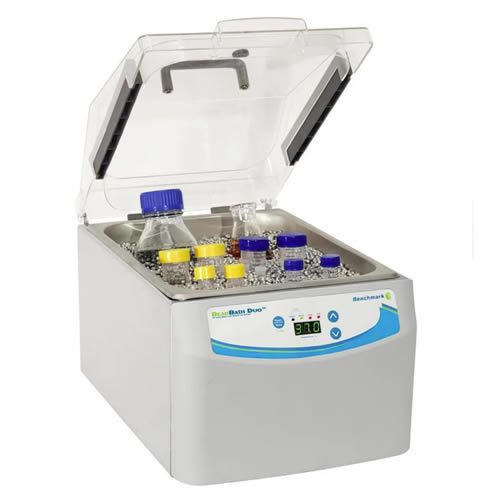
Uniformity Reflects Temperature Consistency Across the Working Area
While Stability is evaluated over time, Uniformity is evaluated across different locations within the bath.
At any given moment, the temperature at the center of the bath, near the walls, or close to the bottom may not be exactly the same. Uniformity indicates the temperature difference between these locations.
A bath with excellent temperature uniformity provides nearly identical thermal conditions throughout the entire working area. This becomes especially important when multiple samples are processed simultaneously or when samples are positioned in different parts of the bath.
In calibration laboratories, uniformity is often considered just as important as stability. Even if the temperature remains stable over time, temperature differences between locations can introduce measurement errors and affect comparison results.
Uniformity plays a particularly critical role in applications involving multiple measurement points or multiple samples. Thermometer calibration, temperature sensor verification, viscosity testing, and materials research all require samples to experience the same thermal environment. Any temperature variation between locations can influence measurement accuracy.
Why Circulating Baths Typically Offer Better Uniformity
In circulating bath, a pump continuously moves water or heat transfer fluid throughout the working chamber. This circulation reduces temperature differences between locations and minimizes localized hot spots near the heating element.
As a result, circulating baths generally provide superior temperature uniformity compared with standard heating baths that rely solely on natural convection. For this reason, calibration and research applications requiring high accuracy often use circulating baths rather than conventional laboratory baths.
In contrast, natural convection bath tend to exhibit larger temperature differences between areas close to the heat source and those farther away.
When selecting a laboratory circulating bath, both specifications should be evaluated together rather than relying on only one parameter. A system that combines high stability with excellent uniformity provides the most reliable thermal environment and helps ensure accurate, repeatable results.