What is a magnetically demagnetized sword?
The magnetic stir bar operates using magnets placed inside a PTFE casing. During operation, the magnetic attraction between the stir bar and the drive mechanism beneath the machine causes the bar to rotate in sync with the motor's movement.
As the magnetism weakens, this connection weakens, causing the stir bar to rotate slower than normal, easily lose synchronization at high speeds, or continuously fly off-center even when the machine is operating stably. This situation often occurs after prolonged operation at high temperatures or when the stir bar is subjected to repeated impacts.
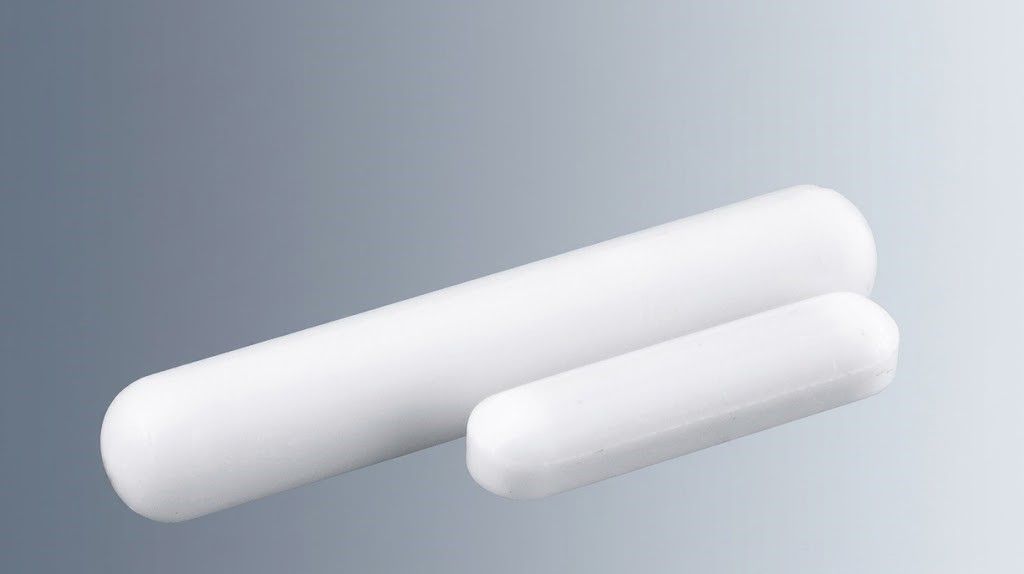
Causes of loss of magnetism
Temperature is the most common cause. Each type of magnet has its own temperature tolerance limit. If frequently used beyond this limit, the internal magnetic structure will gradually deteriorate, leading to weaker magnetic force. Impacts can also affect magnetization. Repeated drops onto hard surfaces or strong impacts during cleaning can reduce performance.
Additionally, using the wrong size can easily give the impression that the stirring rod has lost its magnetism. A stirring rod that is too small in a large-capacity beaker or working with high-viscosity solutions will often struggle to maintain stable movement even if the magnetism remains normal.
Can it be recharged magnetically?
Technically, some types of stirring bars can have their magnetism partially restored using strong magnets. However, the effectiveness depends on the internal magnet material, the degree of degradation, and the conditions under which it is performed.
In a laboratory setting, this method is rarely used because it is difficult to accurately assess the extent of restoration after treatment. The stirring bar may still function, but the magnetic force will no longer be as uniform as it was initially.
For low-value stirring bars or those that have been used for a long time, replacement is usually a simpler and more reliable solution.
See some articles:
What are handheld laboratory stirrers used for?
Some notes on using heated magnetic stirrers and their advantages and disadvantages.
How can you tell if the problem lies with the stirring rod or the mixer?
Before replacing the stirring bar, the equipment in use should be inspected.
In magnetic stirrers such as the DLAB MS-H280-Proor AREC.X, the internal drive mechanism directly affects the ability to maintain the stirring bar's movement.
See full details at: EMIN Magnetic Stirrers Distributed
If multiple stirring bars exhibit weak rotation on the same machine, the cause may lie in the drive mechanism or the motor inside the device.
Conversely, if a different stirring bar is used and the system operates normally, the problem is most likely with the stirring bar itself.
When should I replace the stirring rod?
The stirring rod should be replaced when the stirring force decreases significantly, becomes consistently inconsistent even after reducing the speed, or shows signs of damage to the PTFE coating such as cracking, peeling, or surface wear.
Continued use of a stirring rod with reduced magnetism can affect sample mixing capabilities, especially in applications requiring high homogeneity or extended stirring times.