The specific role of a light meter
In many cases, the lighting may look fine, but in practice, it can cause eye strain, color distortion, or affect product quality. Such situations are difficult to identify based solely on perception.
A light meter provides specific readings at each location. This allows you to identify areas that are underlit or overlit, enabling you to adjust the lighting system accordingly.
When should you use a light meter?
In reality, many people only start looking to buy lighting when they encounter one of the following situations:
- Offices with excessive glare or insufficient lighting, causing eye strain for staff.
- Production workshops needing to remeasure illuminance to meet standards.
- Photography studios requiring consistent lighting between sessions.
- Greenhouses needing to monitor light levels for optimal plant growth.
- Construction projects preparing for lighting system acceptance testing.
Top 7 hot selling light intensity measuring devices at EMIN
1. Testo Light Intensity Meter
Coming from a German brand, Testo is renowned for its compact design and high durability. With a measurement range of 99,999 Lux, it offers fast and accurate response, making it suitable for both domestic and industrial testing.
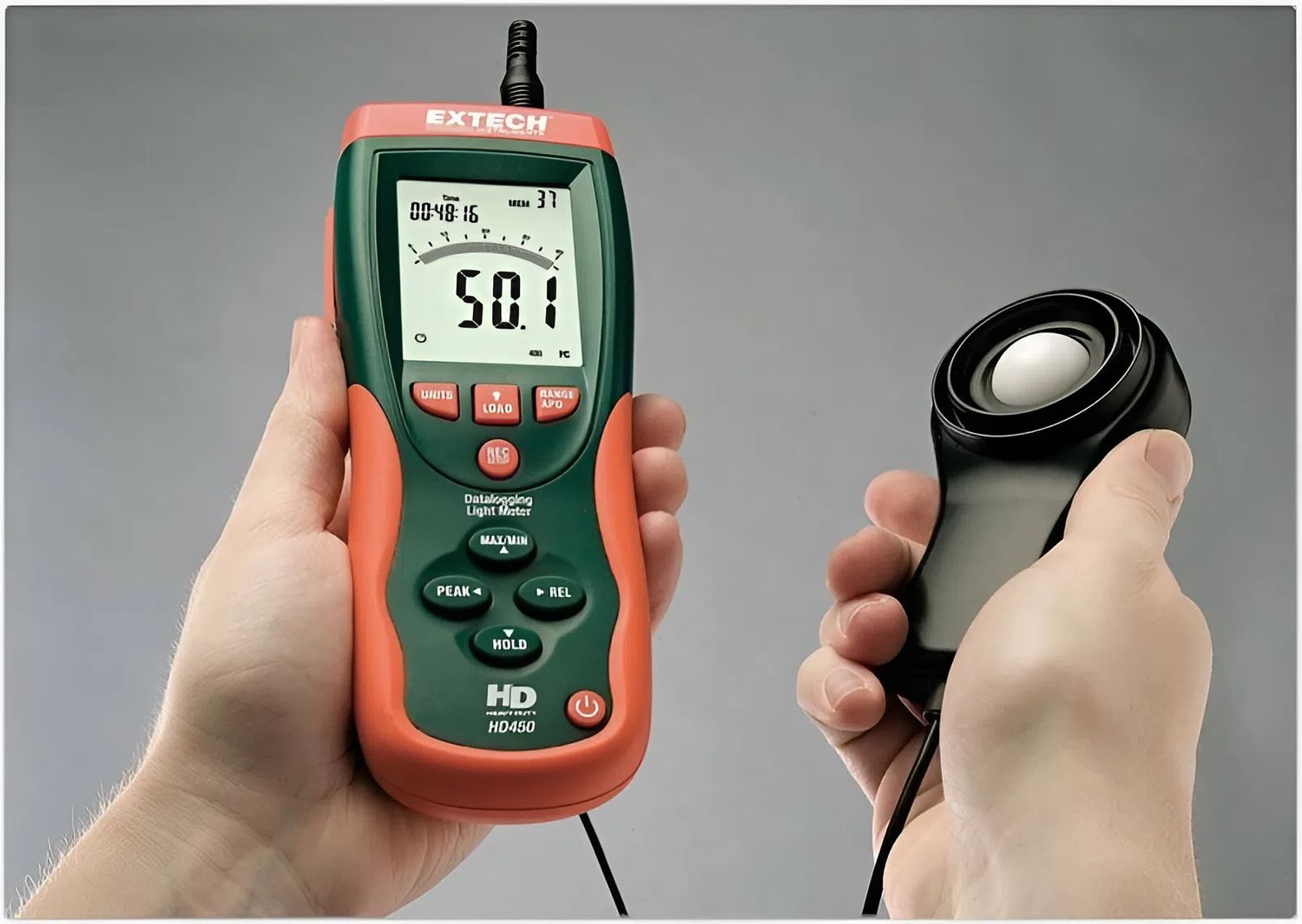
If the job requires measurements in areas with extremely high light intensity, Extech is the suitable choice with a measurement range of up to 400,000 Lux. The detachable sensor makes it easy to operate in tight spaces.
Kyoritsu is a robust and reliable Japanese instrument. Its extremely accurate angle measurement capabilities and low error rate make it a staple in the toolkits of professional electrical and lighting engineers.
The outer casing is made of durable ABS plastic, offering good impact resistance. The device automatically switches between measurement ranges flexibly, making it easy for new users to get acquainted with and operate.
5. UNI-T UT383BT Light Intensity Meter
A key feature is the Bluetooth connectivity. You can transfer data directly to your phone for storage and analysis, which is very convenient when you need to create field reports.
6. Kimo LX50 handheld light meter
The device meets IP54 standards, ensuring stable operation in high-humidity environments. This is a specialized model for those requiring absolute precision for testing large-scale lighting projects.
Additionally, you can refer to some topics on light intensity to choose the most suitable model for your needs.
Good lighting for working and studying