Apllication training
Hands-on learning is often the fastest way to connect theory with real industrial practice. In technical education, research labs, and vocational programs, application-oriented training equipment helps learners move beyond abstract concepts and work directly with real signals, control scenarios, energy topics, and engineering systems.
Apllication training equipment in this category is suited to institutions that need practical platforms for demonstrations, guided exercises, and lab-based skill development. Rather than focusing on one narrow discipline, this range supports multiple training needs, from audio signal and communication exercises to RFID experiments, green energy education, and airflow or ducting studies.
Built for practical technical education
Application training systems are designed to make engineering principles easier to observe, test, and repeat in a controlled environment. For schools, training centers, and research-oriented departments, this is especially useful when students need to understand how a system behaves under changing inputs, operating conditions, or measurement points.
Compared with purely theoretical instruction, a training platform gives instructors a structured way to demonstrate operating principles, while giving learners direct exposure to equipment handling, measurement routines, and troubleshooting logic. This makes the category relevant for laboratories covering electronics, energy, airflow, and applied technology topics.
Typical learning areas covered in this category
The scope of this category is broad enough to support several kinds of technical programs. Some systems focus on signal-related exercises, where students can work with transmission, reception, and audio behavior. Others are intended for emerging technology topics such as RFID, helping learners understand identification systems and experimental workflows in a more interactive way.
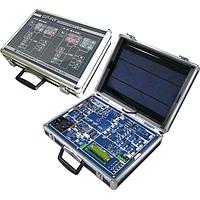
There are also platforms for energy and environmental engineering themes. A product such as the Leaptronix GP-6W Green Power Lab can support practical learning around green power concepts, while larger trainers such as the GOTT-CFADT-HP centrifugal fan air and ducting trainer are more suitable for airflow, ducting, and HVAC-related demonstrations. For institutions building a wider lab ecosystem, it can also be useful to review adjacent areas such as information technology training or civil engineering training depending on the curriculum.
Representative equipment in the range
Several products in this category illustrate how application training can be adapted to different disciplines. The Airfree AC-001 receiver audio signal equipment for education is an example of a compact training-focused device for signal and audio related instruction. Based on the available context, it includes receiver and modulation-related characteristics that can support demonstrations of communication and signal handling principles.
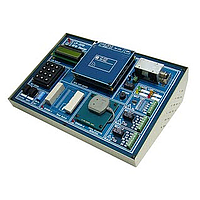
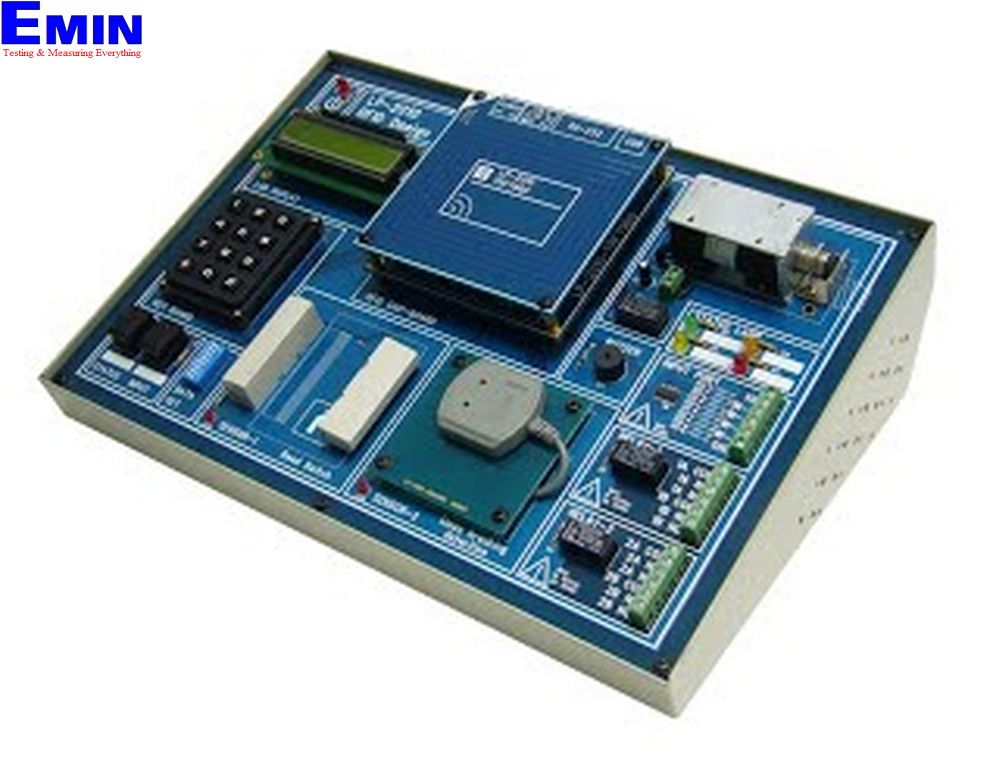
For identification and automation-oriented learning, the Leaptronix LP-2010 RFID Experimental Trainer provides a more focused experimental platform. Instructors can use this type of equipment to introduce learners to tagging, detection concepts, and the logic of RFID-based systems. In a different direction, the GOTT centrifugal fan air and ducting trainer supports applied study of airflow behavior, pressure, temperature, humidity, and ducting components, which is highly relevant for mechanical services and building systems education.
How to choose the right application training equipment
The right selection usually depends on the training objective first, not just the product type. If the goal is to teach communication or audio signal fundamentals, a compact signal-oriented trainer may be more appropriate. If the objective is to build practical understanding of sensing, identification, or smart system concepts, an RFID trainer can be a better fit. For facilities and environmental control topics, a larger airflow or ducting trainer will be more aligned with actual coursework.
It is also important to consider how the equipment will be used in class. Some institutions need trainer systems for instructor-led demonstrations, while others prioritize repeated student experiments in small groups. Available lab space, power requirements, measurement points, and the desired balance between guided exercises and open experimentation all influence the selection process.
Why manufacturer support and platform design matter
In educational procurement, hardware quality is only one part of the decision. The overall value of a trainer also depends on how clearly the system is arranged for teaching, how easy it is to observe inputs and outputs, and whether the platform supports repeatable experiments without unnecessary complexity. This is where established suppliers such as LEAPTRONIX and GOTT often become relevant in laboratory planning.
For example, LEAPTRONIX is represented here by both an RFID experimental trainer and a green power lab, showing how one manufacturer can support different application areas within the same institution. GOTT, by contrast, represents a more system-level approach in the ducting and airflow domain. Looking at the manufacturer ecosystem can therefore help buyers standardize training setups across departments while keeping operation and teaching methods consistent.
Applications in schools, labs, and technical training centers
This category is well suited to universities, vocational colleges, polytechnic schools, technical institutes, and corporate training environments that need more than general-purpose classroom equipment. These systems help learners understand how real engineering variables interact, whether that means signal response, air movement, humidity simulation, or energy-related experiments.
Application training equipment is also useful where programs want to bridge multiple disciplines. A curriculum may combine electronics, automation, and system testing, or extend into broader technical foundations supported by basic practice equipment. In healthcare-oriented technical education, related lab expansion may also include biomedical trainer systems where appropriate.
Key points to review before procurement
Before purchasing, it is worth reviewing whether the equipment matches the teaching level of the learners. Entry-level students often benefit from clearly structured trainers with visible test points and straightforward operating sequences, while advanced users may need broader experiment flexibility and deeper measurement capability.
Buyers should also check installation conditions, operating environment, and the role of accessories within the complete setup. In larger trainers, supporting elements such as measuring instruments, control consoles, ducting sections, or simulation modules are not secondary details; they are part of the learning system itself. A well-matched platform should support safe operation, understandable demonstrations, and meaningful hands-on practice over time.
Supporting stronger outcomes in applied learning
When chosen carefully, application training equipment can improve the way technical concepts are taught, demonstrated, and retained. It gives instructors a more concrete teaching tool and gives learners a clearer path from classroom theory to measurable system behavior.
Whether the requirement is for audio signal education, RFID experiments, green energy demonstrations, or airflow and ducting studies, this category brings together practical platforms for real training use. Reviewing the intended subject area, lab conditions, and learning outcomes will make it easier to identify the most suitable equipment for a durable and effective training environment.
Get exclusive volume discounts, bulk pricing updates, and new product alerts delivered directly to your inbox.
By subscribing, you agree to our Terms of Service and Privacy Policy.
Direct access to our certified experts