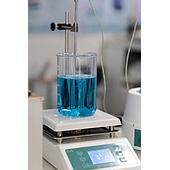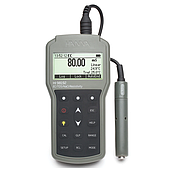

1. Why Does the Displayed Hotplate Temperature Differ from the Sample Temperature? Which Upgrades Solve This?
Legacy hotplates control temperature based on sensors embedded directly within the heating plate. However, the temperature of the liquid inside a beaker always deviates noticeably from the plate temperature, depending on beaker material, sample volume, and heating speed.
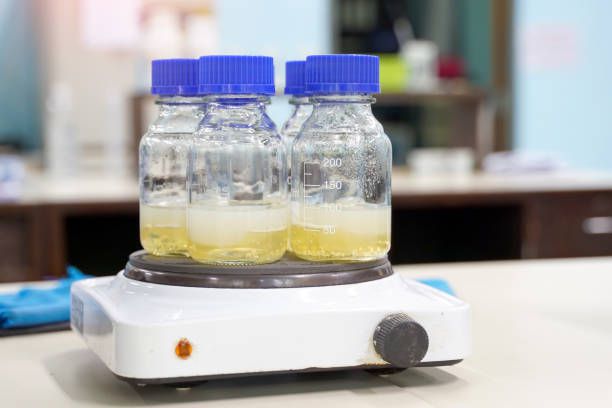
Published specifications for high-end heating magnetic stirrers reveal that plate-based temperature control achieves an accuracy of roughly ±5 K at 100°C. Integrating an external PT1000 probe directly immersed in the solution tightens media control accuracy to ±0.5 K to ±1 K. Furthermore, utilizing specialized contact electronic thermometers yields an optimal control accuracy of up to ±0.2 K.
Continuously compares measured real-time temperature against set values, automatically adjusting heating power to minimize overshoot during rapid heating phases.
Transmits direct measurement data from within the solution back to the controller, enabling precise thermal control right at the reaction site.
Allows calibration for discrepancies between displayed readings and certified reference thermometers (e.g., DaiHan HP-D series permits offset adjustments within ±20°C).
Laboratory Best Practice Note: External probes are effective only when fully immersed in liquid without touching the beaker's walls or bottom. Intelligent models automatically shut off heating if they detect an unimmersed probe, preventing runaway heating.
Explore Digital Hotplates with Integrated Temperature Sensors at EMIN
2. Hotplate Surface Selection: Ceramic-Coated Aluminum, Solid Ceramic, or Bare Aluminum?
The top plate material directly dictates durability, thermal conductivity, and maximum operating temperature limits:
| Plate Material Category | Key Technical Strengths | Essential Operational Constraints |
|---|---|---|
| Bare Aluminum | Fast heat transfer, highly uniform distribution, lower initial cost. | Prone to scratching and chemical corrosion over extended usage. |
| Ceramic-Coated Aluminum | Excellent chemical and acid resistance, scratch-resistant, easy to clean. | Maximum temperature for standard models ranges from 300°C to 380°C depending on model. |
| Solid Ceramic / Glass Ceramic | Extreme temperature resistance (rated up to 500°C–540°C for small plates; ~400°C for large plates). Superior chemical inertness. | More brittle than metals; thermal shock must be strictly avoided. |
| Specialized Hard Glass Surface | High chemical resistance, sleek aesthetic, clear visibility, easy cleaning. | Model-dependent; maximum temperatures are generally lower than solid ceramic plates. |
EMIN Technical Recommendation: Laboratories working with concentrated acids should verify chemical compatibility charts prior to purchase. Never splash cold liquids onto hot ceramic plates, as thermal shock can cause thermal cracking. High-temperature hotplates reaching up to 500°C with glass-ceramic plates are featured in DaiHan's MaXtir 500 series.
View Glass-Ceramic Heating Magnetic Stirrers (DaiHan MaXtir Series) at EMIN
3. Hot Top Alert Systems & Multi-Layered Laboratory Safety Features
Beyond Hot Top alerts, premium laboratory hotplates incorporate comprehensive passive and active safety layers:
- Independent Over-Temperature Protection Circuits: Automatically cuts off power if temperatures exceed safety thresholds.
- Integrated Timers & Keypad Lockouts: Automatic alarm shutdown upon timer expiration, paired with control lockouts to prevent accidental setting changes during active experiments.
- Spill-Resistant Control Housing: Displays are elevated above the hotplate surface to divert spilled liquids away from internal electronics, meeting international IP water-ingress standards.
4. Brushless DC Motors & Intelligent Magnetic Stirring Functions
Conventional stirrers utilizing brushed motors suffer from mechanical wear, noisy operation, and degrading magnetic strength over time. Modern magnetic stirrers distributed by EMIN utilize maintenance-free Brushless DC (BLDC) motors, maintaining precise speed stability within ±2% at 1,500 rpm (under no-load conditions).
Intelligent stirring technology delivers key operational benefits:
- Automatic Speed Compensation: Maintains constant set rpm even as sample viscosity changes during chemical reactions.
- High-Torque Magnetic Coupling: Ensures stir bars remain locked to the drive magnet without decoupling during rapid acceleration.
- Viscosity Trend Measurement & Intermittent Stirring Modes: Supports specialized reaction protocols requiring periodic agitation. High-capacity models support stirring up to 20 liters of water.
5. When to Replace Aging Hotplates & 6 Key Evaluation Criteria for New Equipment
Laboratories should consider replacing legacy heating equipment upon detecting the following warning signs:
6 Comparison Criteria for Selecting New Laboratory Hotplates:
- Temperature Control Method: Plate-based control vs. direct liquid measurement via external probes.
- Top Plate Material: Bare aluminum, ceramic-coated aluminum, or solid glass-ceramic.
- Maximum Temperature & Stirring Volume: Must accommodate maximum sample volumes with margin for viscosity.
- Comprehensive Safety Features: Hot Top warning, over-temperature protection circuits, timer alarms, spill-proof casing.
- Motor Technology Type: Preference for maintenance-free Brushless DC (BLDC) motors offering quiet and durable operation.
- Traceable Calibration: Individual serial numbers accompanied by factory calibration certificates.
The DaiHan HP-D Digital Series distributed by EMIN features premium ceramic-coated aluminum plates with set temperature accuracy of ±0.3°C. Set packages include external temperature probes, and every unit includes traceable calibration certification matched to its unique serial number. Investing in modern hotplates directly enhances analytical accuracy and laboratory safety.
Read more: DaiHan HP-20D vs. HP-30D Digital Hotplates: Choosing the Right Model for Your Lab Needs
Browse Genuine Laboratory Hotplates & Heating Equipment at EMIN