A three-phase welding machine is generally intended for workshops with a 380V industrial supply and recurring or heavier welding work. The right choice depends first on the welding process, base material, material thickness, and expected working intensity.
Compared with common 220V workshop equipment, three-phase machines are typically better suited to higher-load applications and longer operating periods. However, some listed models support both 220V and 380V, so input power should always be confirmed for the individual model.
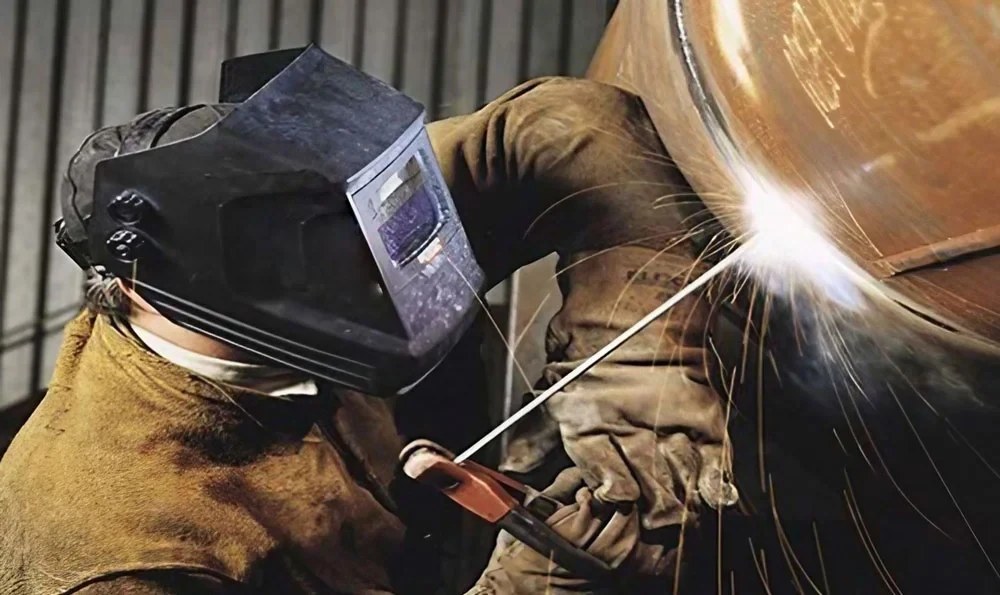
Summary: Three-phase machines commonly use 380V power. Stick welding is a practical option for general fabrication; MIG supports faster production; TIG suits work requiring a clean, controlled finish. Review input supply, welding process, output requirements, and duty cycle together.
What is a three-phase welding machine?
A three-phase welding machine uses a three-phase power supply, commonly 380V in the source data, to provide welding output for industrial and fabrication work. It is often used in mechanical workshops, steel structures, tank fabrication, industrial stainless-steel work, shipbuilding, and manufacturing facilities.
These machines are generally considered when a workshop needs stable operation for repeated welding, larger workloads, or thicker materials. Availability of the correct electrical supply is a basic requirement before selection.
How does a three-phase welding machine differ from a 220V machine?
The main difference is the input supply: standard three-phase equipment is associated with 380V power, while common general-purpose machines use 220V. Three-phase equipment is typically selected for higher-load, longer-duration workshop work, whereas 220V equipment may suit lighter work or smaller shops.
| Selection point | Three-phase machine | Typical 220V machine |
|---|---|---|
| Input supply | Commonly 380V | Commonly 220V |
| Typical setting | Industrial or larger mechanical workshops | Smaller workshops or lighter work |
| Typical workload | Higher-load or recurring welding work | Lower-intensity applications |
Note: Input voltage is model-specific. ARC-250D, ARC-315D Z226D JET20, NB 270D (J346), and NB 270DF (J443) are identified in the source data as supporting both 220V and 380V.
Which three-phase welding process should a workshop choose?
Choose the process according to the work rather than voltage alone: stick welding is suitable for general fabrication and site work, MIG for faster production-oriented welding, and TIG for controlled work on stainless steel, aluminum, or parts where finish matters.
| Process | How it works | Suitable applications in the source data | Main consideration |
|---|---|---|---|
| Three-phase stick | Uses welding electrodes | General mechanical work, construction, steel structures | Accessible and flexible; weld quality depends on operator skill |
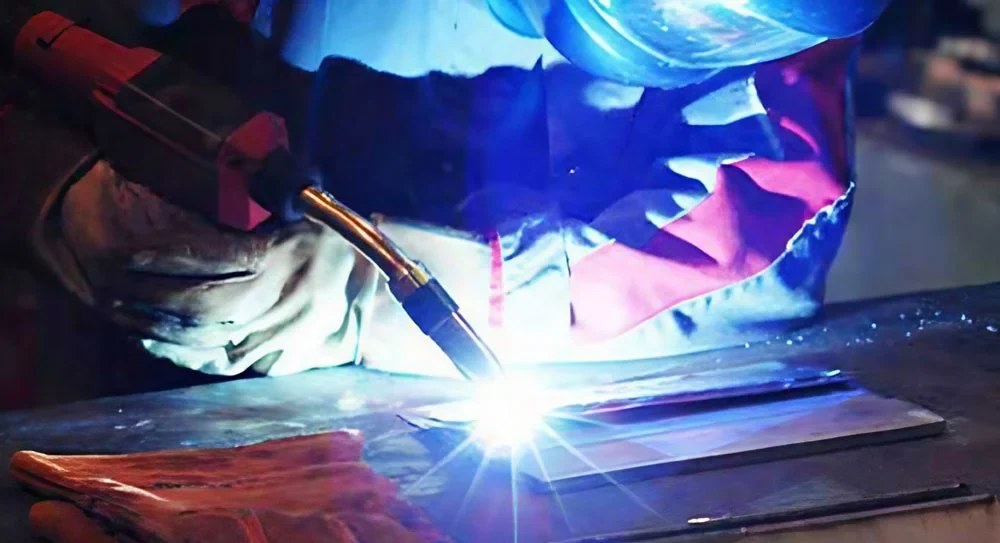
| Three-phase MIG | Uses continuous wire feed | Carbon steel, frames, steel structures, production work | Faster welding; requires suitable wire and may require shielding gas |
| Three-phase TIG | Uses a TIG arc with shielding gas | Stainless steel, aluminum, precision fabrication | Clean finish and heat control; slower than MIG and requires greater skill |
When is higher welding capacity the better choice?
Higher capacity is more appropriate when a workshop regularly welds thicker materials, larger structures, or operates for long periods and across multiple shifts. Capacity should not be judged from one figure alone; input power, output current, and duty cycle should be reviewed together.
A machine with high output current but a low duty cycle may not suit continuous production. Conversely, selecting substantially more capacity than the actual workload can increase initial investment without a clear operational need.
Which JASIC three-phase models are identified by welding process?
The source data lists JASIC models across stick, MIG, and TIG categories. These model names indicate available reference options, but the final choice should be matched to the workshop's supply, process, material, and operating requirements.
| Welding category | Models listed in the source data | Input information stated |
|---|---|---|
| Stick | ARES 400 / 380V; ARC-400 Z298 II JET20; ARC-400 (J45); ARES 500 / 380V | Three-phase 380V |
| Multi-input stick | ARC-250D; ARC-315D Z226D JET20 | 220V and 380V |
| MIG | MIG-250 (J04); MIG-270 N248 II JET20; NB 270 (N249); MIG 250F N253; MIG-315F (N254); MIG 350 (J1601); NB-350E; MIG500 (J8110); MIG-500 (N388); NB-500E | Three-phase 380V |
| Multi-input MIG | NB 270D (J346); NB 270DF (J443) | 220V and 380V |
| TIG | TIG 300 (W229); TIG-400 W231 II JET20; TIG-400 (J98); TIG 315P ACDC E203 II JET20; TIG 500P ACDC (E312) | Three-phase 380V |
What should be checked before buying a three-phase welding machine?
Confirm that the workshop has the required electrical supply, then define the primary material, thickness range, preferred welding process, production volume, and daily operating pattern. These factors provide a more reliable basis for selection than price or output rating alone.
- Power supply: Verify whether 380V three-phase power is available and whether a dual-input model is needed.
- Material and finish: MIG is identified for steel fabrication and output speed; TIG is identified for stainless steel, aluminum, and cleaner finishing needs.
- Working intensity: For frequent or long-duration welding, assess duty cycle alongside output current.
- Workshop growth: Modest spare capacity may be useful if workload is expected to increase, but excessive oversizing can raise the initial cost.