ESD-safe torque screwdrivers are used to tighten fasteners with controlled torque while helping limit electrostatic discharge during assembly. They are particularly relevant for work involving circuit boards, microprocessors, sensors, and other sensitive electronic components.
In electronics production, static electricity can contribute to immediate failures or defects that appear later. Controlled torque also helps avoid fasteners being tightened too little or too much, supporting a secure assembly.
Summary: ESD-safe torque screwdrivers combine static-control properties with controlled torque application. They can help protect sensitive electronics, support consistent fastening, and reduce assembly defects associated with ESD or incorrect torque.
What is an ESD-safe torque screwdriver?
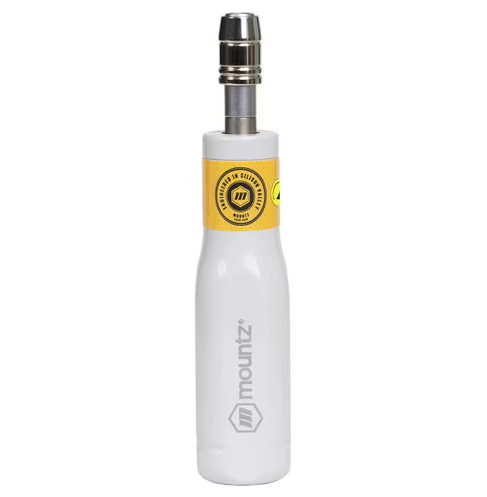
An ESD-safe torque screwdriver is a fastening tool designed to help prevent electrostatic discharge during assembly while applying torque to a fastener. This combination addresses two assembly concerns at once: protection for static-sensitive components and repeatable tightening.
Mountz identifies its FG ESD Preset Torque Screwdrivers as ESD-safe tools for this purpose. The FG and FGA drivers are described as using anti-static properties to reduce static electricity generation and minimize particle attraction.
Why is electrostatic discharge a concern in electronics assembly?
Electrostatic discharge, or ESD, can damage delicate electronic components even at voltages a person may not notice. The potential outcomes described for electronics manufacturing include product defects, rework, equipment malfunctions, and failures after the product enters service.
Static-sensitive items can include circuit boards, microprocessors, and sensors. Using tools designed to manage ESD is therefore relevant where these components are handled or installed during assembly.
How do ESD-safe torque screwdrivers support assembly quality?
They support assembly quality by pairing ESD control with precise torque application. Applying the specified torque helps reduce under-tightening and over-tightening, both of which can affect the integrity of a fastened assembly.
| Assembly concern | How the tool is intended to help |
|---|---|
| Static electricity around sensitive components | ESD-safe construction is intended to limit electrostatic discharge during assembly. |
| Under-tightened fasteners | Controlled torque helps bring fastening closer to the required specification. |
| Over-tightened fasteners | Controlled torque helps reduce the risk of damage associated with excessive tightening. |
| Assembly defects and rework | Managing both ESD exposure and torque application can help reduce related defects. |
What material and resistance characteristics are described for FG and FGA ESD drivers?
The FG and FGA ESD drivers are described as being constructed from impact-resistant, dissipative materials. Their stated surface resistance range is 10⁵ to 10⁸ Ohms.
The source associates this range with ESD standards and cites IEC 61340-5-1 and ANSI/ESD STM11.13 as test methods. These details are useful when reviewing whether a tool's static-control characteristics align with the requirements of a specific assembly environment.
Note: Tool selection should match the torque requirement, fastener, component sensitivity, and ESD-control practices of the assembly process.
When should an ESD-safe torque screwdriver be considered?
An ESD-safe torque screwdriver should be considered when a fastening task involves static-sensitive electronics and requires controlled torque. Electronics manufacturing is the most direct use case described, especially where circuit boards, processors, or sensors are part of the product.
The same need can arise in automotive, telecommunications, aerospace, medical-device, semiconductor, and other applications where electronic components are integral to product operation. The relevant question is whether the assembly combines an ESD-sensitive component with a torque-critical fastener.
How can preset torque settings help operators?
Preset torque settings can simplify repetitive fastening because the target torque is established for the task. This supports a more consistent process and can reduce the opportunity for torque-setting errors during repeated assembly operations.
The FG series is also described as having ergonomic handles intended to reduce operator fatigue during longer shifts. In practice, usability matters alongside ESD performance and torque control when tools are used repeatedly on a production line.
What should be checked when selecting an ESD-safe torque screwdriver?
Start with the assembly requirement: the component's ESD sensitivity, the required fastening torque, and the need for a preset setting. A suitable tool must address both static-control needs and the torque specification for the joint.
Also review the tool's stated dissipative characteristics and any applicable ESD procedures used in the facility. For applications that require documented compliance or testing, confirm the relevant requirements against the tool information and the assembly process rather than relying on a general tool category alone.