Fabric pilling is a common phenomenon that occurs after a period of wearing, washing, or using textile products. Small fiber pills on the surface not only make the fabric look older but can also affect its texture and overall user experience. In quality control, evaluating a fabric’s resistance to pilling provides manufacturers with additional information to assess its suitability for the intended application.
This phenomenon is influenced by friction during use. A fabric pilling tester is typically designed to reproduce different types of mechanical action, allowing changes to the sample surface to be observed and evaluated.
What Is Clothing Pilling?
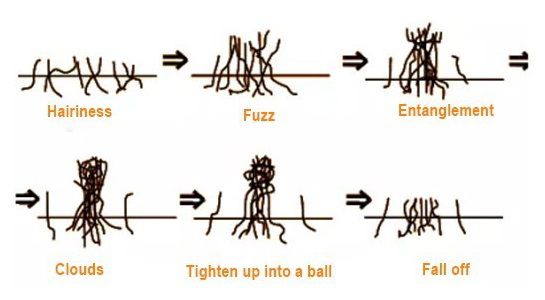
Pilling is the formation of small, irregular fiber balls on a fabric surface. It generally follows an earlier stage known as fuzzing or fluffing. During wear or washing, friction can pull fiber ends from the textile structure. These loose ends create a hairy surface. As rubbing continues, the projecting fibers may catch and twist around one another, forming pills.
The process does not necessarily end when a pill detaches. Fibers remaining at the surface can be pulled out again during further use, allowing new pills to form. This repeating cycle helps explain why pilling performance is evaluated as part of textile and garment quality control.
Why Do Clothes Pill?
The main driver of pilling is continuous mechanical action. Friction, hooking, dragging, and repeated contact during wearing or laundering can draw fibers to the surface and encourage them to entangle. The extent of visible pilling can therefore be influenced by how a product is used as well as by the fabric construction and fiber composition.
Because real-world use involves many changing conditions, laboratory tests are designed to simulate defined forms of rubbing or random movement. Their purpose is to create a controlled basis for comparing samples, rather than to reproduce every detail of actual wear.
Fabrics That May Be More Prone to Pilling
Several textile groups are commonly associated with pilling concerns. These include wool and wool-blend fabrics, especially knitted sweater-type materials. Fabrics made with chemical staple fibers and their blends, such as polyester-cotton and polyester-viscose materials, may also be assessed for pilling performance.
Lightweight knitted fabrics, including cotton, modal, viscose, and other regenerated cellulose fiber fabrics, are another relevant category. Embroidered denim is also identified as a fabric type where pilling may need consideration. These examples are useful starting points for inspection planning, but each fabric should be evaluated according to its intended application and construction.
Laboratory Methods for a Clothing Pilling Test
A clothing pilling test applies specified mechanical action to a prepared specimen, then evaluates the resulting surface condition. Different instruments create different types of abrasion, brushing, tumbling, or movement. Selecting a method should reflect the textile category and the type of wear effect being examined.
Surface Fuzzing and Pilling Tester
This method rubs a specimen with a nylon brush and fabric abrasive, or with fabric abrasive alone, for a specified number of cycles under specified pressure. It is intended to create surface fuzzing and pilling efficiently and can simulate snagging and pilling effects. The method is described as suitable for knitted apparel fabrics, including garments and T-shirts.
Martindale Abrasion and Pilling Tester
In a Martindale-based evaluation, a circular specimen moves under specified pressure while following a Lissajous-pattern rubbing path against the same fabric or a wool fabric abrasive. This controlled motion supports repeatable comparison of samples. The source material identifies this approach as suitable for bedding-related testing.
ICI Pilling and Snagging Tester
For the ICI method, specimens are mounted on polyurethane tubes and tumbled in a cork-lined wooden box at a constant rotation speed. After a specified number of turns, the pilling and/or snagging condition is evaluated visually. This approach is applicable to sweater-like textiles.
Random Tumble Pilling Tester
Random tumble testing creates random tumbling and rubbing inside a cylindrical chamber lined with cork gaskets. A small amount of gray short cotton is used in the chamber. The random movement is intended to expose the fabric to a different rubbing environment from the more controlled motion of other test methods.
Using Pilling Results in Quality Control
The tests are designed to simulate certain aspects of product use, but actual wearing and washing conditions can vary considerably. Therefore, a fabric abrasion and pilling tester may produce results that do not completely correspond to the fabric’s actual performance in use. During quality testing, test results should be compared with the surface appearance observed on the finished product and the actual requirements of its intended use to provide a more balanced assessment.