1. Opportunities arising from the explosion of connectivity in the AI era
AI is completely overshadowing traditional (non-AI) applications. Older Ethernet standards are being replaced by AI-specific protocols with stringent requirements for extremely high bandwidth and extremely low latency.
With the pressure of mass-producing optical cables and modules daily, maintaining absolute quality is a difficult challenge. The VNA Keysight machine is the "key" to inspecting thousands of cables with high accuracy, completely eliminating bottlenecks in AI supercomputer networks.
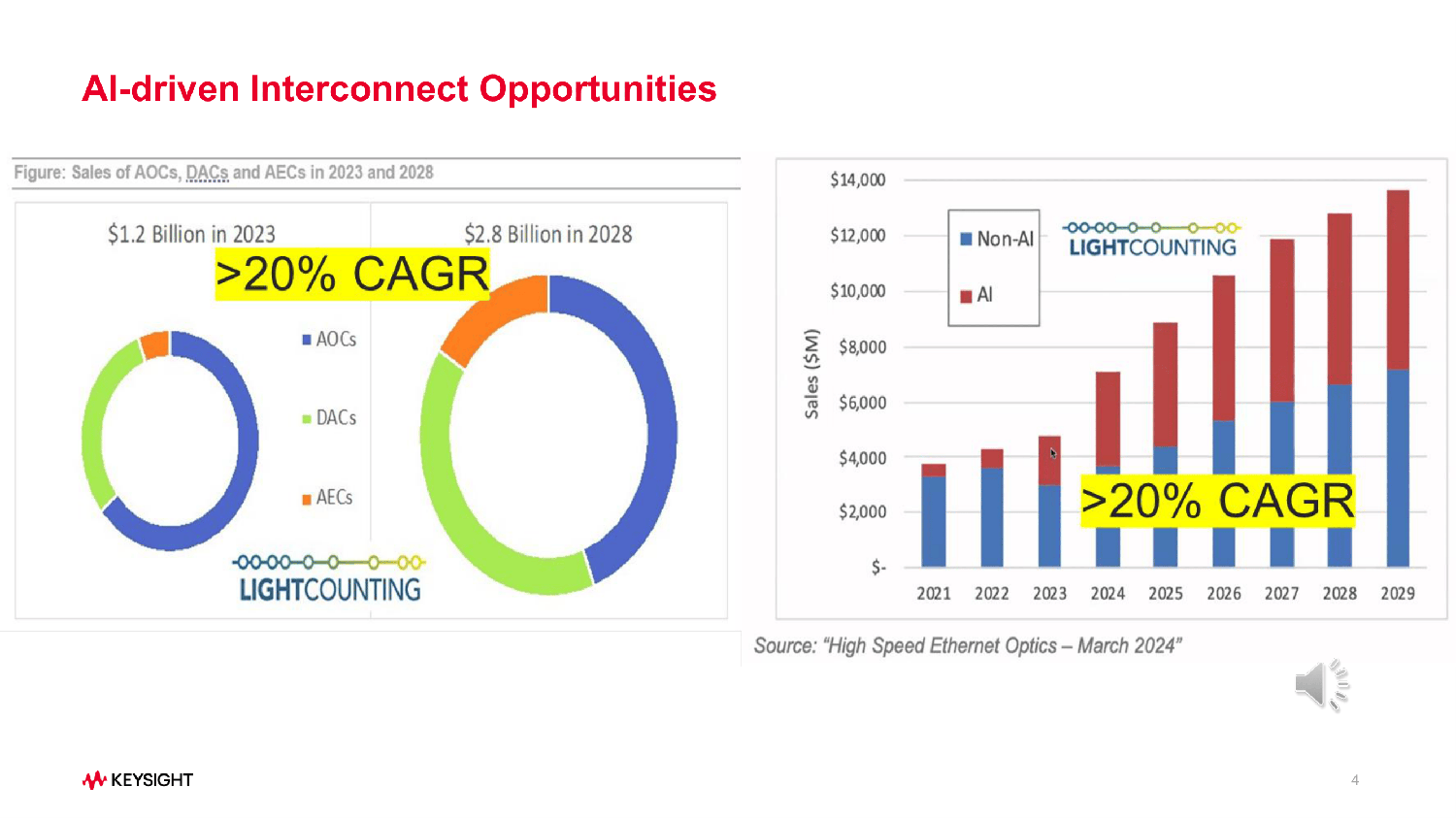
AI is a fertile ground but also presents significant technical challenges in terms of measurement and testing. The explosion in demand for AI connectivity is not just about market size; it's directly changing how we design and build hardware infrastructure. To meet this enormous bandwidth demand, engineers are simultaneously implementing two core scaling strategies: Scale-up and Scale-out.
2. AI Infrastructure Strategy: Scale-up & Scale-out
Scale-up (Internal Server Connection): Connects GPUs/XPUs at extremely close distances (NVLink/PCIe).
VNA machines optimize hardware design, including controlling crosstalk on the PCB and ensuring power integrity to prevent voltage drops during heavy data processing.
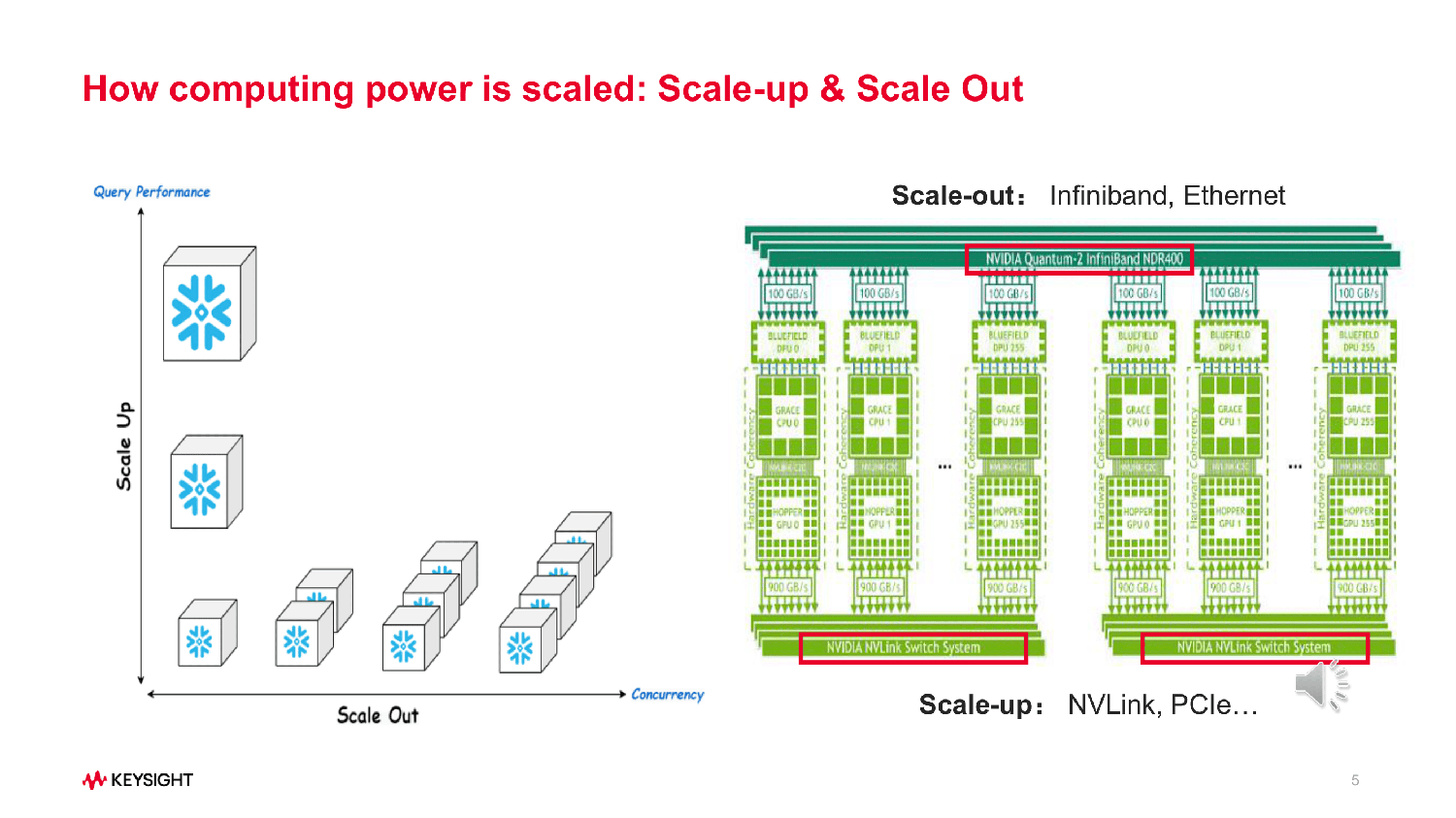
Scale-out (Wide Area Network Connection): Links thousands of servers via optical networks (Ethernet/InfiniBand).
The VNA system will ensure the continuous accuracy of the network by: assessing the quality of the fiber optic cable (AOC) and transceiver modules, ensuring Signal Integrity with no bit errors at speeds of 800G/1.6T.
3. Solving the AI Infrastructure Strategy Problem with the Keysight VNA Ecosystem
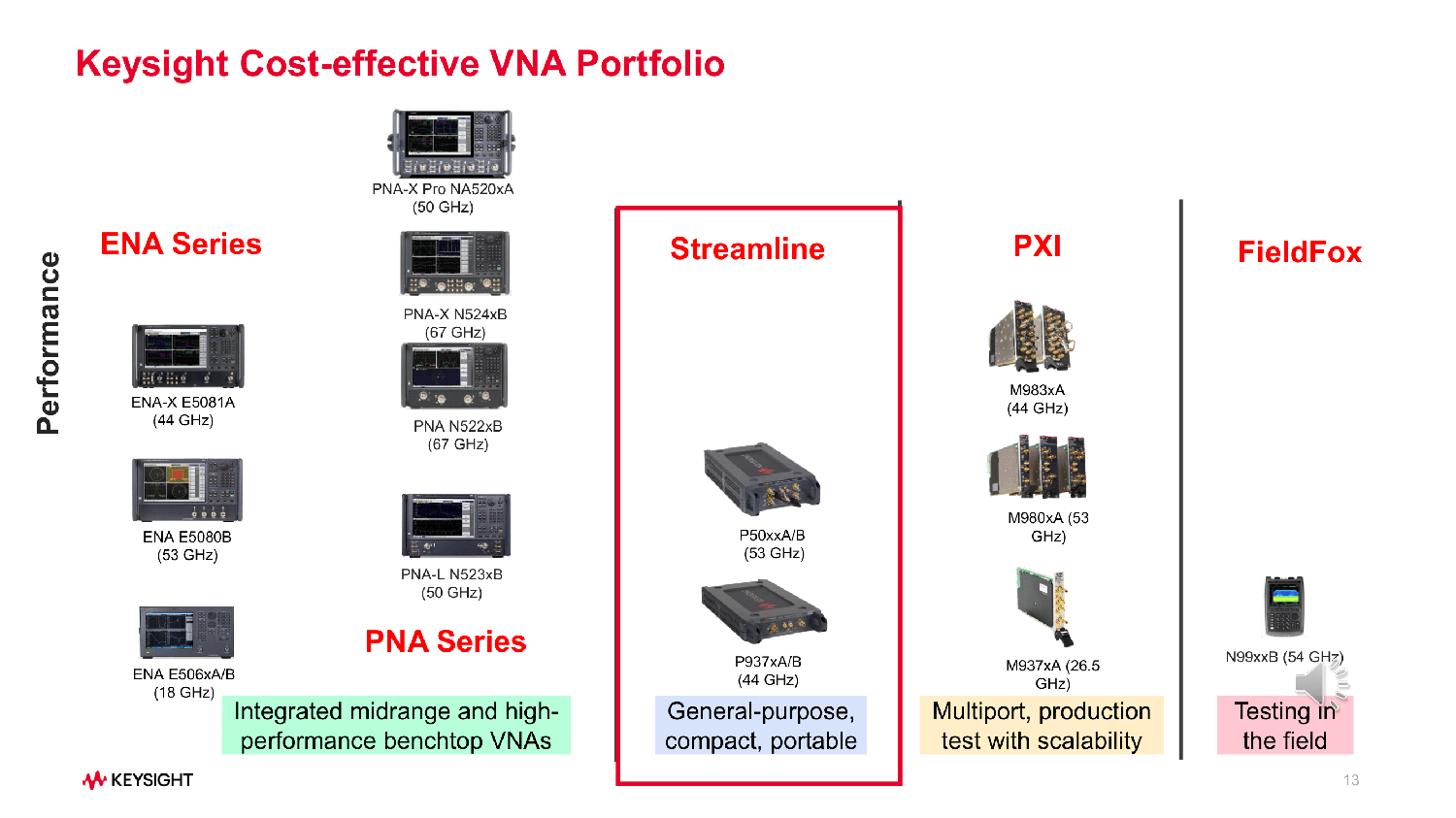
Streamline Series VNA is considered a mobile lab for ultra-fast AI infrastructure.
- Its ultra-compact USB design (only 2kg) offers flexibility for both on-site and in-data center testing.
- It boasts powerful performance with an extended frequency range up to 53 GHz or 330 GHz (mmWave).
Do you know? Keysight VNA is an indispensable platform for realizing ultra-fast connectivity systems currently running ChatGPT or Grok.
4. Utilizing VNA Keysight to accelerate research and evaluation of AI applications
- Signal Integrity (SI): Simultaneous time-domain (TDR) and frequency-domain measurements on a single device, reducing setup time by 50%.
- PCB & Material Optimization: Accurately determine dielectric constant (Dk/Df) accuracy in the mmWave range to reduce the number of trial fabrications.
- Power Supply Integrity (PI): Address voltage drop and EMI issues on GPU boards by measuring PDN impedance.
- Multi-port connectivity system: Configure VNA with up to 12 ports to simultaneously measure multiple signal pairs in AI Tray Switches.
Event Information:
Register now for the Technical Workshop: Enhancing Production Efficiency of Next-Generation Electronic Components and PCBs
Location: Vinpearl Hotel, Bac Ninh
Time: 13:30 – 17:15, Tuesday, March 31st
Don't miss the chance to experience firsthand the next-generation VNA solution - the key to optimizing design and accelerating your AI infrastructure development roadmap.