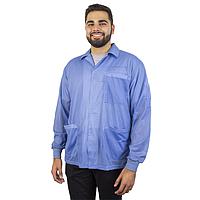
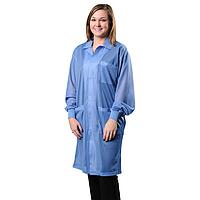
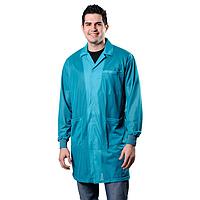
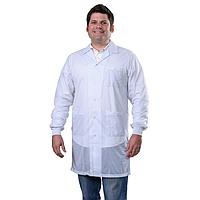
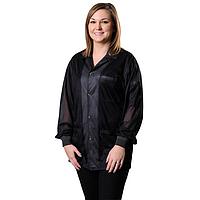
Coat, Jacket, Smock, Pants
In electronics assembly, laboratory work, and controlled production areas, the clothing worn by operators directly affects both product protection and workplace discipline. Choosing the right Coat, Jacket, Smock, Pants for anti-static or cleanroom use helps reduce particle transfer, supports more consistent handling practices, and improves comfort during long shifts.
This category brings together practical garment options for environments where ESD control, cleanliness, and operator mobility matter. Whether you are selecting apparel for a bench technician, a cleanroom operator, or a laboratory team, the goal is not simply to find a uniform, but to match garment style, coverage, and wear conditions to the actual task.
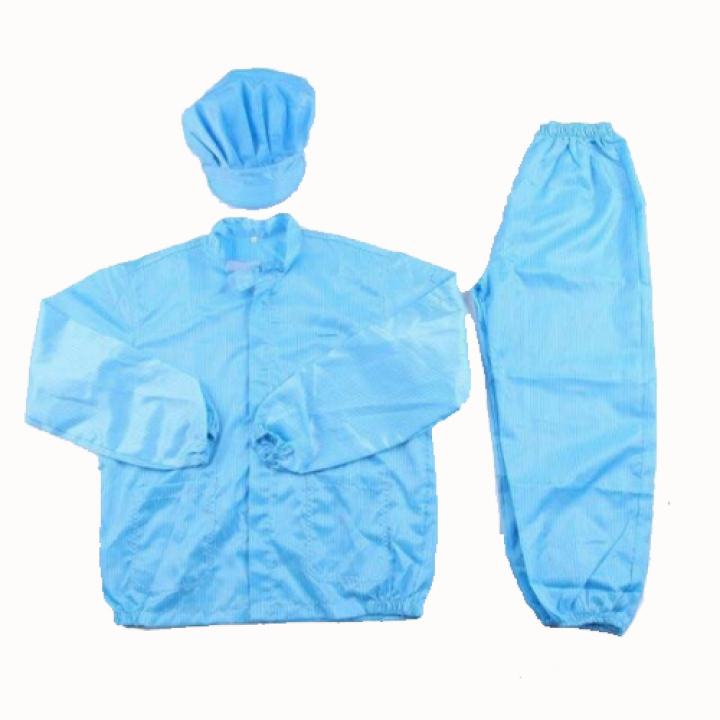
Why garment selection matters in ESD and clean environments
Anti-static and cleanroom clothing plays a broader role than basic workwear. In many production and inspection settings, garments help limit uncontrolled electrostatic discharge while also reducing contamination from fibers, dust, and everyday clothing underneath.
For this reason, buyers often evaluate more than appearance or sizing. A suitable garment should align with the process area, expected movement, operator comfort, and the level of coverage needed across the workday. In some workflows, separate pants and tops are preferred for flexibility, while in others, gown or smock formats offer simpler coverage and easier standardization across teams.
Common garment types in this category
This category typically covers outerwear and lower-body apparel used in controlled work areas, including coats, jackets, smocks, gowns, and pants. While these formats serve similar overall goals, they are often chosen for different operational reasons.
Lab coats are commonly used in laboratories, QA areas, and light clean handling tasks where front coverage and ease of wear are important. Smocks and gowns can provide a more enclosed fit for assembly or cleanroom routines, while pants are useful when facilities specify a two-piece clothing system. If you are building a full operator outfit, it is often helpful to review related items such as gloves for ESD and cleanroom use as part of the same PPE and contamination-control setup.
Examples of products available in this range
The assortment includes both general protective garments and application-specific apparel. For example, the VIỆT NAM PANTS Electrostatic pants represent a straightforward option for facilities that require dedicated lower-body anti-static clothing as part of a standard operator dress code.
For cleanroom-oriented wear, examples such as DaiHan DH.Wea3018 and DH.Wea3019 two-piece garments, along with DaiHan DH.Wea3021 and DH.Wea3029 gown styles, illustrate how this category can support different coverage formats and size requirements. In lab-focused settings, Daihan medical garments such as DM.App6007, DM.App6036, DM.App6032, DM.App6026, and DM.App6024 show the relevance of coat-style apparel where comfort, professional presentation, and routine laboratory use are key considerations.
There are also protective coverall examples from 3M, including MG2000 variants in different sizes. These are useful reference points for buyers comparing apparel intended for broader protective wear versus garments selected specifically for anti-static clothing systems.
How to choose the right coat, jacket, smock, or pants
The best selection usually starts with the process, not the garment name. Consider whether the user is working in electronics assembly, packaging, medical or laboratory handling, or a cleaner controlled area where particle management is part of the requirement. This will help determine whether a coat, gown, jacket, or pants-based setup is the better fit.
Next, review practical factors such as garment length, fit, size availability, and whether the team needs a one-piece or two-piece approach. In many industrial settings, operator comfort is closely linked to compliance: clothing that is too warm, too restrictive, or poorly sized is less likely to be worn consistently and correctly.
It is also worth considering how garments integrate with the rest of the apparel system. Footwear, head covering, and hand protection often need to work together, so buyers may also compare related categories such as ESD shoes or cleanroom caps when standardizing clothing across a production line.
Brand coverage and sourcing considerations
This category includes garments associated with recognized names in industrial and laboratory supply, including DaiHan, Daihan medical, 3M, and other manufacturers represented across the wider anti-static clothing range. Each brand may be relevant for different purchasing priorities, such as laboratory apparel, cleanroom wear, or general protective clothing.
When comparing options, it is usually more useful to focus on use case, fit, and garment format than on brand name alone. A lab coat for routine bench work and a cleanroom gown for controlled handling may both belong to the same broader clothing category, but they solve different operational needs. For buyers reviewing supplier ecosystems, the wider DaiHan range can also provide useful context for cleanroom and laboratory-oriented items.
Typical applications across industry
Coats, jackets, smocks, and pants in anti-static or cleanroom contexts are commonly used in electronics manufacturing, component handling, laboratory operations, medical-support environments, and inspection areas. In these settings, clothing is part of a broader process-control approach rather than a standalone purchase.
Cleanroom clothing systems are often selected to support repeatable procedures, controlled movement between zones, and easier visual identification of compliant apparel. In electronics work, anti-static garments can also form part of a complete ESD control program alongside grounded workstations, mats, wrist straps, and operator training.
Building a more complete clothing system
For many organizations, buying garments one item at a time creates inconsistency across teams. A more effective approach is to define the clothing standard by work area: for example, specifying the correct outer garment, pants, gloves, shoes, and head covering together so operators receive a complete and appropriate set.
This category is therefore most useful when treated as part of a larger apparel and contamination-control framework. The right choice depends on where the garment will be used, how often it will be worn, and what level of anti-static or cleanliness discipline the process requires.
If you are comparing options in this section, focus on garment style, coverage, wearer comfort, and compatibility with your working environment. A well-matched selection of coats, jackets, smocks, or pants supports both daily usability and more consistent control in ESD-sensitive and clean production areas.
Get exclusive volume discounts, bulk pricing updates, and new product alerts delivered directly to your inbox.
By subscribing, you agree to our Terms of Service and Privacy Policy.
Direct access to our certified experts