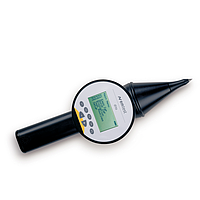
Electrostatic Discharge/charger Monitors
Reliable ESD control depends on more than installing ionizers or grounding personnel. In electronics manufacturing, cleanroom handling, and other static-sensitive environments, teams also need a practical way to verify how quickly charge decays and whether ionization performance stays within process limits. That is where Electrostatic Discharge/charger Monitors become important.
These instruments are used to evaluate charged plate behavior, monitor static decay, and support routine validation of ESD control programs. They are especially useful when checking ionizers, investigating process instability, or documenting performance during maintenance and audits.
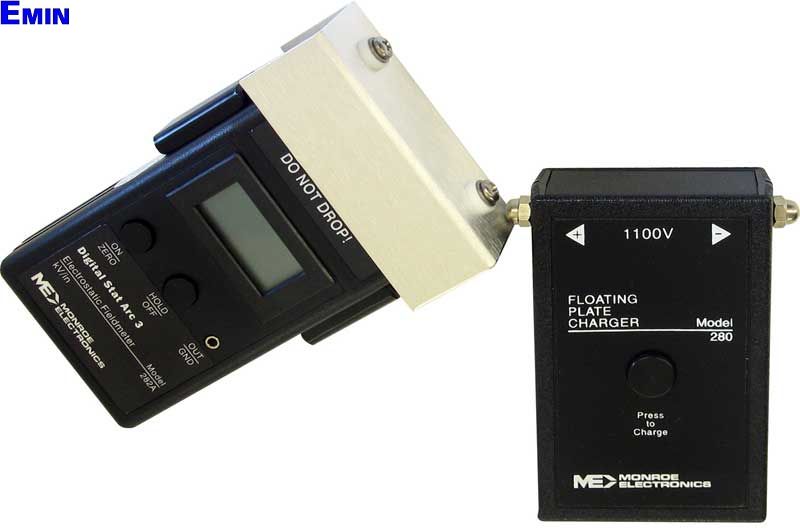
Why charged plate and electrostatic discharge monitoring matters
Static charge can build up on insulators, packaging, work surfaces, or moving materials and then discharge into sensitive components. Even when personnel grounding and workstation protection are already in place, ionization performance still needs to be checked under real operating conditions. A monitor designed for charged plate testing helps quantify how a controlled environment responds to a known electrostatic charge.
In many facilities, these tools are part of regular verification routines rather than one-time setup instruments. They support repeatable testing by applying or measuring a defined voltage level and timing the decay to a target threshold. This makes them useful for comparing ionizer performance over time, troubleshooting process drift, and confirming whether an ESD mitigation method is still effective.
Typical use cases in production and clean environments
Electrostatic discharge and charger monitors are commonly used in electronics assembly, semiconductor handling, lab environments, packaging stations, and clean manufacturing areas where static events can affect quality or yield. They help maintenance and quality teams validate ionization systems above benches, conveyors, or inspection points where charge accumulation may not be obvious during normal operation.
These instruments also fit well into broader contamination-control workflows. In environments where airflow, surface cleanliness, and process stability all matter, ESD verification is often reviewed alongside equipment such as a clean bench or an air shower, depending on the production area. The goal is not only low particle exposure, but also controlled electrostatic behavior throughout handling and assembly.
What to look for when selecting a monitor
The right choice depends on how the instrument will be used. For field verification and portable testing, buyers often look for compact units with onboard display, battery operation, and straightforward setup. For deeper analysis, features such as programmable start and stop voltages, graphical readout, data retrieval, or accessory support can make testing more flexible.
Another key point is the measurement range and resolution needed for your procedure. In this category, some instruments are designed for routine charged plate monitoring, while others combine charge generation, field measurement, and decay timing in one platform. It is also worth considering plate size, mounting options, carrying cases, and whether the unit will be used primarily at a bench, in a maintenance toolkit, or across multiple production zones.
Representative instruments in this category
Several products in this range illustrate the different levels of capability available. The TREK 158A Charged Plate Monitor is positioned for charged plate testing with programmable thresholds and a display format suited to detailed measurement work. For users who want a more complete setup, the TREK 158A Kit Charged-Plate Monitor Kit adds practical accessories that can simplify deployment in routine verification tasks.
For facilities using established charged plate methodologies, the TREK 157 Charged Plate Monitor and Trek 156A Charged Plate Monitor provide additional options for static decay evaluation. The KLEINWACHTER CPM 374 Charge Plate Monitor is another example of a portable instrument used for monitoring and documenting charged plate behavior in ESD-sensitive processes.
Where combined analysis is required, the Monroe 287B Ionzer Perfomance Analyzer stands out as a solution for evaluating ionizer behavior with charged plate and field-related functions in one instrument. Supporting items such as the Monroe 287/22C Adapter Plate and accessories like the TREK TK-1K065 Tripod for Charge Plate or dedicated carrying cases also matter, because repeatable setup and transport can have a direct effect on consistency in test routines.
Brands commonly used for ESD verification
This category includes products and compatible solutions from recognized ESD and test equipment manufacturers. For many buyers, TREK is a familiar name for charged plate monitoring instruments and accessories, especially where decay testing and configurable measurement parameters are important. Monroe is also relevant for ionizer performance analysis and related charged plate setups.
Depending on the application, buyers may also evaluate offerings from KLEINWACHTER and other established ESD brands listed in this category, including Desco, SCS, PROSTAT, KASUGA, Shishido, EM TEST, and DONG IL (DIT). Brand selection often comes down to test method preference, existing maintenance procedures, required accessories, and how the instrument will fit into a current ESD control program.
Accessories and setup details that affect real-world testing
In practice, the monitor itself is only part of the measurement chain. Charged plates, adapter plates, tripods, cables, and carrying cases help create a stable and repeatable test setup. For example, a dedicated plate or adapter can support specific test geometries, while a tripod helps position the plate consistently relative to the ionization source under evaluation.
Accessories are particularly useful for teams that move between workstations or perform periodic audits across several lines. A carrying case may seem secondary, but it helps protect calibration-sensitive instruments during transport. Likewise, specialized plates such as the TREK 156P-HT-150mm x 150mm High Temperature Charged Plate can be relevant where test conditions involve elevated temperatures or demanding environments.
How these monitors support ESD program control
A good monitoring workflow is not just about collecting numbers. It supports trend analysis, maintenance planning, and faster root-cause checks when electrostatic problems appear unexpectedly. If an ionizer no longer neutralizes charge within the expected window, a charged plate monitor gives teams a direct way to verify that issue instead of relying on assumptions.
Used correctly, these instruments help connect ESD compliance with process performance. They can support acceptance testing after service, scheduled validation on the production floor, and comparisons between multiple ionization points. Over time, that leads to more consistent handling of static-sensitive assemblies and better confidence in the overall control strategy.
Choosing the right option for your application
When comparing Electrostatic Discharge/charger Monitors, it helps to start with the actual test task: routine ionizer checks, portable troubleshooting, detailed decay analysis, or a more complete validation workflow with accessories. From there, evaluate the preferred display style, voltage programming needs, portability, and compatibility with the plates or fixtures used in your procedure.
This category brings together instruments, kits, and supporting accessories for organizations that need dependable ESD verification in production or clean environments. If you are building or refining an electrostatic control process, choosing the right monitor can make routine testing easier, more repeatable, and more useful for long-term quality control.
Get exclusive volume discounts, bulk pricing updates, and new product alerts delivered directly to your inbox.
By subscribing, you agree to our Terms of Service and Privacy Policy.
Direct access to our certified experts