Static meter
Controlling electrostatic charge is a practical requirement in electronics assembly, cleanroom handling, material testing, and many other sensitive processes. When charge buildup is not measured correctly, it can lead to ESD events, unstable product quality, dust attraction, or misleading process data. A static meter helps operators and engineers monitor surface voltage and electrostatic conditions without unnecessary contact with the target object.
On this page, you can explore instruments and related accessories used for electrostatic voltage measurement, along with probes and support components that fit into a broader ESD control workflow. The range is especially relevant for users who need non-contact measurement, repeatable readings, and better visibility into how static charge behaves in production or laboratory environments.
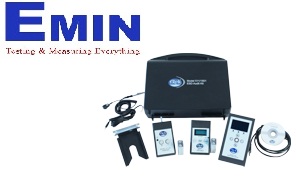
Where static meters are used
Electrostatic measurement is important anywhere charge can accumulate on insulating materials, moving parts, packaging, web surfaces, or isolated components. In electronics manufacturing, a static meter is often used to verify whether work surfaces, trays, films, or assemblies are carrying a voltage level that could create an ESD risk. In cleaner environments, the same type of instrument can also support contamination control by identifying charge conditions that attract airborne particles.
These instruments are also useful during process development and troubleshooting. Engineers may use them to compare material behavior, evaluate ionization effectiveness, or confirm whether a process step is generating more charge than expected. In controlled workspaces, static measurement often complements other environmental and workstation controls such as a clean bench or an air shower, depending on the application.
Typical device types in this category
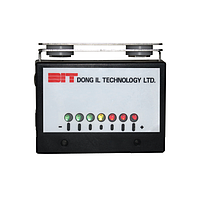
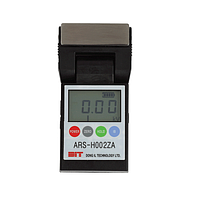
This category includes both portable and bench-oriented electrostatic measuring solutions. Hand-held non-contacting electrostatic voltmeters are commonly selected for quick inspections, spot checks, and maintenance tasks. They are useful when mobility matters and when operators need to measure charge on surfaces without touching delicate materials.
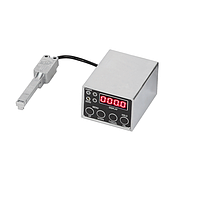
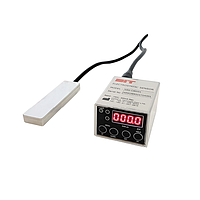
For more stable or integrated measurement setups, electrostatic voltmeters with dedicated probes are often preferred. These systems are suited to fixed stations, lab environments, and applications where response time, monitoring output, or probe geometry matters. Probe selection can be especially important when access is limited or when the measurement target has a narrow or difficult-to-reach surface.
Examples from the available range
Several representative products in this category show how static measurement needs can vary by task. The TREK 520-1 and TREK 520-2 hand-held non-contacting electrostatic voltmeters are designed for portable measurement in the lower voltage range, making them suitable for routine checks and operator-friendly use. Where a wider measuring range is needed, the TREK 523-1 and TREK 884 extend handheld capability into higher-voltage applications.
For fixed or more performance-oriented setups, the TREK 347-3-H DC-Stable Electrostatic Voltmeter is an example of a bench-style instrument intended for precise electrostatic measurement. Supporting components such as the TREK 541PR-E miniature electrostatic field chopper, the TREK 6000B-7C standard probe, and the TREK 3870AET-2 high-speed end-view probe illustrate how probe design can influence access, orientation, and system integration. If you are comparing product families from the same supplier, the TREK brand page can help you review the broader lineup more efficiently.
How to choose the right static meter
The first selection point is usually the required measurement range. Some applications involve relatively low surface voltages on electronic assemblies or packaging materials, while others involve much higher static levels on films, plastics, or isolated objects. Choosing a range that matches your real operating conditions helps improve usefulness and avoids over- or under-specifying the instrument.
The second factor is measurement method. A handheld unit is convenient for general field checks, but a dedicated meter with a matched probe may be better when the process requires repeatability, faster response, or continuous monitoring. Probe geometry also matters: miniature, end-view, or standard round-body configurations may be more suitable depending on available space, target position, and the recommended probe-to-surface distance.
It is also worth considering accessories and practical deployment needs. Items such as a carrying case, walking test adapter, or model-specific AC-DC adapter can support transport, specialized testing, or stable operation in a fixed setup. When reviewing options, it is useful to think not only about the meter itself, but also about how the instrument will be used day to day.
Why probes and accessories matter
In electrostatic measurement, the meter body is only one part of the system. Probes and adapters can strongly affect usability, especially in compact equipment, test fixtures, or production lines where the target cannot be reached easily. A miniature field chopper probe, for example, may be more suitable for confined spaces, while a standard probe may be the better fit for general-purpose bench measurement.
Accessories in this category are best understood as part of a measurement ecosystem rather than stand-alone primary instruments. The TREK TK-1K037R walking test adapter supports a specific testing scenario, while the TREK 43469 carrying case helps protect a portable meter during transport. Model-specific power adapters such as the TREK TK-F5058R and TREK TK-1K073 are also relevant where continuous powered operation is required instead of battery-only use.
Brand context and broader ESD measurement needs
Although the featured products listed here are centered on TREK, users evaluating a static meter often compare instrument ecosystems across established ESD and industrial brands. Depending on the workflow, buyers may also look at related manufacturers such as Desco, SCS, or SIMCO for adjacent ESD control tools and monitoring solutions. The right choice usually depends on measurement objective, process environment, and how the instrument fits into existing control procedures.
In many facilities, static measurement is not an isolated task. It is part of a broader program that includes grounding, ionization, packaging control, operator handling discipline, and environmental management. That is why selecting a meter should be based on the actual process and measurement point, not only on nominal voltage range.
Practical buying considerations for B2B users
For engineering, maintenance, QA, and procurement teams, a good category review starts with application fit. Consider whether the instrument will be used for incoming inspection, workstation verification, process development, failure analysis, or periodic ESD audits. This helps narrow the choice between a portable meter, a bench instrument, or a measurement setup that depends on a dedicated probe.
It is also sensible to verify compatibility between the main unit and any required accessories. Some items in this category are clearly intended for specific models, so matching the correct probe, adapter, or carrying accessory is important before ordering. For organizations standardizing their ESD control program, consistency in measurement method can also make operator training and data comparison easier over time.
Find a static meter that matches your process
This selection of static measurement products is intended for users who need reliable insight into electrostatic conditions in technical and industrial environments. Whether the requirement is a portable handheld voltmeter, a stable bench instrument, or a probe and accessory that completes an existing setup, the category supports a range of practical measurement tasks.
If you are narrowing down options, focus on the expected voltage range, required portability, probe configuration, and the actual measurement environment. A well-matched static meter can make ESD troubleshooting more effective, support cleaner process control, and provide more meaningful electrostatic data for day-to-day operations.
Get exclusive volume discounts, bulk pricing updates, and new product alerts delivered directly to your inbox.
By subscribing, you agree to our Terms of Service and Privacy Policy.
Direct access to our certified experts