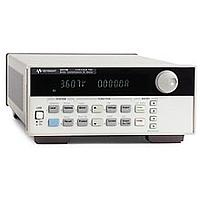
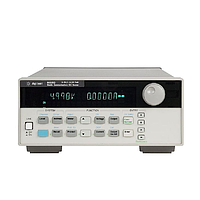
Battery Simulating DC Power Supply
Accurate battery behavior is critical when validating portable electronics, embedded systems, wireless modules, and power-management designs. In many test setups, engineers need a source that does more than deliver DC output—they need a programmable instrument that can reproduce battery voltage, internal resistance, charge or discharge conditions, and dynamic response under changing loads. That is where Battery Simulating DC Power Supply solutions become especially useful.
On this category page, you can explore instruments used to emulate real battery conditions during design verification, production test, and troubleshooting. These systems help reduce dependence on physical cells, improve repeatability, and make it easier to test power-sensitive devices under controlled laboratory conditions.
Why battery simulation matters in electronics testing
A real battery is not an ideal voltage source. Its output changes with load current, state of charge, internal impedance, and transient demand. When a product includes radios, processors, sensors, or pulse-driven subsystems, those variations can directly affect startup behavior, current consumption, and overall system stability.
A battery simulator allows engineers to reproduce these conditions in a controlled way. Instead of swapping cells or building ad hoc power arrangements, the test bench can apply repeatable voltage profiles, source or sink current as required, and observe how the device under test responds. This is valuable in R&D, validation, service labs, and manufacturing environments where consistency matters.
Typical applications for battery simulating DC power supplies
These instruments are commonly used for testing mobile and portable products, battery-powered IoT devices, handheld equipment, communication modules, and low-voltage electronic assemblies. They are also useful when engineers need to analyze current drain, simulate battery sag during pulse load events, or verify charging and discharging behavior without relying on live battery packs.
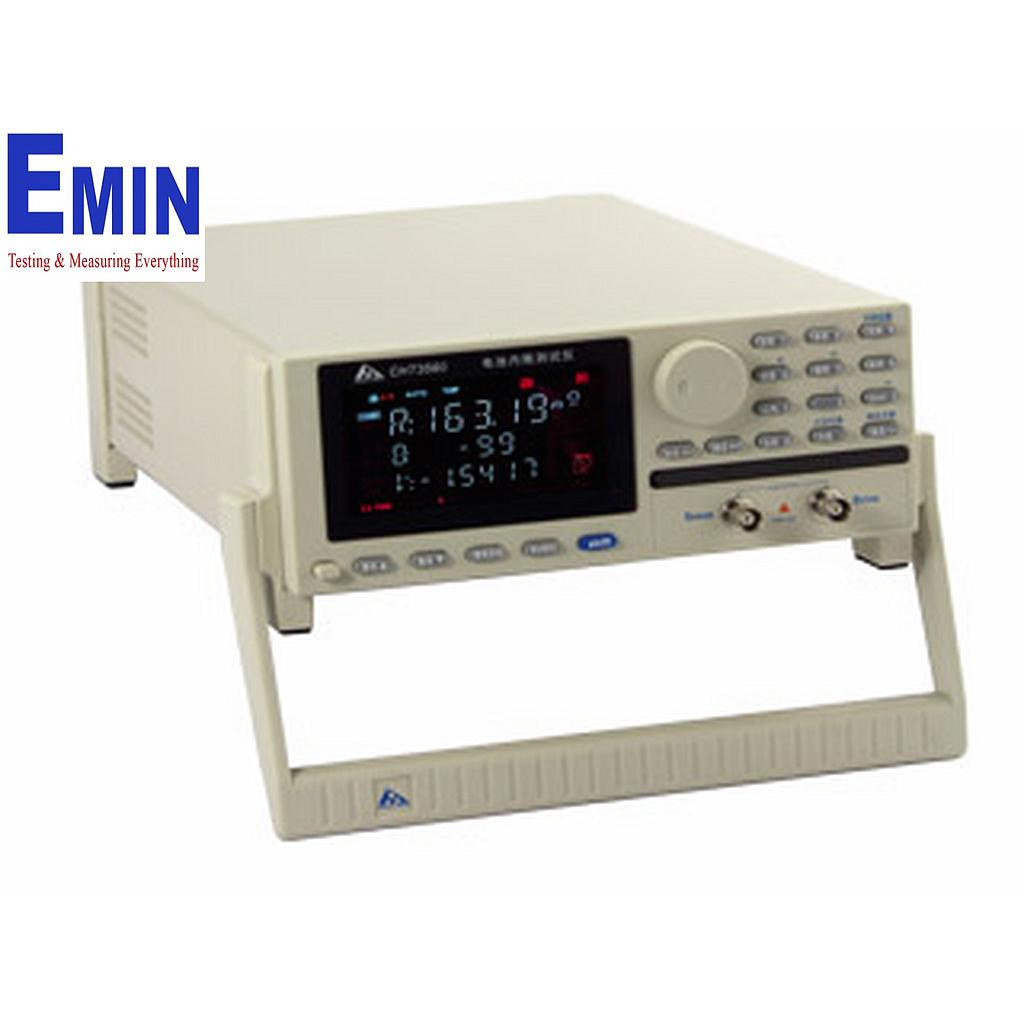
In practical workflows, battery simulation often sits alongside related tools such as battery monitoring equipment and instruments for electrical health checks like a battery impedance tester. Together, these categories support a more complete battery test strategy, from source emulation to condition assessment and performance analysis.
What to look for when choosing a battery simulator
The right unit depends on the device under test and the level of realism needed in the test scenario. Key factors usually include voltage and current range, source and sink capability, channel count, programmable output impedance, measurement resolution, transient response, and remote control interfaces such as USB, LAN, or GPIB.
For engineers working with pulsed loads or power-sensitive devices, dynamic response and readback accuracy are especially important. A simulator with variable output impedance can better reproduce battery-like behavior, while dual-channel designs may be useful for separating battery emulation from charger-path testing. If automated validation is required, SCPI-compatible control and data logging support can also simplify integration into larger test systems.
Representative products in this category
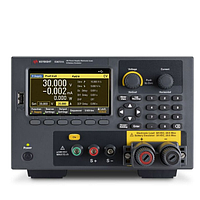
Several well-known platforms illustrate the range of solutions available. The KEYSIGHT E36731A Battery Emulator and Profiler combines battery emulation with profiling functions, making it suitable for labs that need both stable sourcing and deeper battery-related characterization. Keysight also offers module-based options such as the N6783A-BAT and N6785A for charge/discharge testing and battery drain analysis within modular DC power systems.
For compact bench setups, BKPRECISION provides battery charger/simulator models such as the BCS6402 and dual-channel BCS6401, both designed for applications where programmable output and battery behavior simulation are needed in a practical lab format. In addition, KEITHLEY solutions such as the 2308, 2306, and 2281S-20-6 are widely associated with portable device power testing, especially where current measurement and transient behavior are part of the evaluation workflow.
GW INSTEK also appears in this category with products such as the PPH-1506D, a programmable high-precision DC power supply, along with related accessories like the 13PH-1503D40 GPIB card. In a battery simulation ecosystem, this type of equipment can support precision sourcing, automation, and interface expansion for bench or system-level test environments.
Battery simulation, precision DC sourcing, and battery test workflows
Not every application needs the same level of emulation. Some users primarily need a stable programmable source with fine voltage control, while others need to mimic battery impedance, charge acceptance, or discharge behavior more closely. That is why this category can overlap naturally with both dedicated simulators and precision DC power platforms configured for battery-related testing.
If your workflow extends beyond emulation into fixture-based validation or device power characterization, it may also be helpful to review DC power supply solutions for battery test. In many labs, engineers combine a battery simulator with monitoring, measurement, and load control tools to create a more complete and scalable test setup.
Single-channel vs dual-channel configurations
Channel count can make a meaningful difference depending on the product architecture. A single-channel unit may be sufficient for straightforward battery emulation, especially during early-stage functional testing or simple power validation. This approach is often attractive when the DUT has one main battery input and the test objective is focused on voltage behavior, current draw, or battery drain analysis.
A dual-channel instrument may be more useful when engineers need to simulate both battery and charger paths, or when separate rails must be controlled during test. Products such as the BKPRECISION BCS6401 or KEITHLEY 2306 show how dual-channel configurations can support more complex scenarios without requiring multiple standalone instruments.
How this category fits into a broader battery test environment
Battery simulation is often one part of a larger validation process. During development, teams may use a simulator to reproduce controlled source conditions, then move to battery condition analysis or acceptance testing as the design matures. In maintenance or field support environments, a different toolset may be needed to assess health, conductance, or degradation rather than emulate supply behavior.
For that reason, users comparing options in this category may also want to explore battery conductance testers when the goal is to evaluate battery condition instead of replacing the battery with a programmable source. Choosing the right category depends on whether your priority is emulation, electrical characterization, monitoring, or health assessment.
Choosing the right platform for your lab
When comparing models, start with the behavior you need to reproduce rather than the product name alone. Consider whether your test requires only programmable DC output, or whether it also depends on features such as battery profiling, internal resistance simulation, current sinking, pulse measurement support, or modular expansion.
This category brings together instruments from established suppliers including KEITHLEY, KEYSIGHT, BKPRECISION, and GW INSTEK, covering both dedicated battery simulation tools and closely related precision power solutions. A careful match between DUT requirements, automation needs, and measurement depth will usually lead to a more reliable and efficient test workflow.
For engineers building repeatable battery-related test setups, the right battery simulating DC power supply can improve realism without sacrificing control. Reviewing the available models in this category is a practical way to identify equipment that fits your voltage range, channel requirements, and level of test complexity.
Get exclusive volume discounts, bulk pricing updates, and new product alerts delivered directly to your inbox.
By subscribing, you agree to our Terms of Service and Privacy Policy.
Direct access to our certified experts