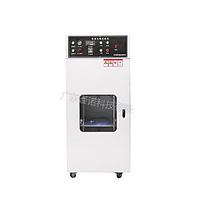
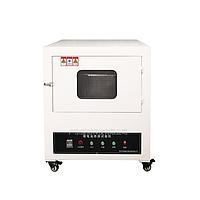
Machines for manufacturing and testing for batteries and capacitors
Production quality in battery and capacitor manufacturing depends on more than a single tester or station. Stable dispensing, coating consistency, curing control, and material handling all influence yield, traceability, and long-term product reliability. For engineering teams building or upgrading a line, it is often more practical to evaluate the equipment ecosystem around the process rather than looking at one machine in isolation.
This category brings together machines for manufacturing and testing for batteries and capacitors with a focus on process automation used around dispensing, conformal coating, UV curing, and inline transfer. These systems are relevant where repeatable fluid application, board-level protection, and efficient line integration are important in battery pack electronics, capacitor-related assemblies, and other precision electronic manufacturing environments.
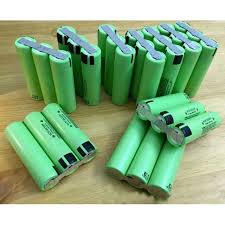
Where these machines fit in battery and capacitor production
Battery and capacitor manufacturing lines can include multiple stages that must work together smoothly: loading and unloading, adhesive or underfill dispensing, selective coating, curing, and final inspection. In many applications, the goal is not just automation for speed, but automation that improves process repeatability and reduces variation between batches.
For example, electronics associated with battery modules, BMS assemblies, capacitor control boards, and power-related subassemblies may require precise fluid placement and controlled curing. That is where integrated systems such as dispensing platforms, coating workcells, and UV curing ovens become relevant. If your process also relies on electrical verification, related tools such as battery monitoring equipment can support broader production and validation workflows.
Typical equipment types in this category
The product mix in this category points to a practical manufacturing setup rather than a single-purpose machine list. You may find inline transfer equipment, fluid dispensing systems, conformal coating machines, and curing equipment used together as part of a coordinated process.
A model such as the Anda ADJ 460 Automatic Machine Load/Unload serves the line-handling role, helping boards move in and out of process stations. Dispensing systems including the Anda iJet SD-600 Dispenser, Anda iJet HD-18 Dispenser, and Anda iJet SD-900 Dispenser are suited to applications where controlled deposit size, repeatability, and programmable motion matter. For downstream protection or material finishing, the Anda UV-2 UV Curing oven machine supports curing steps, while selective coating platforms such as the Anda Intermediate Model - iCoat X3 and Anda Advanced Model iCoat-X5 address coating coverage and path control.
Why dispensing and coating accuracy matter
In battery and capacitor related electronics, material application errors can create expensive rework or hidden reliability issues. Too much fluid may contaminate adjacent areas, while too little can leave gaps in protection or bonding. This is especially important in processes such as underfill, glob top, edge bonding, surface-mount adhesive dispensing, and selective conformal coating.
Several featured Anda systems indicate capabilities commonly expected in this kind of environment, such as servo-driven motion, vision-assisted alignment, programmable dispensing paths, and fine positioning. Those characteristics are useful when manufacturers need consistent fluid control across changing board layouts or mixed-product runs. In a B2B production setting, that consistency often matters just as much as headline throughput.
Examples of line integration and workflow design
One of the more useful ways to evaluate this category is to think in terms of line architecture. A load/unload station can feed boards to a dispensing cell, which then passes parts to coating or curing equipment before inspection. The Anda OMO ONE MAN OPERATION (OMO) – FLUID DISPENSING LINE reflects this broader approach, where multiple process modules are organized to reduce manual intervention and floor-space inefficiencies.
For companies planning a semi-automatic or fully inline setup, it can be helpful to compare not only machine specifications but also how each station supports upstream and downstream communication, transfer direction, width adjustment, and maintenance access. If your project includes electrical source simulation during validation or production support, a battery simulating DC power supply may also be part of the wider test environment.
Featured manufacturer in this category
Anda is the primary manufacturer represented here, and the available products suggest strong coverage across fluid dispensing, selective conformal coating, curing, and line handling. That makes the brand relevant for users looking for coordinated equipment rather than unrelated standalone machines from multiple sources.
Within this range, different models serve different production priorities. The iJet series is suitable for precision dispensing tasks with varied application ranges, while the iCoat platforms are better aligned with selective conformal coating requirements. Supporting equipment such as the UV-2 curing oven and ADJ 460 load/unload machine helps complete the process chain around the core manufacturing step.
How to choose the right machine set
The best selection process usually starts with the material and process requirement, not the model name. Buyers should first define whether the application is primarily dispensing, coating, curing, or transfer automation. From there, the next questions typically involve board size range, required precision, valve or nozzle flexibility, conveyor compatibility, and whether the machine will run as a standalone cell or in a full inline line.
It is also important to check how the equipment fits with production controls and quality targets. For some users, vision alignment and programmable motion are essential. For others, easier width adjustment, operator workflow, or compact line design may have more impact. Where electrical condition assessment is part of incoming inspection or maintenance planning, instruments such as a battery impedance tester can complement production equipment by supporting diagnostic work outside the core assembly cell.
What this category is useful for in B2B sourcing
For purchasing teams, process engineers, and factory planners, this category is useful as a starting point for comparing equipment involved in automated battery and capacitor related manufacturing. It is especially relevant when the requirement goes beyond a generic machine search and into the details of application fit, production flow, and equipment compatibility.
Because the listed products span dispensing, coating, curing, and material handling, the category supports a more structured sourcing process. Instead of reviewing unrelated machines one by one, buyers can identify how different stations may work together in a production environment and shortlist the solutions that match their line design, material behavior, and throughput goals.
Final considerations
Choosing equipment for battery and capacitor production is often a matter of balancing precision, integration, and operational efficiency. The machines shown here are most relevant for manufacturers who need controlled fluid application, protective coating processes, curing support, and smoother inline transfer within electronic assembly workflows.
If you are comparing options for a new line or upgrading an existing process, this category provides a focused view of the available automation around those tasks. Reviewing the application scope of each system, especially across the Anda range, can help narrow down the right combination for your production and testing requirements.
Get exclusive volume discounts, bulk pricing updates, and new product alerts delivered directly to your inbox.
By subscribing, you agree to our Terms of Service and Privacy Policy.
Direct access to our certified experts