Shoe soles are exposed to repeated bending throughout normal use. Over time, this motion can contribute to cracking or fracture, particularly when cuts, notches, or punctures are present in areas subject to high flexing stress. Testing flex-crack resistance helps quality control teams examine how a sole specimen responds to continuous flexion under defined conditions.
The Bennewart method is one approach used for this purpose. It focuses on the progression of prepared cuts during repeated bending. By comparing the cut length before and after testing, laboratories can document changes in the specimen and evaluate the result against the applicable standard or product specification.
What Is the Bennewart Method?
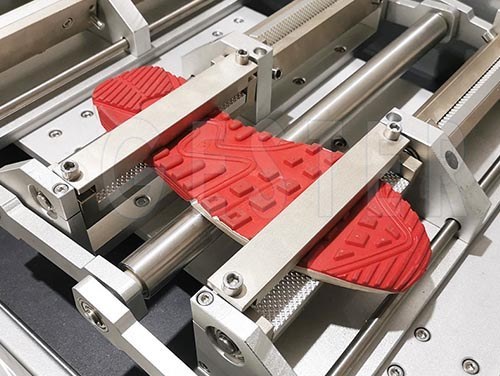
The Bennewart method evaluates the flexing resistance of shoe soles under continuous motion. A prepared sole specimen is held between two fixtures: one fixed and one connected to a moving actuator. As the machine operates, the specimen bends repeatedly around a support point.
Before the test begins, small openings are made at the location of maximum bending stress. These openings act as controlled starting points for assessing crack growth. After the selected number of cycles has been completed, the specimen is removed for inspection. The final cut length is measured and compared with the initial length.
This approach is relevant when manufacturers and laboratories need a repeatable way to observe the effect of flexing on sole materials and tread areas. It also creates a clear record of specimen condition, settings, and observed changes for quality documentation.
Bennewart Testing Workflow
1. Prepare the specimens
Select sole samples that meet the requirements of the intended test. The source procedure refers to cutting specimens to the dimensions specified in ISO 17707 and using at least three specimens per test. Consistent specimen selection and preparation are important because material construction and sample geometry can affect flexing behavior.
2. Secure the sample
Mount the specimen so that it is flat, vertical, and stable in the testing machine. At the sole’s maximum bending-stress line, three small openings are made using a notching knife. Careful positioning is essential because the test is intended to concentrate flexing at the prepared area.
3. Define test settings
Set the bending angle, frequency, and number of test cycles according to the relevant testing requirement. These conditions should be documented together with the specimen identification so that the test can be reviewed and repeated when needed.
4. Run and observe the test
Start the flexing sequence and monitor the specimen during operation. Observations may include visible deformation and crack development around the prepared cuts. Following the operating procedure helps reduce the risk of equipment damage and supports consistent handling of every specimen.
5. Inspect and record results
At the end of the required cycles, inspect the specimen, including the prepared cut area. A magnifying glass may be used to examine the extension of the cuts. Measure the final cut length and compare it with the starting length. The evaluation should be made against the applicable standard requirement or product specification.
A complete record can include the test parameters, sample information, observations, measurements, and final assessment. This provides useful quality control documentation and helps teams compare results across samples or production batches.
Equipment Considerations for GT-KB06
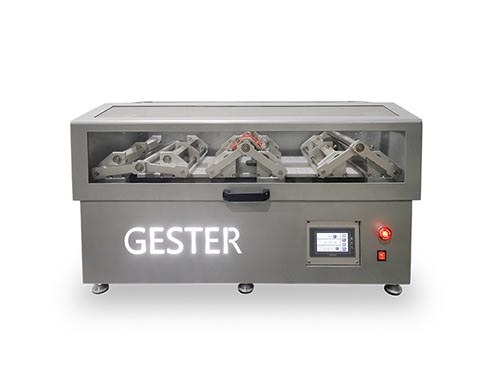
The source material identifies GT-KB06 as an EN sole flexing tester associated with the Bennewart method. The described tester arrangement includes a specimen clamping assembly, an electromechanical actuator, a PLC control system, a load cell, and fixtures for holding the sole sample during bending.
The source also describes a 90±2 bending angle, a 30 mm mandrel diameter, and a bending speed usually between 125 and 150 cpm. However, test settings may be adjusted according to the applicable test standard or specific test requirement. Fixture width is selected to provide stable support for the size of the sole specimen being tested.
Good Practice for Reliable Sole Flexing Results
- Use specimens prepared to the applicable requirement and keep their identification clear.
- Ensure each specimen is securely fixed before starting the test.
- Record the initial cut length and all selected test parameters before cycling begins.
- Use the same inspection approach when comparing multiple specimens.
- Clean and maintain the sole flexing tester after use to support normal operation and service life.
The Bennewart method does not replace the need to follow the relevant standard or product specification. Instead, it provides a structured way to examine crack development caused by repeated flexing and to capture the resulting data for shoe sole quality assessment.