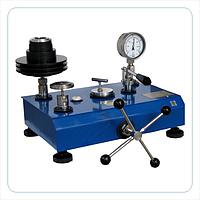
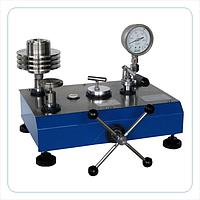
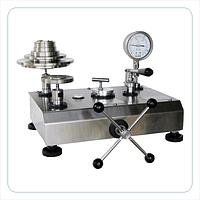
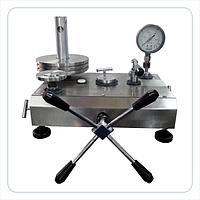
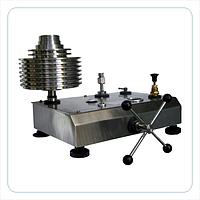
Pressure Deadweight Testers
When pressure measurement needs to be verified with very high confidence, a stable reference standard becomes essential. Pressure Deadweight Testers are widely used in calibration laboratories, instrument workshops, and quality systems where repeatable pressure generation and traceable reference values matter more than quick field checks.
On this page, you can explore deadweight tester solutions for gauge and differential pressure work across low-pressure, medium-pressure, and higher-pressure ranges. These instruments are commonly selected for calibrating pressure gauges, transmitters, switches, and other devices used in process, energy, manufacturing, and test environments.
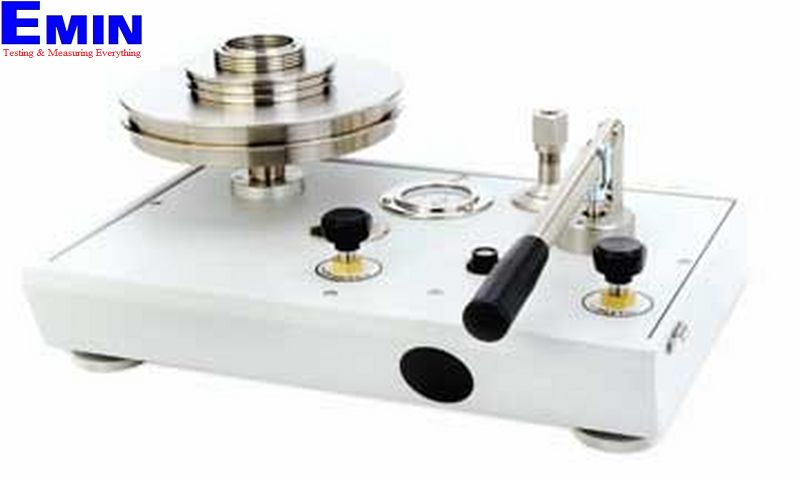
Why deadweight testers are still important in pressure calibration
A deadweight tester generates pressure from a well-defined combination of mass and effective piston area. Because the reference is based on physical principles rather than only electronic indication, this method remains a trusted approach for high-accuracy calibration work. It is especially useful where users need a primary or near-primary standard for comparing other pressure instruments.
Compared with routine production checks, deadweight testing is typically chosen when the calibration process must be more rigorous. In many workflows, it complements other tools such as a benchtop pressure calibrator for electronic test procedures or a digital pressure calibration gauge for fast reference readings.
Typical applications for pressure deadweight testers
These systems are commonly used wherever pressure instruments need to be checked against a stable reference over a defined range. Typical applications include calibration of analog gauges, pressure transmitters, pressure switches, chart recorders, and test instruments used in maintenance or production.
They are also relevant in differential pressure work, where low-level pressure differences must be applied with good control. This is important for laboratories and process users dealing with DP transmitters, low-pressure sensing elements, and performance verification tasks that demand high measurement stability.
Product range and example configurations
The range shown here includes pneumatic and differential pressure models suited to different calibration tasks. For example, the Fluke (Calibration) P3015-BAR-P is a pneumatic deadweight tester for air applications from 0.2 to 35 bar, with a stated accuracy of ±0.015% of reading and multiple test port adaptor options for common connection requirements.
For users working with differential pressure and broader gauge pressure coverage, BalunTech models in the BL508 series provide several range and accuracy combinations. Examples include the BL508-40MPA-2, BL508-10MPA-1, and BL508-200KPA-1, covering applications from low kPa-level work up to 40 MPa, depending on the selected version.
This variety is important because deadweight testers are rarely chosen by brand name alone. Buyers usually need to match the instrument to the calibration medium, target pressure range, required uncertainty, and the type of device under test.
How to choose the right model
The first selection point is the pressure range. A lab calibrating low-pressure and differential instruments will have very different needs from a workshop handling hydraulic or higher-pressure process devices. It is often more practical to choose a model aligned closely with the instruments you calibrate most often rather than selecting an overly broad range that may not be ideal for every task.
The second key factor is accuracy. In this category, available models include versions specified at 0.02%, 0.01%, and 0.005% of reading, depending on the series and range. The required level depends on your calibration hierarchy, acceptance criteria, and whether the deadweight tester will serve as a working standard or a higher-level lab reference.
You should also consider the pressure medium and operating style. Some applications are pneumatic, while others may involve gas and oil depending on the model configuration. Connection options such as metric, NPT, or BSP also matter, especially when the tester will be used across multiple instrument types or in mixed international environments.
Deadweight testers compared with other pressure calibration tools
Not every pressure calibration job requires a deadweight tester. For faster setup and routine verification, users often rely on a pressure comparator or one of the available pressure calibration pumps to generate test pressure more quickly in the field or on the bench.
The main advantage of a deadweight tester is its role as a reference standard for more demanding calibration work. It is generally preferred when repeatability, traceability, and confidence in the applied pressure are more important than portability or speed. In many organizations, these tools are part of a broader pressure calibration setup rather than a stand-alone purchase.
Key considerations for laboratory and workshop use
In practice, long-term usability depends on more than stated accuracy. Buyers should think about the physical size of the unit, the handling of mass sets, the intended installation environment, and whether the tester will remain in a controlled lab or be moved between stations. Even when a model offers excellent performance, day-to-day workflow can be affected by setup effort and operator familiarity.
Another important point is compatibility with the instruments you calibrate most often. Thread adapters, pressure units, and medium handling can make a real difference in efficiency. For example, some models listed here support optional bar or PSI indication conventions and connector styles such as NPT or BSP, which can simplify integration into existing calibration routines.
Brands covered in this category
This category focuses on manufacturers commonly associated with pressure calibration and test instrumentation. Fluke (Calibration) is well known for laboratory and industrial calibration equipment, while BalunTech appears here with multiple differential pressure deadweight tester configurations spanning several ranges and accuracy classes.
Additional manufacturer coverage in this category may include Furness Controls and Nagman, depending on current availability. For B2B buyers, this makes it easier to compare different product philosophies, from pneumatic deadweight testing to more specialized differential pressure calibration setups, without leaving the broader pressure calibration ecosystem.
Finding the right solution for your calibration workflow
If your priority is a dependable standard for verifying pressure instruments with low uncertainty, a deadweight tester is often the right place to start. The best choice usually comes from balancing range, accuracy, pressure medium, connection requirements, and the types of instruments you calibrate every day.
Browse the available models in this category to compare configurations for air, gauge pressure, and differential pressure applications. A well-matched deadweight tester can support more consistent calibration results, clearer traceability, and a more efficient pressure calibration process over the long term.
Get exclusive volume discounts, bulk pricing updates, and new product alerts delivered directly to your inbox.
By subscribing, you agree to our Terms of Service and Privacy Policy.
Direct access to our certified experts