Data Conversion Modules
Reliable signal handling starts with accurate conversion between the analog and digital domains. In embedded systems, test platforms, and industrial electronics, that conversion stage often determines how well a design can capture real-world inputs, generate usable outputs, and maintain overall system stability. Choosing the right Data Conversion Modules is therefore less about a single specification and more about matching signal requirements, interface needs, and integration constraints.
This category brings together module-level solutions used where sensing, acquisition, signal generation, and digital processing need to work together efficiently. Whether the goal is to digitize sensor data, support mixed-signal development, or build a compact embedded measurement chain, these modules sit at a critical point between physical signals and system-level control.
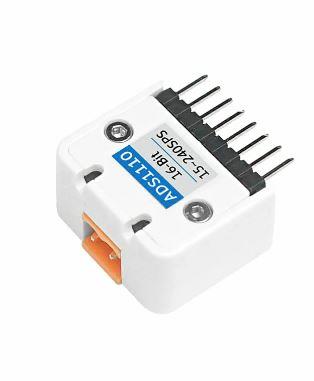
Where data conversion modules fit in embedded design
Many embedded applications depend on converting analog signals into digital data for processing, logging, or communication. The reverse path is equally important when a system needs to generate control signals, reference waveforms, or other analog outputs from digital instructions. Data conversion modules help handle these tasks in a more integrated and deployment-ready format than building every signal chain from discrete components.
In practice, these modules are relevant in instrumentation, automated test setups, industrial monitoring, edge devices, and electronics development environments. They are often used alongside communication modules when converted data must be transferred across a network or linked into a larger control architecture.
Common use cases and signal-chain roles
A typical signal path may include sensors, conditioning circuits, conversion hardware, digital processing, and then output or transmission functions. Data conversion modules are valuable when a project requires dependable acquisition or generation without redesigning the conversion stage from scratch. This can reduce development effort and help teams focus on application logic, firmware, and system integration.
These modules are commonly considered for measurement systems, prototype platforms, automated validation benches, and mixed-signal embedded applications. In some environments, they also complement software tools used for configuration, control, analysis, or test automation, especially where repeatability and data visibility matter.
What to evaluate when selecting a module
The right choice depends first on the nature of the signal itself. Engineers typically look at input or output type, expected voltage range, signal bandwidth, timing behavior, and the level of precision required for the application. Resolution and accuracy are both important, but so are interface compatibility, supply conditions, and how easily the module fits into the existing hardware stack.
Another key factor is how the module will interact with the host system. Interface standards such as SPI can influence firmware design, throughput planning, and board-level integration. For embedded teams working across acquisition and processing functions, it may also be useful to review related accelerator cards or adjacent processing hardware where converted data is handled at higher speed or in larger volumes.
Precision, integration, and application demands
Not every design needs the same conversion performance. Some projects prioritize compact integration and stable baseline functionality, while others need very fine signal fidelity for calibration, analysis, or waveform generation. In those higher-demand scenarios, the conversion module becomes a core performance element rather than a supporting component.
This is where supplier quality and architecture matter. Analog Devices is widely associated with mixed-signal technology, making it a relevant manufacturer in applications where signal integrity, precision, and embedded integration must be balanced carefully. For buyers and design teams, that makes manufacturer context useful when narrowing down options within this category.
Example of a high-precision mixed-signal platform
One representative product in this category is the Analog Devices ADMX1001B Signal Generators Ultra High Precision SIGGEN + ACQ. Based on the provided product context, it uses an SPI interface and operates from a 12 V supply, which already points to the kind of embedded and instrument-oriented environments where controlled signal generation and acquisition may need to coexist.
Rather than viewing a product like this as a generic module, it is better understood as part of a broader mixed-signal workflow. Solutions in this class can support development tasks such as validating signal paths, building precision test setups, or connecting digital control logic with analog measurement and generation requirements in a more streamlined way.
How these modules relate to adjacent embedded categories
Data conversion does not operate in isolation. In many systems, converted signals feed processors, edge controllers, network interfaces, or storage layers. That is why this category often makes the most sense when considered as part of a larger embedded platform rather than as a standalone hardware purchase.
For example, projects that ingest analog data may also require communication infrastructure, software support, or specialized compute resources depending on throughput and latency targets. Looking at the wider solution path helps buyers avoid selecting a module that is technically capable but operationally awkward once integrated into the final system.
Practical buying considerations for B2B teams
For engineering, procurement, and technical sourcing teams, a useful evaluation process starts with the application goal: acquisition, generation, or both. From there, it becomes easier to compare interface requirements, power conditions, expected measurement quality, and the broader environment in which the module will be deployed. This approach is often more reliable than filtering only by headline specs.
It is also worth considering long-term maintainability. Module selection affects firmware effort, validation time, and compatibility with surrounding hardware. When the conversion stage is chosen with the full system architecture in mind, integration tends to be smoother and scaling the design becomes more practical.
Conclusion
In embedded and industrial electronics, data conversion modules play a central role in turning physical signals into usable digital information and digital commands into controlled analog behavior. The category is especially relevant for teams building measurement-capable devices, mixed-signal platforms, and embedded systems that depend on consistent signal quality.
If your application involves sensing, acquisition, waveform generation, or signal-chain development, reviewing this category with attention to interface, precision, and system fit will lead to better decisions than comparing isolated specifications alone. A well-matched module can simplify design work, support dependable operation, and create a stronger foundation for the rest of the embedded solution.
Get exclusive volume discounts, bulk pricing updates, and new product alerts delivered directly to your inbox.
By subscribing, you agree to our Terms of Service and Privacy Policy.
Direct access to our certified experts