Computer On Modules
When an embedded design needs strong processing capability without the time and risk of building a full custom board from scratch, modular computing platforms become a practical choice. Computer On Modules help engineering teams shorten development cycles by integrating the processor, memory architecture, and key high-speed interfaces into a compact module that can be paired with a dedicated carrier board for application-specific I/O.
This category is aimed at developers, OEMs, and industrial integrators looking for scalable embedded platforms for automation, transport, edge processing, HMI, robotics, and rugged systems. From low-power ARM-based designs to high-performance x86 and server-class modules, the range supports different form factors, thermal needs, and interface requirements across long-life industrial projects.
Why Computer On Modules are widely used in embedded system design
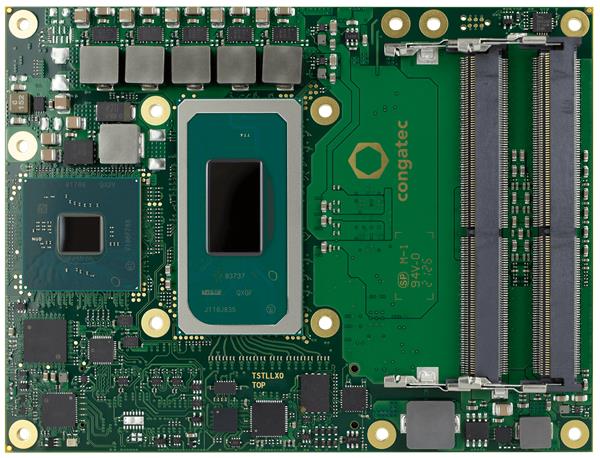
A COM separates the core computing section from the custom carrier board. This approach allows designers to focus carrier development on the connectors, fieldbus, storage, display, and power requirements of the end application while keeping the compute platform standardized and easier to update over time.
In many industrial projects, this modularity improves maintainability and product lifecycle planning. It can also simplify migration between processor generations, since a new module may fit into an established platform concept with fewer redesign steps than a fully custom SBC.
Form factors and platform types in this category
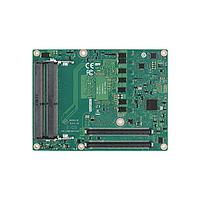
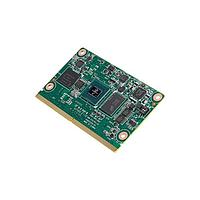
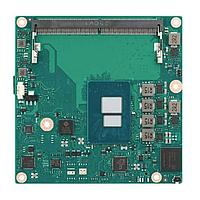
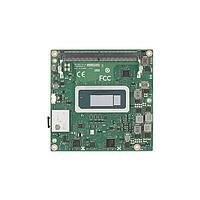
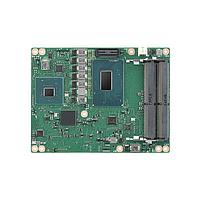
This category covers several common module standards used in professional embedded computing. Examples in the current range include COM Express, SMARC, Qseven, and COM-HPC, each serving different balances of size, performance, and I/O density.
COM Express is often selected for industrial and high-performance x86 applications where PCIe, Ethernet, storage, and display connectivity are important. Smaller platforms such as SMARC and Qseven are often more suitable for compact, power-sensitive, or ARM-based designs, while COM-HPC addresses demanding edge and data-intensive applications with higher bandwidth and expansion potential.
If your project needs a complete ready-to-deploy system rather than a module plus carrier architecture, it may also be useful to compare options in embedded box computers or panel PCs, depending on installation and HMI requirements.
Processor choices for different workloads
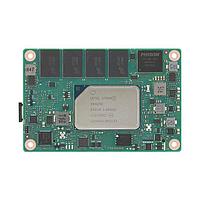
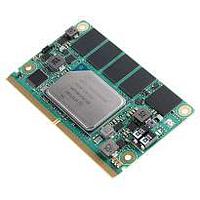
The available modules illustrate how broad the performance range can be. For compact embedded AI and efficient edge tasks, the ADLINK Technology LEC-iMX8MP-Q-N-8G-32G-ER uses an NXP i.MX 8M platform in SMARC 2.1 format, making it relevant for low-power control, gateway, and vision-oriented designs that benefit from integrated embedded processing features.
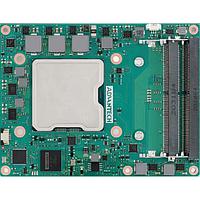
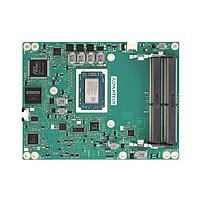
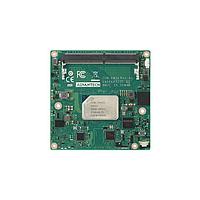
For mainstream industrial x86 applications, examples such as the Advantech ROM-5721WS-QDA2E and Advantech SOM-6869PCD-S2A2 show how module-based computing can fit compact and power-conscious designs. At the higher end, modules such as the ADLINK Technology t1Express-RLP-i7-1365URE, the congatec conga-TS570/W-11155MRE, and the Kontron 38041-0000-25-7 target projects that require stronger CPU performance, wider memory capability, and broader I/O integration.
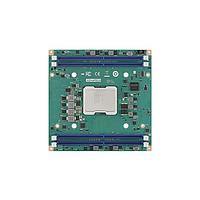
There are also designs optimized for networking or edge server workloads. The ADLINK Technology Express-VR7-V3C18I in COM Express Type 7 and the congatec HPC/sILH-D2752TER in COM-HPC format are examples of modules intended for systems where Ethernet throughput, expansion bandwidth, and long-term platform scalability matter.
Key selection criteria before choosing a module
The right module is usually determined by a combination of processor architecture, form factor, operating temperature, memory support, and required interfaces. For example, projects deployed in harsh environments may prioritize an industrial temperature range, while mobile or compact designs may focus more on low power consumption and space-saving dimensions.
Interface planning is equally important. Depending on the product, engineers may need Ethernet, USB, UART, GPIO, CAN, SATA, PCIe, display outputs, or high-speed storage connectivity. A module should be chosen not only for current requirements but also for the expected evolution of the product platform over its service life.
It is also worth checking the carrier board effort. A high-performance COM with advanced PCIe lanes and multiple display options offers flexibility, but that flexibility only creates value if the carrier design can properly expose and support those interfaces in the final system.
Examples of applications supported by this category
Computer On Modules are commonly used in industrial controllers, edge gateways, machine vision systems, medical devices, transport electronics, kiosks, and ruggedized computing nodes. Smaller ARM-based modules are often well suited to compact HMI, gateway, and smart device integration, while x86 COM Express platforms are frequently chosen for software compatibility, richer expansion, and heavier multitasking.
In automation and machine-building environments, modular computing can make product families easier to maintain across multiple performance tiers. A single carrier concept may support more than one module option, allowing manufacturers to create entry-level and higher-performance variants without redesigning the whole platform.
Representative manufacturers in this range
This category includes solutions from established embedded computing suppliers such as ADLINK Technology, Advantech, congatec, Kontron, and Arbor Technology. These brands are commonly considered in B2B projects where product longevity, ecosystem support, and industrial deployment requirements are part of the evaluation process.
Within the listed examples, ADLINK Technology stands out with several different module families spanning SMARC, COM Express Type 6, and Type 7 platforms. congatec contributes both COM Express and COM-HPC examples, while Advantech and Arbor Technology broaden the selection for teams comparing size, processor class, and integration style.
How to evaluate COMs against other embedded computing options
A module-based architecture is especially useful when the application needs customization on the carrier side but still benefits from a standardized compute core. This is common when specific field interfaces, connector layouts, power designs, or enclosure constraints make an off-the-shelf system less suitable.
By contrast, if your priority is faster deployment with minimal hardware development, a complete platform from the broader computer on modules range may still need carrier design work, whereas a prebuilt embedded computer may be easier to integrate immediately. The right decision depends on whether your project values hardware customization, lifecycle flexibility, or shortest time to installation.
Choosing a module for long-term product development
For OEM and industrial design teams, module selection should be treated as part of the full platform strategy rather than a simple component purchase. Processor roadmap, thermal concept, software environment, I/O mapping, and mechanical constraints all influence whether a module will remain suitable through production scaling and future revisions.
A well-matched COM can reduce engineering risk, support cleaner upgrade paths, and help align the computing core with the real needs of the application. Whether you are building a compact ARM-based device or a high-performance industrial edge system, this category provides a practical starting point for comparing module standards, performance classes, and supplier ecosystems.
Review the available form factors, interface sets, and processor families carefully, then narrow the shortlist based on your carrier design scope and environmental requirements. That approach usually leads to a more stable embedded platform and a smoother transition from prototype to deployment.
Get exclusive volume discounts, bulk pricing updates, and new product alerts delivered directly to your inbox.
By subscribing, you agree to our Terms of Service and Privacy Policy.
Direct access to our certified experts